
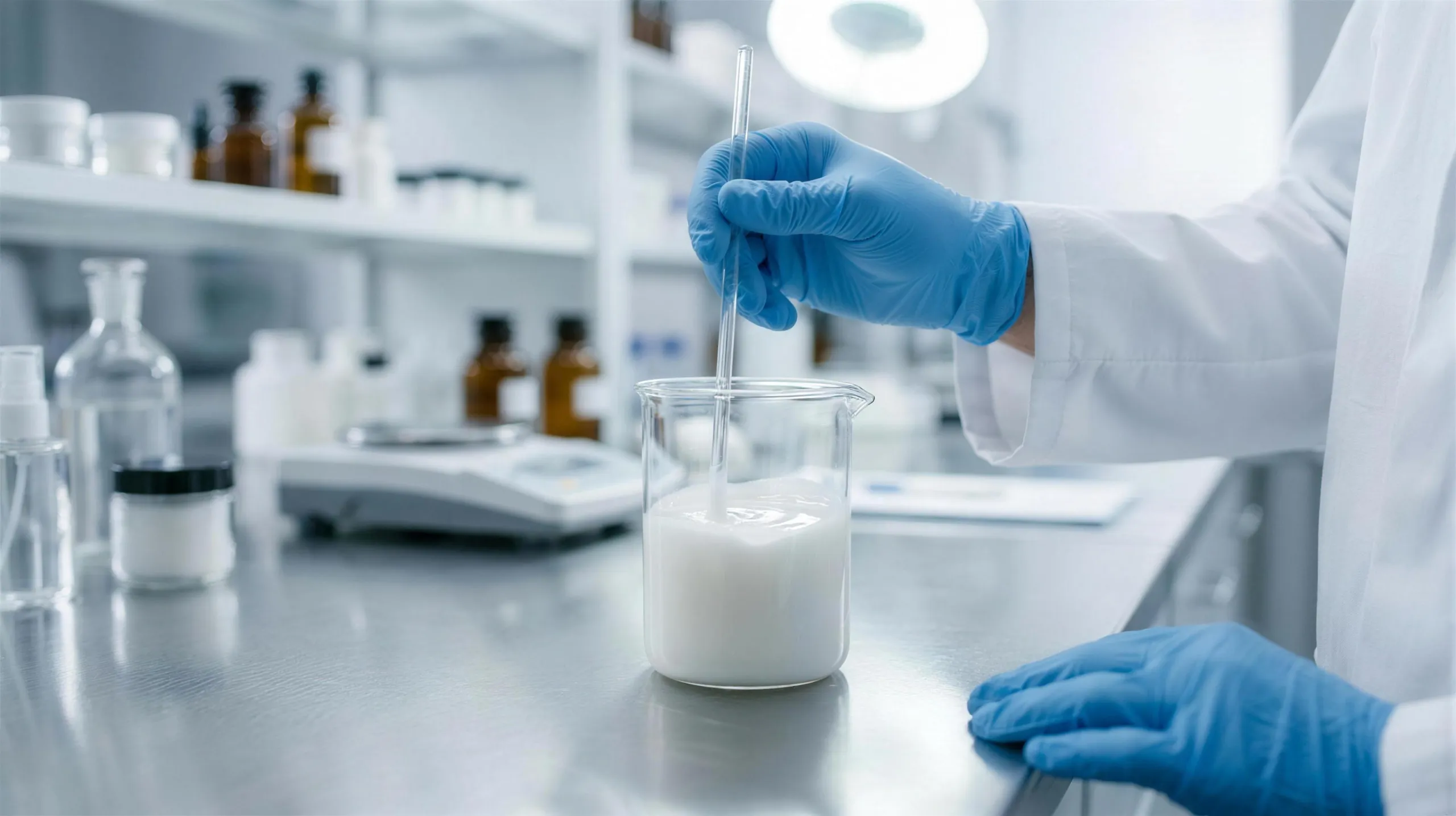
Triethanolamine (TEA) is a tertiary amine and tri-alcohol used industrially as a pH adjuster, an emulsifier, and a corrosion inhibitor. A weak base that pushes a water solution to roughly pH 10–11, it neutralizes acidic polymers to build gels, reacts with fatty acids to form emulsifying soaps, and shows up everywhere from lotions and shampoos to cement grinding aids and metalworking coolants. It ships in two grades that matter to formulators and purchasing teams: a high-purity 99% grade and a commercial 85% grade. This guide covers what TEA does, where it earns its place in a formula, and how the grades differ when you buy in bulk.
What triethanolamine actually is
Chemically, triethanolamine is a single nitrogen atom carrying three 2-hydroxyethyl groups: one molecule, three hydroxyl groups, and a basic amine center. CAS number 102-71-6. That structure is the whole story behind its versatility. The amine makes it a weak base, so a small charge of TEA lifts the pH of a water-based system and holds it in the mildly alkaline range. The three hydroxyl groups make it water-soluble and give it the polar, slightly viscous character of a glycol-like liquid. And the molecule is reactive enough to form salts and soaps on contact with acids and fatty acids.
Pure TEA is a colorless to pale-yellow viscous liquid with a faint ammonia-like odor. It is hygroscopic and will darken on prolonged exposure to air and light, which is why color spec and storage discipline matter more than buyers expect. None of these traits are exotic on their own, but combined in one inexpensive molecule they explain why TEA appears on bills of material across a dozen unrelated industries.
What this guide covers
- pH adjustment and carbomer neutralization
- Emulsification and TEA surfactants
- Cement grinding aids and concrete admixtures
- Metalworking fluids and corrosion inhibition
- Other uses: gas treating, textiles, agrochemicals
- Grades: 99% vs 85%
- Safety and bulk handling
- Frequently asked questions
- Bulk triethanolamine supply
pH adjustment and carbomer neutralization
The most common reason a formulator reaches for triethanolamine is pH control. As a weak base it neutralizes acids without the harshness of a strong alkali like sodium hydroxide, and because it is a liquid it doses cleanly into water-based batches. A typical use is nudging a finished cosmetic or cleaning formula up into a target band and holding it there.
The signature application is neutralizing carbomer and other acrylic acid thickeners. Carbomer disperses in water as a tight, acidic coil that does almost nothing until its carboxyl groups are neutralized. Add TEA and those groups ionize, the polymer chains repel each other and uncoil, and a thin dispersion swells into a clear, stable gel. Carbomer gels neutralized this way hold their viscosity well across roughly pH 5 to 8, which is why TEA is the default neutralizer behind a huge share of the clear gels, serums, and gel creams on the market. The practical trade-off: dose to your target pH and stop. Overshooting past the neutral point gains you no extra thickness and pushes the formula more alkaline than skin prefers, so titrate rather than pour.
Emulsification and TEA surfactants
TEA does not emulsify on its own — it builds the emulsifier in situ. Combine it with a fatty acid such as stearic acid in the oil phase and it forms triethanolamine stearate, an anionic soap that sits at the oil-water boundary and lowers interfacial tension. That is the mechanism behind countless vanishing creams, lotions, and hand creams: the chemist adds stearic acid to the oils, TEA to the water, and the soap forms when the two phases meet under shear. The same logic produces ready-made TEA-based surfactants such as TEA-lauryl sulfate and TEA-dodecylbenzenesulfonate, where the triethanolamine salt of a sulfate or sulfonate gives a milder, more water-soluble surfactant than the sodium version, useful in shampoos and liquid cleaners.
For purchasing teams, the takeaway is that TEA is often bought not as a finished surfactant but as the base that makes one. A drum of triethanolamine plus a drum of stearic acid replaces a more expensive pre-made emulsifier, which is exactly why it stays on so many cost-down bills of material. The honest caveat: TEA soaps are alkaline and sensitive to electrolytes and low pH, so they are not the right emulsifier for every system. Acidic or high-salt formulas usually call for a nonionic instead.
Cement grinding aids and concrete admixtures
Outside of personal care, cement is one of triethanolamine’s largest homes. In a cement mill, freshly fractured clinker particles carry unsatisfied surface charges that pull them back together and let them coat the grinding media, both of which waste mill energy. Dosed at a fraction of a percent of clinker weight (commonly around 0.02–0.1%), TEA adsorbs onto those fresh surfaces, neutralizes the surface charge, and keeps the fine particles from re-agglomerating. The result is a finer grind for the same mill energy, or the same fineness at higher throughput.
TEA also acts as an admixture that modifies how cement sets and gains strength, and this is where the chemistry needs respect rather than hype. It accelerates the hydration of the aluminate phases (C3A and C4AF) but retards the silicate phase (C3S) that drives long-term strength. The effect is sharply dose-dependent: a few hundredths of a percent can raise early strength, while overdosing can retard the silicate hydration and reduce later-age strength. For concrete and grinding-aid producers the recommendation is a tight, validated dosage window per clinker rather than a one-size-fits-all rate.

Metalworking fluids and corrosion inhibition
In metalworking fluids, triethanolamine does two jobs at once, which is what makes it efficient. As a base, it neutralizes the fatty acids in a soluble-oil or semisynthetic coolant to form the emulsifier soaps that let oil disperse stably in water, the same in-situ soap chemistry seen in cosmetics applied to a machine-tool sump. At the same time, the amine forms a protective film on ferrous surfaces and keeps the fluid alkaline, which suppresses the flash rust that would otherwise attack freshly cut iron and steel and the machine itself.
So a single additive supplies emulsification, pH buffering, and corrosion inhibition in a cutting or grinding coolant. The trade-off worth flagging: TEA-buffered fluids run alkaline, and operators have to watch concentration and skin contact, since high-pH coolant is a dermatitis risk on the shop floor. Maintaining the fluid at its target concentration is part of using TEA well here, not an afterthought.
Other uses: gas treating, textiles, and agrochemicals
Triethanolamine’s reach extends well past those four pillars. As an alkanolamine it can absorb acidic gases, and historically it was used in gas-sweetening to scrub hydrogen sulfide and carbon dioxide from process and natural gas, though the industry has largely moved to more selective amines like MEA and MDEA for that duty. In textiles it serves as a leveling agent and emulsifier that helps dye distribute evenly across fabric. In agrochemical formulations it works as a pH adjuster and as a counter-ion that turns acidic active ingredients into more soluble, easier-to-formulate salts. It is also a building-block intermediate for surfactants, corrosion inhibitors, and other downstream amines. The common thread across all of these is the same trio of properties (weak base, polar tri-alcohol, salt-former) pointed at a different problem.
Grades: 99% vs 85%
Two grades dominate the bulk market, and the choice between them is a real formulating and logistics decision rather than a quality ranking.
| Property | Triethanolamine 99% | Triethanolamine 85% |
|---|---|---|
| Composition | High-purity TEA | Commercial blend: TEA with water and minor diethanolamine/ethanolamine content depending on source |
| Color stability | Tighter, lower color spec; better consistency | More prone to color drift; still acceptable for many industrial uses |
| Low-temperature handling | Higher freeze point; can solidify in cold storage | Better cold fluidity, but can stratify below ~15°C and needs warming and mixing to restore homogeneity |
| Typical fit | Cosmetics, pharma-adjacent, and applications needing tight, repeatable spec | Cost-sensitive industrial use: cement, metalworking, cleaning, textiles |
| Cost basis | Higher per active unit | More economical commercial grade |
The practical recommendation: specify 99% when color, purity, and batch-to-batch consistency are non-negotiable, which covers most personal-care and tightly-specified work. Use 85% where the application tolerates a commercial blend and cost matters, which covers a large share of cement and metalworking volume. Either way, confirm the exact assay and color spec against your formula before locking a supplier, because “85%” is not a single standardized product across the market.
Safety and bulk handling
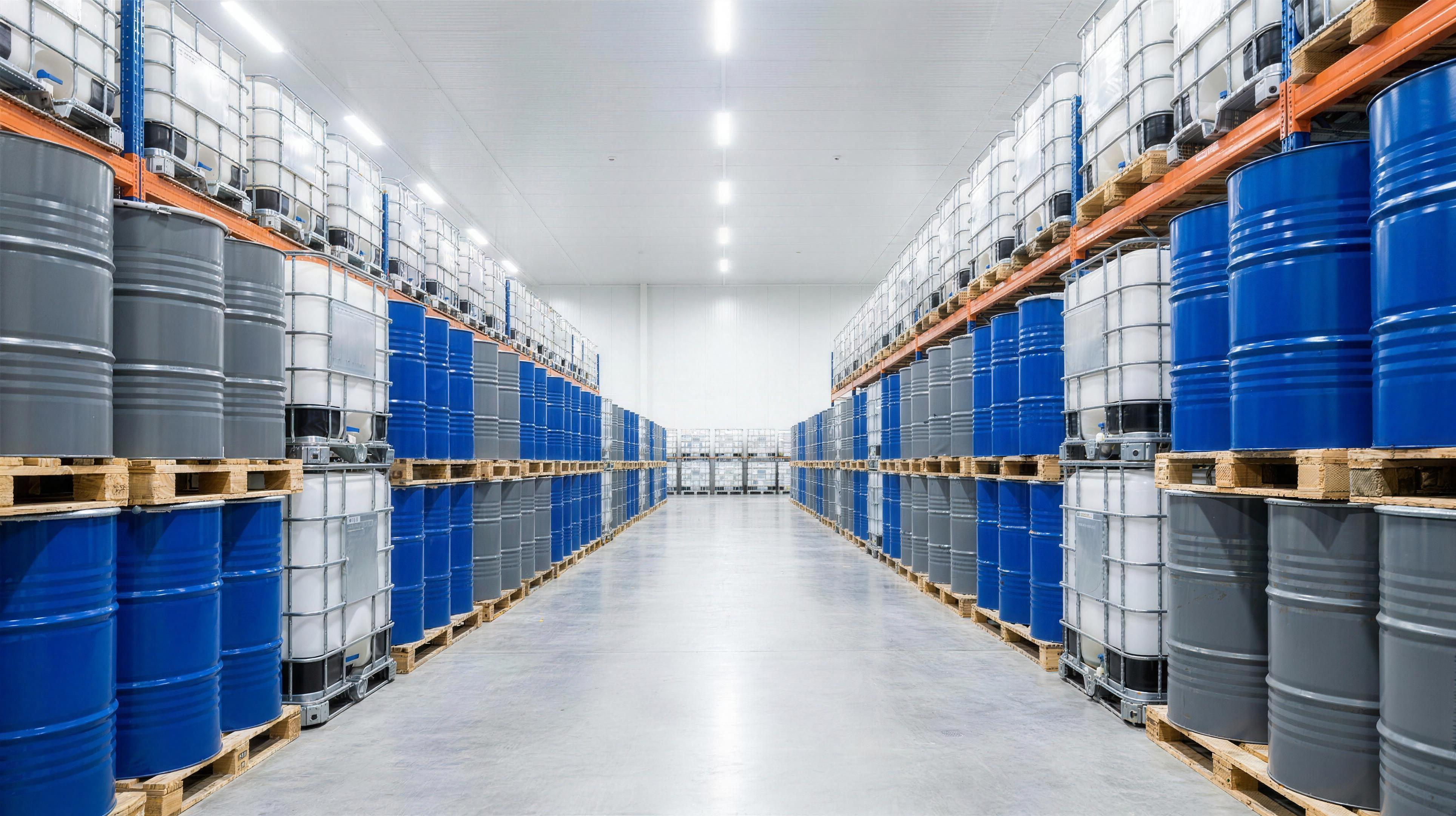
Triethanolamine is not a benign material to handle casually, and we would rather state that plainly than dress it up. It is alkaline, and at relevant concentrations it is a skin and eye irritant and a recognized skin sensitizer. Repeated unprotected contact can drive dermatitis, which is the main reason metalworking operators glove up around TEA-buffered coolant. It is hygroscopic and darkens with air and light exposure, so it should be stored sealed, away from oxidizers and strong acids, and kept out of prolonged heat and sunlight to protect color. The 85% grade in particular can stratify in cold storage and should be warmed and remixed before use. Standard PPE (chemical-resistant gloves and eye protection) and good ventilation apply. Always work from the current SDS for the specific grade you receive, and follow local transport and disposal regulations.
Frequently asked questions
What is triethanolamine used for?
Triethanolamine is used as a pH adjuster, an emulsifier, and a corrosion inhibitor. Its biggest roles are neutralizing carbomer and acrylic thickeners in cosmetics and gels, forming emulsifying soaps in creams and lotions, acting as a grinding aid and admixture in cement, and providing emulsification plus corrosion protection in metalworking coolants.
Is triethanolamine acidic or basic?
It is a weak base. A water solution of triethanolamine typically sits around pH 10–11, which is why a small dose raises the pH of a formulation and why it can neutralize acidic polymers and fatty acids.
What is the difference between 99% and 85% triethanolamine?
The 99% grade is high-purity TEA with tighter color and consistency, preferred where spec is critical. The 85% grade is a more economical commercial blend (TEA with water and minor related amines) common in cement, metalworking, and cleaning; it has better cold fluidity but can stratify below about 15°C and needs warming before use.
How does triethanolamine thicken a carbomer gel?
Carbomer is an acidic polymer that stays coiled and inactive until neutralized. Triethanolamine ionizes its carboxyl groups, the chains repel and uncoil, and the dispersion swells into a stable clear gel that holds viscosity across roughly pH 5–8.
Is triethanolamine safe to handle?
It must be handled with care. TEA is alkaline and is a skin and eye irritant and a skin sensitizer at relevant concentrations, so it requires chemical-resistant gloves, eye protection, and ventilation. Refer to the SDS for the specific grade before use.
Bulk triethanolamine supply
See the Triethanolamine product page. Request a triethanolamine quote.
This article is provided for general industrial reference and is not medical, health, safety, or regulatory advice. Property values and use cases are typical and not a guaranteed specification. Always consult the current Safety Data Sheet (SDS) for the specific grade before handling, and confirm regulatory status and suitability for your application and jurisdiction.
Search 1,300+ industrial chemicals by name or CAS, or send us your spec — we quote by the drum, tote, or container.
Browse the Chemical Index → Request a Quote