
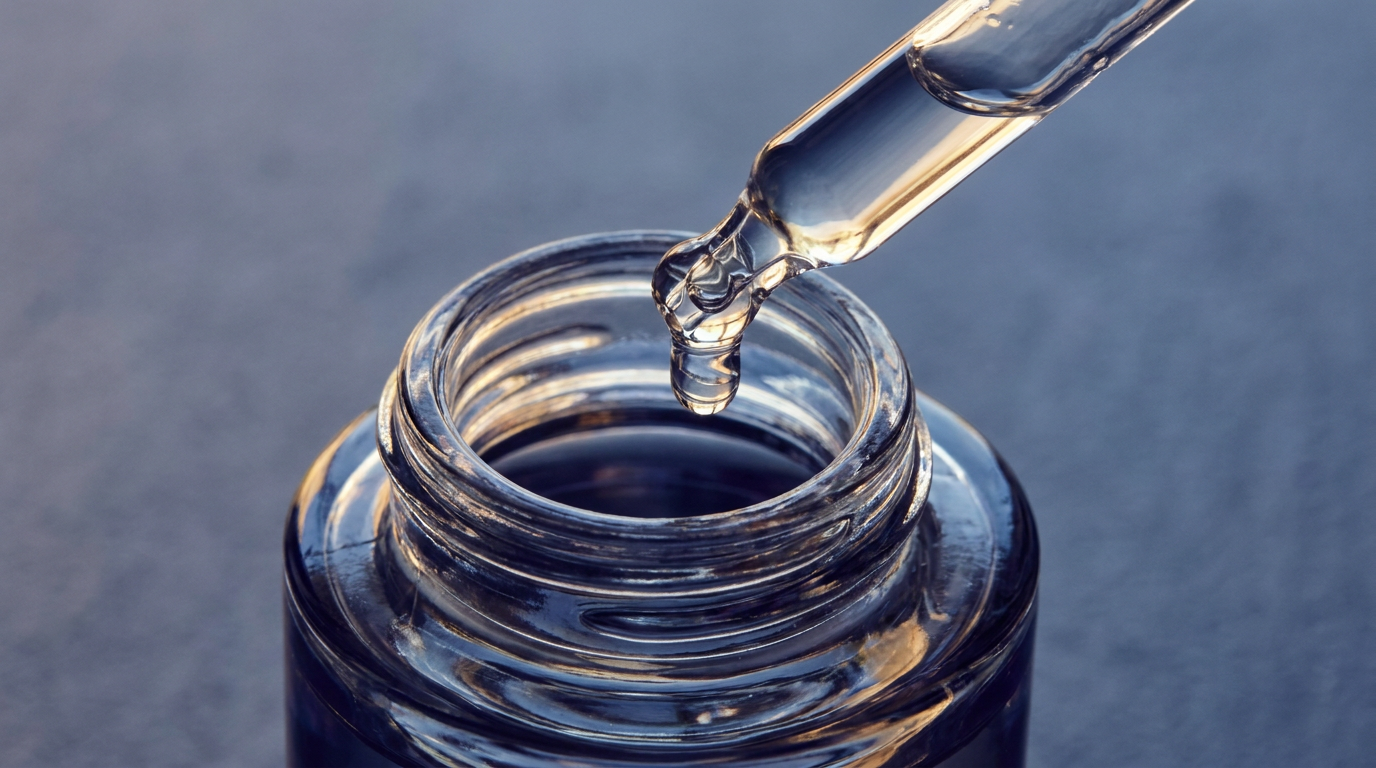
You are building a foundation that has to glide, a primer that has to feel silky, or a sunscreen that has to spread evenly and not feel greasy — and you need a silicone that delivers slip and a natural sheen without weight or a heavy occlusive film. In skin care and color cosmetics, that silicone is very often phenyl trimethicone. This guide is for the people specifying and sourcing it — cosmetic formulators and procurement — not consumers reading an ingredient label.
The short version: Phenyl trimethicone (INCI: Phenyl Trimethicone; CAS 2116-84-9) is a phenyl-substituted silicone fluid with a high refractive index (~1.46), which is why it brings gloss and a natural sheen to color cosmetics and a light, dry, non-greasy slip to skin care. In a formulation it functions as an emollient and spreadability aid, a gloss/sheen agent, a pigment-wetting aid, and a hydrophobic film former that supports wear-time, transfer-resistance and water-resistance — all with a lightweight feel. Typical use levels run roughly 1–10% (often higher in color cosmetics than in skin care). It is oil-soluble (not water-soluble), so it is formulated into the oil/silicone phase. This is formulation guidance, not a consumer health or efficacy claim.
What phenyl trimethicone is
Phenyl trimethicone is a low-to-medium-viscosity silicone fluid in which phenyl groups replace some methyl groups on a polysiloxane backbone. Those phenyl groups raise the refractive index (giving optical sheen) and the affinity for the skin surface relative to plain dimethicone, while keeping a clear, lightweight, dry-feeling fluid that is oil-soluble and water-insoluble. Identity and properties are documented at primary sources such as PubChem. For the underlying chemistry, solubility and sourcing, see the phenyl trimethicone overview; for the raw material, the phenyl trimethicone product page.
What it does in skin-care and color-cosmetics formulations
These are formulation functions — what the ingredient contributes to the product — not promises about an individual’s skin.
- Slip and spreadability. It gives a smooth, even glide, helping a formulation apply uniformly — important for foundations, primers, sunscreens and creams.
- Gloss and natural sheen. Its high refractive index (~1.46) adds optical shine and a natural-looking sheen, which is why it is a staple in lip products and dewy or radiant-finish makeup.
- Pigment wetting / dispersion aid. It helps wet and disperse pigments, improving color payoff and smoothness in foundations and color cosmetics.
- Hydrophobic film → wear-time, transfer- and water-resistance. Its film resists moisture and rub-off, supporting long-wear and transfer-resistant makeup and water-resistant sunscreen formulations.
- Light, dry, non-greasy after-feel. It spreads and dries to a light, non-tacky feel, raising the perceived quality of creams, serums and primers without heaviness or an occlusive, greasy skin-feel.
Where it is formulated, and at what level
| Formulation type | Role of phenyl trimethicone | Typical use level |
|---|---|---|
| Foundations / BB & CC creams | Slip, pigment wetting, natural sheen, wear-time | 2–10% |
| Primers | Silky slip, soft-focus feel, smooth application | 2–8% |
| Lipsticks & lip gloss | Gloss (high RI), shine, smooth, non-tacky feel | 1–8% |
| Sunscreens | Spreadability + water-resistant film | 1–5% |
| Moisturizers & creams | Light emollient, non-greasy after-feel | 1–5% |
| Serums | Slip, silky feel, spreadability of the oil phase | 1–3% |
Levels are typical starting points; optimize against your base, finish and cost. Phenyl trimethicone is often paired with a volatile carrier such as cyclopentasiloxane for spreadability and with dimethicone for substantive feel — the cyclopentasiloxane / dimethiconol / phenyl trimethicone blend is a ready-made version of that system.
Formulating considerations
It is oil-soluble and water-insoluble, so it goes into the oil/silicone phase of an emulsion or an anhydrous system; it needs an emulsifier to be carried in a water-continuous product. It is compatible with cyclomethicones, esters and most cosmetic oils, processes cold or warm, and is shear- and pH-tolerant within normal cosmetic ranges. Because it is light and dry rather than heavy, it is the silicone of choice where a non-greasy, elegant skin-feel and a natural sheen matter. Label it as Phenyl Trimethicone (INCI), and confirm regulatory status and any restrictions for your target markets (e.g. EU CosIng and other regional inventories) before finalizing.
Skin vs hair, and vs dimethicone
In skin and color cosmetics the priorities are slip, sheen, pigment wetting and a non-greasy feel; in hair care the same silicone is used for gloss, conditioning film and heat-styling substantivity — see the phenyl trimethicone in hair care guide. Versus dimethicone, phenyl trimethicone gives more optical gloss (higher refractive index) and a lighter, drier feel, while dimethicone gives heavier, more substantive slip at lower cost; the trade-offs are in phenyl trimethicone vs dimethicone.
Buying phenyl trimethicone in bulk
See the Phenyl Trimethicone product page. Tell us your formulation type, target finish/feel and volume, and we will quote the right grade. Products are sold for professional cosmetic-manufacturing use.
Frequently asked questions
What does phenyl trimethicone do in skin care and makeup?
In a formulation it acts as an emollient and spreadability aid (smooth glide), a gloss/sheen agent (its high refractive index adds optical shine), a pigment-wetting aid that improves color payoff, and a hydrophobic film former that supports wear-time, transfer-resistance and water-resistance — all with a light, dry, non-greasy feel.
What use level of phenyl trimethicone is typical in cosmetics?
Roughly 1–10% depending on the product: about 2–10% in foundations, primers and lip products where slip and sheen matter most, and 1–5% in sunscreens, moisturizers and serums. Optimize against your base and finish.
Why is phenyl trimethicone used in foundations and primers?
It provides slip and even spreadability, helps wet and disperse pigments for better payoff, adds a natural sheen via its high refractive index, and leaves a light, non-greasy feel — and its hydrophobic film supports wear-time and transfer-resistance.
Is phenyl trimethicone water-soluble?
No — it is oil-soluble and water-insoluble. Formulate it into the oil/silicone phase or an anhydrous system; it needs an emulsifier to be delivered from a water-based product.
Phenyl trimethicone vs dimethicone for skin formulations?
Phenyl trimethicone gives more optical gloss/sheen and a lighter, drier feel (good for makeup and elegant skin care); dimethicone gives heavier, more substantive slip at lower cost. Many formulations use both. See the dedicated comparison.
Is phenyl trimethicone safe and how is it regulated for skin contact?
Phenyl trimethicone is a widely used cosmetic silicone; regulatory status and any restrictions vary by market and should be confirmed against the relevant inventory (e.g. EU CosIng) for your application and jurisdiction. Consult the current Safety Data Sheet before handling. This guidance covers formulation function only and is not a consumer health or efficacy claim.
Editorial note. This article is technical guidance for cosmetic formulators and procurement professionals. It describes the ingredient’s function in skin-care and color-cosmetic formulations and typical use levels for industrial cosmetic manufacturing; it is not advice to consumers and makes no medical, health or efficacy claim about any individual’s skin. Properties are typical reference values; the Certificate of Analysis governs the lot you buy. Confirm INCI labeling, regulatory status and suitability for your target markets. Always consult the current Safety Data Sheet (SDS) before handling. RawSource makes no warranty, express or implied, and assumes no liability for use of this information.
Search 1,300+ industrial chemicals by name or CAS, or send us your spec — we quote by the drum, tote, or container.
Browse the Chemical Index → Request a Quote