
Sodium gluconate (CAS 527-07-1) is the sodium salt of gluconic acid, a white crystalline powder produced by fermenting glucose. It is one of the most effective chelating agents available for strongly alkaline conditions, which is why it shows up in three high-volume industrial programs: as a set-retarding admixture in concrete, as a biodegradable scale and corrosion inhibitor in water treatment, and as a sequestrant in heavy-duty alkaline cleaners. This guide covers what it does, where it is specified, the grades buyers ask for, and how to source it in bulk.
Part of our Chelating Agents & Sequestrants guide — compare EDTA, gluconate, phosphonate and iron-chelate chemistries and find the right grade for your process.
What is sodium gluconate?
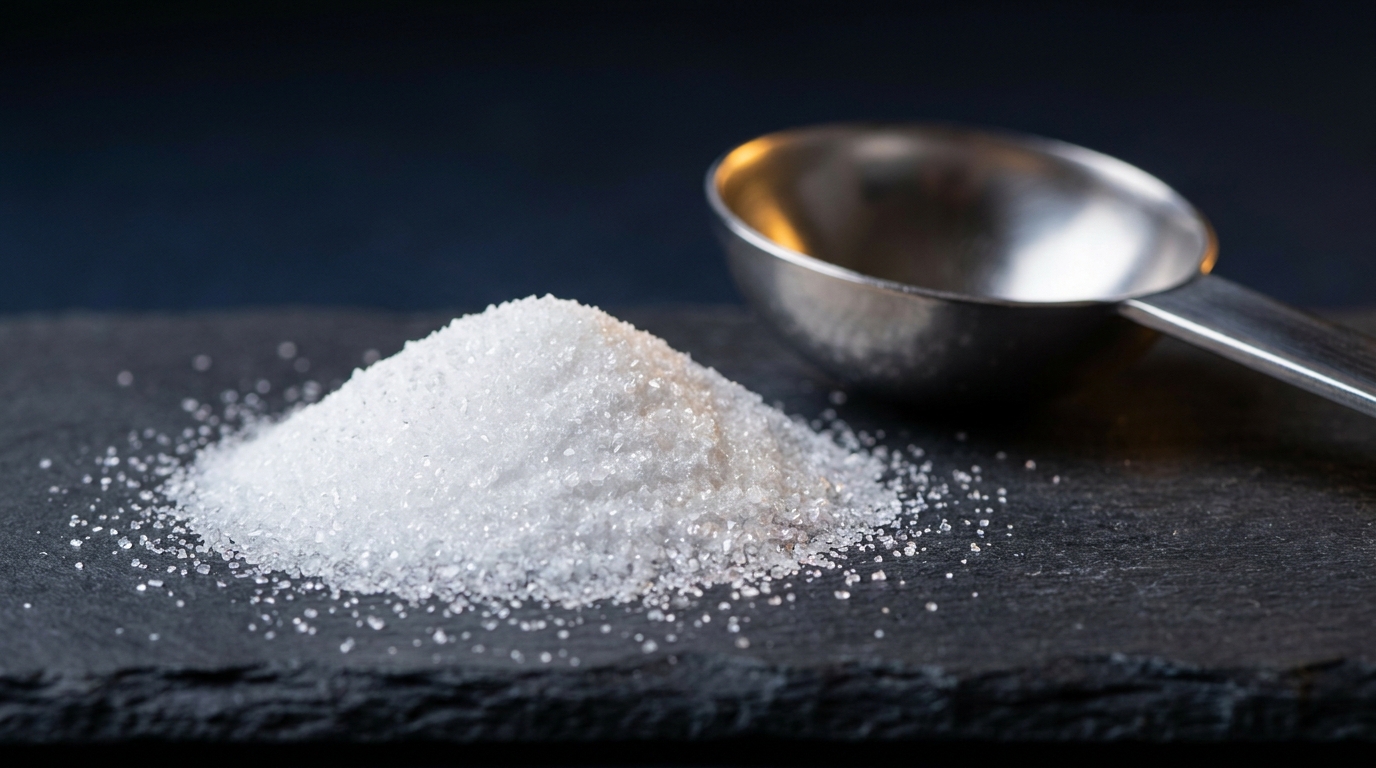
Sodium gluconate is the sodium salt of gluconic acid, an organic acid derived from glucose. Industrially it is made by the aerobic fermentation of glucose using Aspergillus niger, followed by neutralization with sodium hydroxide and crystallization. The result is a white to off-white crystalline powder or granule that dissolves readily in water and is stable across a wide pH range.
Its defining property is sequestration. The molecule wraps around multivalent metal cations and holds them in solution, preventing them from forming scale, catalyzing corrosion, or staining a surface. What separates sodium gluconate from common chelants such as EDTA is that its sequestering power increases in strongly alkaline solutions, the exact conditions where many other agents lose effectiveness. That single trait drives most of its industrial value.
| Property | Value |
| CAS number | 527-07-1 |
| EC number | 208-407-7 |
| Molecular formula | NaC6H11O7 |
| Molar mass | 218.14 g/mol |
| Appearance | White to off-white crystalline powder or granule |
| Solubility | Freely soluble in water |
| Food additive number | E576 (sequestrant) |
| Biodegradability | Readily biodegradable |
Industrial applications of sodium gluconate
Concrete admixture: set retarder and water reducer
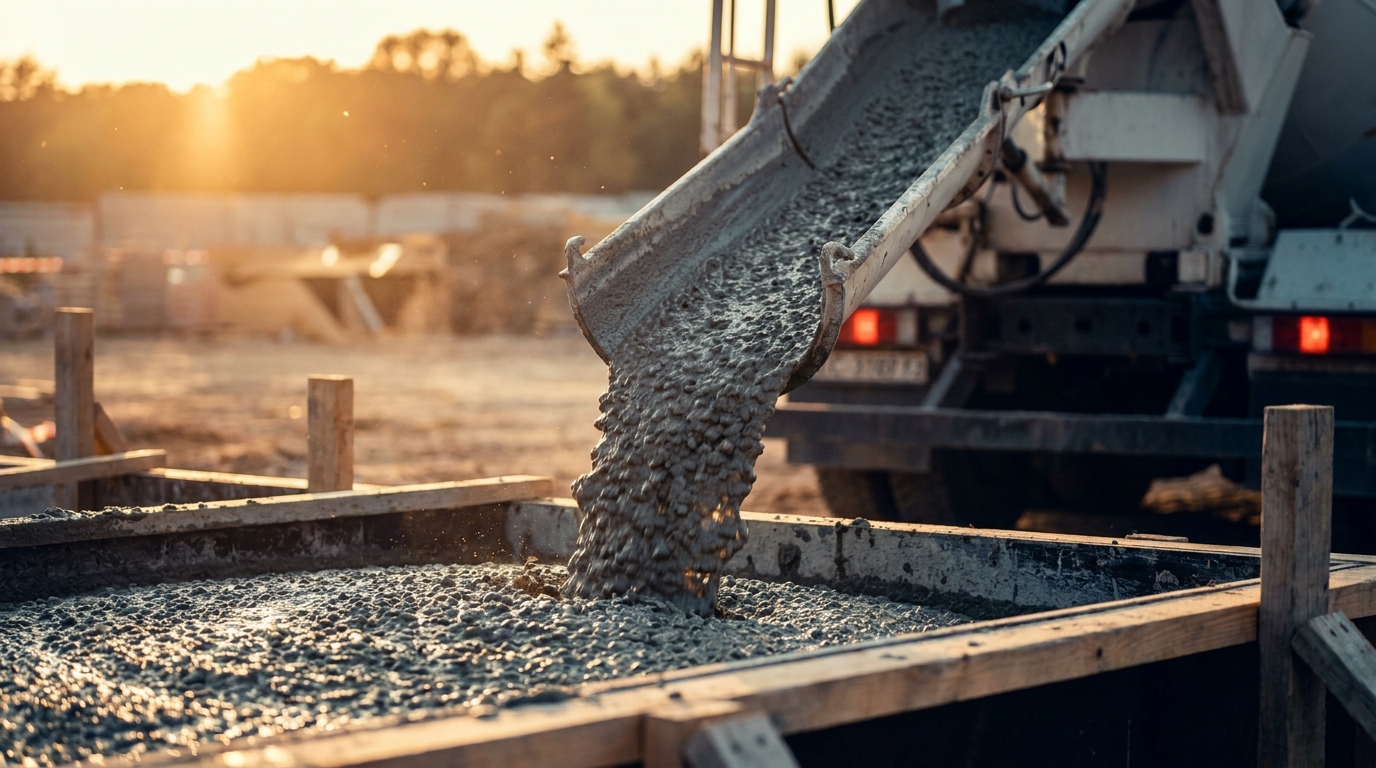
Concrete is the largest single market for sodium gluconate. Added at the batch plant, it functions as a set retarder and a water-reducing plasticizer, classifications that map to ASTM C494/C494M Type B and Type D admixtures. By slowing early hydration it preserves slump and workability on long ready-mix hauls, in hot-weather placements, and in large mass-concrete pours where premature stiffening is the enemy. Because it also lets a mix reach target strength at a lower water-to-cement ratio, it improves the cured density and durability of the concrete.
Typical dosage runs from about 0.1 to 0.2% by weight of cement, adjusted to the cement chemistry, ambient temperature, and the retardation window the placement needs. It is frequently combined with lignosulfonate or polycarboxylate water reducers in a single admixture package.
Cooling and process water treatment
In recirculating cooling water, boilers, and reverse-osmosis systems, sodium gluconate sequesters the calcium, magnesium and iron that otherwise deposit as scale or drive under-deposit corrosion. It performs well at low dosages and, critically for plants under discharge limits, it is readily biodegradable and phosphorus-free, which makes it an attractive substitute for phosphonates and EDTA where effluent chemistry matters. It is often blended with other inhibitors to build a complete cooling-water treatment program.

Industrial, bottle and CIP cleaning
Heavy-duty alkaline cleaners rely on sodium gluconate to keep hardness ions and dissolved metals from redepositing on the surface being cleaned. Its alkaline-stable chelation makes it a standard additive in caustic bottle-washing baths, clean-in-place (CIP) loops for food and beverage lines, and metal degreasing. The payoff is cleaner rinse, less scale buildup in wash tanks, and consistent performance even as the bath loads up with soil.
Metal surface treatment and finishing
Sodium gluconate appears in alkaline derusting baths, aluminum etching, and electroplating formulations, where it complexes iron and other metals to give a uniform, stain-free finish. In these baths its job is to hold dissolved metals in solution so they do not re-plate or streak the workpiece.
Textile processing
In textile scouring, desizing and mercerizing, the additive sequesters iron and hardness in the bath to prevent rust spotting on fabric and to stabilize peroxide bleaching. It supports an even, defect-free preparation before dyeing.
Sodium gluconate vs. other chelating agents
Buyers usually evaluate sodium gluconate against EDTA, phosphonates, and its own parent acid. The trade-offs below explain where each one fits.
| Agent | Strength in high alkalinity | Biodegradable | Typical fit |
| Sodium gluconate | Excellent | Yes | Caustic cleaning, concrete, water treatment |
| EDTA | Falls off at very high pH | Poorly | Broad-range chelation, neutral pH |
| Phosphonates | Good | Limited; adds phosphorus | Scale control where P is allowed |
| Gluconic acid | Good (as the acid) | Yes | Liquid systems, lower pH adjustment |
Gluconic acid and sodium gluconate carry the same active chemistry; the salt is the dry, easy-to-handle, pH-neutral form most buyers prefer for solid blends and dry-batched concrete admixtures.
Grades, packaging and specifications
| Grade | Common use | Notes |
| Technical / industrial | Concrete, water treatment, cleaning, metal finishing | Most common bulk grade; specify assay and particle size |
| Food grade (E576) | Food-contact cleaning, sequestrant uses | Meets food-additive specifications |
Sodium gluconate is typically supplied as a powder or granule in 25 kg bags and supersacks (500 to 1,000 kg). When you request a quote, the details that drive price and lead time are grade, assay, particle size, packaging, and whether you need a per-lot Certificate of Analysis (CoA) and Safety Data Sheet (SDS).
Sourcing sodium gluconate in bulk
RawSource is a sourcing partner, not a warehouse. We qualify and procure sodium gluconate against your specification, with domestic stock access on common technical grades and global sourcing for larger or tightly specified volumes. For recurring concrete-admixture, water-treatment or cleaning programs we can set up vendor-managed inventory (VMI) so material arrives on your schedule rather than sitting on a speculative shelf. Every lot ships with the CoA and SDS your QA team needs.
Send us the grade, volume and packaging you run, and we will source it. Request a bulk quote or browse the sodium gluconate product page for current specifications.
Frequently asked questions
What is sodium gluconate used for?
Its largest uses are as a concrete set-retarding and water-reducing admixture, a scale and corrosion inhibitor in cooling and process water, and a chelating agent in heavy-duty alkaline cleaners. It is also used in metal surface treatment and textile processing.
Is sodium gluconate safe and biodegradable?
Yes. It is readily biodegradable and non-corrosive, and approved as the food additive E576, with a low-toxicity profile for its approved uses. Those properties are a major reason formulators choose it over phosphonates or EDTA where effluent and worker-safety limits apply. Always follow the SDS for handling.
How much sodium gluconate is used in concrete?
Typical dosage is about 0.1 to 0.2% by weight of cement, tuned to the cement, temperature and the set-retardation window required. It is classified as an ASTM C494 Type B and Type D admixture.
What is the difference between sodium gluconate and gluconic acid?
They share the same active chemistry. Gluconic acid is the liquid acid form; sodium gluconate is its dry, pH-neutral sodium salt, which is easier to handle, store and dry-blend, especially in powdered concrete-admixture packages.
Where can I buy sodium gluconate in bulk?
See the Sodium Gluconate product page. Send your grade, volume and packaging requirements through our quote request and we will source it to spec.
Sources and methodology
Identity and physical data are drawn from the U.S. National Library of Medicine PubChem record for sodium gluconate. Concrete-admixture classifications reference ASTM C494/C494M. The E576 food-additive designation is maintained in the EU food-additive framework. Dosage ranges are typical industry figures and should be confirmed by trial against your own mix design and SDS.
Search 1,300+ industrial chemicals by name or CAS, or send us your spec — we quote by the drum, tote, or container.
Browse the Chemical Index → Request a Quote