
SODIUM HYDROXIDE- ▸ Neutralization: Neutralizes acids and adjusts pH.
- ▸ Saponification: Hydrolyzes fats in soap manufacture.
- ▸ Pulp & paper: Pulping and processing aid.
- ▸ Metal/textile: Metal cleaning and textile mercerizing.
- ▸ Water treatment: pH adjustment in water treatment.
A grade-specific Safety Data Sheet (SDS) — with the complete hazard classification, handling precautions, and transport information — is supplied with every shipment and available on request. Confirm all safety and regulatory details against the SDS for your specific grade.
Request SDS →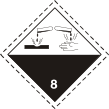
Transport classification per the UN Model Regulations / 49 CFR 172.101 Hazardous Materials Table. Confirm against the grade-specific SDS (Section 14) before shipping.
Caustic soda (sodium hydroxide, NaOH, CAS 1310-73-2) is a strong alkali supplied as beads, flakes, pearls, and 50% liquid solution. It is one of the highest-volume industrial base chemicals, used across pulp & paper, soaps & detergents, water and wastewater treatment, alumina refining, and chemical processing. As a strong base, it neutralizes acids, adjusts pH, saponifies fats and oils, and dissolves a wide range of organic and inorganic materials. RawSource supplies it in bulk, with form, grade, and concentration matched to the application.
Forms and grades of caustic soda
Caustic soda is offered in several physical forms. Solid forms (beads, flakes, pearls) are easy to store, weigh out, and dissolve on demand; the 50% liquid solution is the workhorse for high-volume continuous processes that meter caustic directly into a system. The right choice depends on usage volume, dosing method, and storage and freight constraints.
| Form | Typical NaOH content | Best use |
|---|---|---|
| Beads / prills | ~99% (anhydrous) | Fast-dissolving solid for batch make-up, lab and small-to-mid plant dosing; low caking, easy to handle. |
| Flakes | ~98–99% (anhydrous) | General-purpose solid caustic for saponification, cleaning compounds, and on-site solution preparation. |
| Pearls / micropearls | ~99% (anhydrous) | Free-flowing solid similar to beads; favored where dust control and consistent dissolution matter. |
| 50% liquid solution | 50% NaOH in water | Bulk continuous dosing in water treatment, pulp & paper, and chemical processing; meters directly, no dissolving step. |
Applications by sector
Pulp & paper
Caustic soda is central to kraft pulping, where it helps separate lignin from cellulose fibers, and to bleaching, deinking of recycled fiber, and pH control across the mill. It is one of the largest end uses for NaOH worldwide.
Soaps & detergents
In soap making, NaOH saponifies fats and oils into hard soap and glycerin. It is also used to manufacture surfactants, builders, and the alkaline cleaning compounds that go into industrial and institutional detergents.
Water & wastewater treatment
Caustic soda raises pH and adds alkalinity to control corrosion and stabilize treatment chemistry. It precipitates dissolved heavy metals as insoluble hydroxides for removal, neutralizes acidic waste streams, and supports phosphate and softening processes. The 50% liquid is typically dosed in these continuous applications.
Alumina & the Bayer process
Alumina refiners use concentrated caustic soda to digest bauxite ore in the Bayer process, dissolving aluminum hydroxide so it can be separated from impurities and recovered. This is one of the single largest consuming sectors for NaOH.
Chemical manufacturing & biodiesel
NaOH is a feedstock and reagent for sodium salts (hypochlorite, phosphates, aluminate), dyes, and many organic intermediates. In biodiesel production it acts as a transesterification catalyst, converting fats and oils into fatty acid methyl esters.
Food processing (E524 — informational)
Food-grade sodium hydroxide (designated E524) is used in applications such as peeling fruits and vegetables, curing olives, making pretzels and hominy, and cleaning processing equipment. Food-contact use requires food-grade material and appropriate certification; specify this in your RFQ.
Textiles
In textile processing, caustic soda is used for mercerizing cotton to improve strength, luster, and dye uptake, as well as for scouring and preparation steps ahead of dyeing.
Drain & industrial cleaning
Caustic soda dissolves grease, fats, proteins, and organic deposits, which makes it a core ingredient in heavy-duty drain openers, oven and fryer cleaners, and clean-in-place (CIP) systems for food, beverage, and process equipment.
Handling and safety
Caustic soda is highly corrosive and causes severe skin and eye burns on contact; eye exposure can cause permanent damage. Dissolving solid caustic or diluting the 50% solution is strongly exothermic — it releases enough heat to boil and spatter the liquid. Always add caustic slowly to water, never water to caustic, and use cool water with adequate mixing. Solid caustic is hygroscopic and reacts with aluminum, zinc, and tin to generate flammable hydrogen gas. Personnel must wear chemical-resistant gloves, goggles or a face shield, and protective clothing, and work areas need eyewash and safety-shower access. Store in tightly closed containers away from acids and incompatible metals. Always review the current Safety Data Sheet (SDS) before handling, and follow all applicable transport, storage, and disposal requirements.
Bulk supply & RFQ
RawSource supplies caustic soda in industrial volumes. Beads, flakes, and pearls ship in bags and super-sacks; 50% liquid solution ships in totes and bulk tankers. To get an accurate quote, include the form (beads, flakes, pearls, or 50% liquid), the grade (for example, membrane grade or food grade), the concentration, your volume and delivery location, and any Certificate of Analysis (CoA) or specification requirements. For background on how this chemical is produced, see our explainer: How is sodium hydroxide made?
Regulatory & registration requirements
- TSCA (US):
- REACH (EU):
- EC number: 215-185-5
Source: EPA TSCA Inventory (July 2025 release) · ECHA CHEM — retrieved 2026-07-12
Solutions Using This Product
Process-solution guides on this site that specify this chemistry:
- Mercerizing Wetting Agents for Full Caustic Penetration (Textiles)
- Stainless Steel Passivation Chemicals (Industrial Manufacturing)
- Black Oxide Finishing Chemicals (Industrial Manufacturing)
Frequently Asked Questions
Are caustic soda, sodium hydroxide, and lye the same thing?
Yes. “Caustic soda,” “sodium hydroxide,” and “lye” all refer to the same compound, NaOH (CAS 1310-73-2). “Sodium hydroxide” is the chemical name, “caustic soda” is the common industrial trade name, and “lye” is a traditional term most often used in soap making and food contexts. They are interchangeable names for one material.
What forms is caustic soda available in?
It is supplied as solid beads (prills), flakes, and pearls — all roughly 98–99% NaOH — and as a 50% liquid solution in water. Solid forms are convenient for batch make-up and storage; the liquid is preferred for high-volume continuous dosing.
Beads vs. flakes vs. liquid — which should I order?
Beads and pearls dissolve quickly and produce minimal dust, which suits batch dosing and cleaner handling. Flakes are a versatile, economical solid for saponification and on-site solution prep. The 50% liquid eliminates the dissolving step entirely and is the best fit for large continuous processes such as water treatment and pulp & paper. Choose based on usage volume, dosing method, and storage capability.
Is caustic soda dangerous?
Yes — it is highly corrosive and causes severe burns to skin and eyes, and dissolving or diluting it releases significant heat. It must be handled with proper PPE (chemical-resistant gloves, eye and face protection, protective clothing), kept away from acids and reactive metals, and used only after reviewing the SDS. When handled correctly with the right controls, it is used safely at industrial scale every day.
What is membrane-grade caustic soda?
Membrane grade is high-purity caustic soda produced by the modern membrane chlor-alkali process. It has very low mercury and low chloride content compared with older diaphragm- and mercury-cell production and has become the industry standard where purity matters. Specify membrane grade when impurity limits are critical, and confirm the exact specification on the CoA.
What is caustic soda used for?
Major uses include pulp & paper (kraft pulping and bleaching), soaps and detergents (saponification and alkaline cleaners), water and wastewater treatment (pH control, alkalinity, heavy-metal precipitation), alumina refining (the Bayer process), chemical manufacturing and biodiesel, textile mercerizing, and heavy-duty cleaning and drain products.
How is caustic soda supplied in bulk?
Solid forms (beads, flakes, pearls) ship in bags and super-sacks; the 50% liquid solution ships in totes and bulk tankers. Pricing depends on form, grade, concentration, volume, and freight. Submit an RFQ with those details plus your delivery location and any CoA requirements for a current quote.
RANK_MATH_TITLE: Caustic Soda (Sodium Hydroxide, NaOH) Supplier | RawSource RANK_MATH_DESCRIPTION: Bulk caustic soda (sodium hydroxide, NaOH, CAS 1310-73-2) as beads, flakes, pearls & 50% liquid for pulp, water treatment & soaps. RFQ.Sodium Hydroxide (Caustic Soda Beads) — frequently asked
What is the molecular weight of Caustic Soda Beads?
The molecular weight of Caustic Soda Beads is 39.997 g/mol (PubChem).
What is the molecular formula of Caustic Soda Beads?
The molecular formula of Caustic Soda Beads is HNaO.
What is the CAS number of Caustic Soda Beads?
The CAS number of Caustic Soda Beads is 1310-73-2.
What is Caustic Soda Beads used for?
Caustic Soda Beads is classified for pH Adjustment, with catalog industries Agriculture, Beauty & Personal Care, Food & Beverage, HI&I Cleaning, Industrial Manufacturing, Mining, Oil & Gas, Textiles and Water Treatment.
What is the IUPAC name of Caustic Soda Beads?
The IUPAC name of Caustic Soda Beads is sodium hydroxide.
What other names is Caustic Soda Beads known by?
Caustic Soda Beads is also listed as SODIUM HYDROXIDE, Caustic soda, Sodium hydrate, Aetznatron, Soda lye and White caustic.