
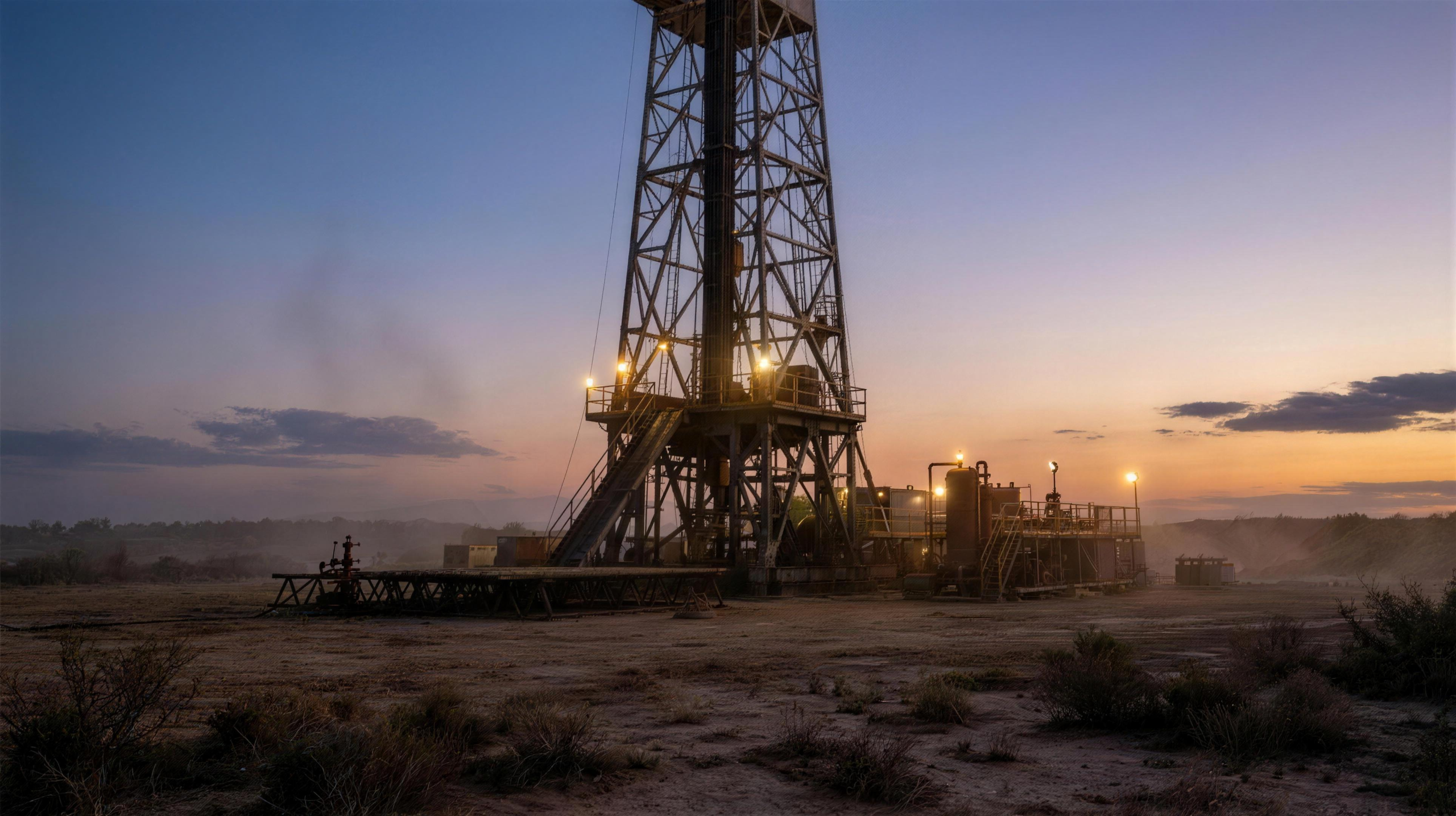
Oilfield chemical programs are the families of specialty chemicals injected at every stage of a well’s life — drilling, cementing, production, stimulation, and enhanced oil recovery — to keep fluids flowing, protect steel, and lift more hydrocarbons out of the reservoir. No single product covers the whole well. Each operation has its own failure modes (lost circulation, sour gas, scale, emulsions, corrosion), and each is met with a specific class of chemistry. This page is the working map: it walks operation by operation, names the representative chemistries, and explains the problem each one solves.
On this page
- Drilling fluid chemicals
- Cementing and completion chemicals
- Production chemicals
- Stimulation: acidizing and fracturing
- Enhanced oil recovery (EOR)
- The oilfield chemical program at a glance
- Frequently asked questions
- Source oilfield chemicals in bulk
Drilling fluid chemicals
Drilling fluid — the mud — carries cuttings to surface, cools and lubricates the bit, balances formation pressure, and seals the borehole wall. A water-based mud is built from a handful of additive classes, each tuning one property:
- Viscosifiers build the gel structure that suspends cuttings and keeps weight material from sagging. Bentonite clay is the workhorse; biopolymers such as xanthan gum and cellulosics deliver shear-thinning rheology that thickens at rest and thins under the bit. Carboxymethyl Cellulose doubles as a viscosifier and a filtration-control polymer.
- Weighting agents raise mud density to control formation pressure and prevent blowouts. Barium Sulfate (barite) is the standard at roughly 4.2 specific gravity; hematite and ilmenite are used where higher density or lower abrasivity is needed.
- Shale inhibitors stop reactive clays from swelling and sloughing into the hole. Potassium Chloride (KCl) is the classic inhibitor — the potassium ion fixes the clay lattice — and is often paired with polymer or amine encapsulators.
- pH and alkalinity control keeps the mud in the window where polymers stay stable and corrosion is minimized. Caustics such as Potassium Hydroxide and sodium hydroxide raise and buffer pH.
- Deflocculants and thinners reduce gel strength and plastic viscosity in clay-heavy muds. Lignosulfonates — including Calcium Lignosulfonate — neutralize the charge on clay platelets so the mud pumps with less hydraulic horsepower.
- Lubricants and filtration-control agents cut torque and drag and build a thin, low-permeability filter cake on the wall.
Get the mud chemistry wrong and the consequences are immediate: stuck pipe, lost circulation, washouts, and non-productive time measured in tens of thousands of dollars per day.
Cementing and completion chemicals
After a hole section is drilled, casing is run and cement is pumped down and up the annulus to bond the pipe to the formation and isolate zones. Cement slurry rarely goes downhole neat — additives tune set time and durability for the temperature and pressure at depth:
- Retarders delay set so the slurry stays pumpable long enough to place at depth, where heat would otherwise flash-set it. Lignosulfonates and sugar-acid derivatives are common retarder chemistries.
- Accelerators do the opposite in shallow, cool zones — calcium chloride and sodium chloride speed set and build early compressive strength so the rig can move on.
- Fluid-loss additives keep water from bleeding out of the slurry into the formation, which would dehydrate the cement and ruin zonal isolation. Cellulosic and polyacrylamide polymers control this.
- Spacers and surfactants are pumped ahead of the cement to push the oily drilling mud out of the annulus and water-wet the casing and rock so the cement bonds. Surfactant packages flip the surface from oil-wet to water-wet.
A failed cement job is one of the most expensive problems in well construction — remediation means squeeze cementing or a workover, so the additive chemistry that protects the bond pays for itself many times over.
Production chemicals
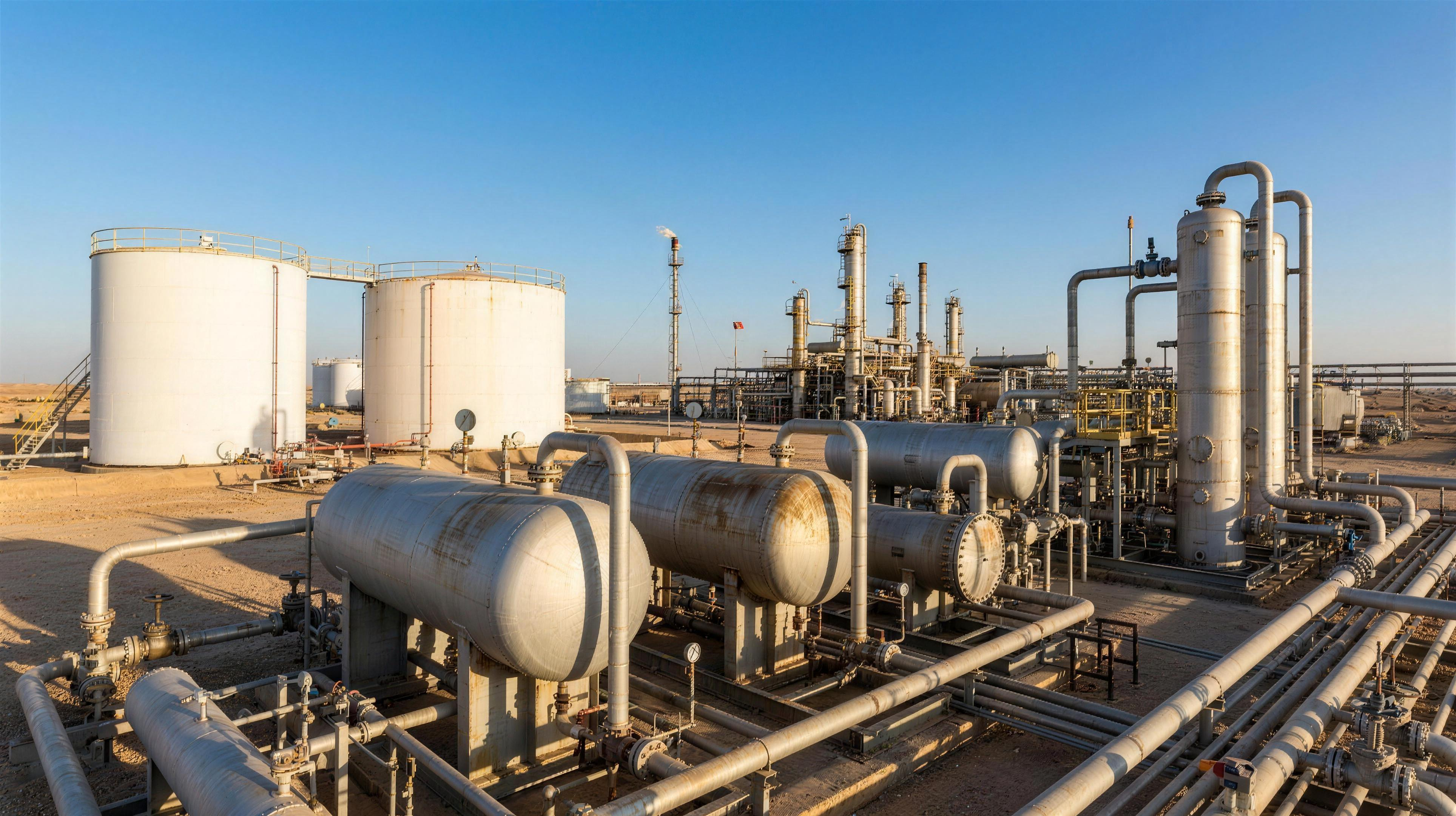
Once a well is producing, the chemical program shifts from building the well to protecting it. Produced fluids are corrosive, scale-forming, often sour, and arrive as a stubborn oil-water emulsion. Production chemicals — usually injected continuously downhole or at the wellhead — keep the system clean and the steel intact:
- Corrosion inhibitors form a protective film on tubing and pipeline steel to defend against CO2 (“sweet”) and H2S (“sour”) corrosion. Filming amines, imidazolines, and quaternary ammonium compounds are the core chemistries. For the full picture, see our deep dive on corrosion inhibitors in the oil and gas industry.
- Scale inhibitors stop calcium carbonate, calcium sulfate, and barium sulfate scale from plugging perforations, tubing, and surface lines. Phosphonates and polyacrylates work at sub-stoichiometric “threshold” doses, interfering with crystal growth rather than dissolving deposits after the fact.
- Demulsifiers break the water-in-oil emulsion that forms as fluids are produced, so crude and brine separate cleanly in the separator and the oil meets pipeline spec.
- Paraffin and asphaltene control keeps heavy organics from depositing as temperature and pressure drop. Pour-point depressants and dispersants handle paraffin wax; solvents such as d-limonene dissolve existing deposits — see our note on paraffin and asphaltene removal.
- Biocides control sulfate-reducing bacteria that sour reservoirs, foul equipment, and drive microbially influenced corrosion. Glutaraldehyde and quaternary ammonium biocides are the mainstays. These are hazardous, regulated products and are handled accordingly.
- H2S scavengers remove hydrogen sulfide from gas and liquid streams to meet pipeline sulfur limits and protect personnel from a lethal gas. MEA-triazine is the dominant liquid scavenger; the broader removal step is covered in our gas sweetening overview.
Stimulation: acidizing and fracturing
When natural flow falls short, the formation is stimulated to open or restore flow paths near the wellbore. Two chemical-heavy techniques dominate.
Matrix acidizing pumps acid below fracture pressure to dissolve the minerals choking the rock pores. Hydrochloric Acid dissolves carbonate (limestone and dolomite) reservoirs; in sandstone, a “mud acid” blend of HCl and Hydrofluoric Acid attacks the silicate clays and feldspars that plug pore throats. Hydrofluoric acid is acutely toxic and demands specialized handling. Because raw acid would eat the tubing as fast as the formation, every acid job runs with an acidizing corrosion inhibitor to protect the steel — propargyl alcohol is a benchmark inhibitor for this duty, as detailed in our piece on propargyl alcohol in acidizing.
Hydraulic fracturing pumps fluid at high rate and pressure to crack the rock and prop the fractures open with sand. The chemistry that makes it work:
- Friction reducers — high-molecular-weight Polyacrylamide (HPAM) — slash the pumping pressure needed to move “slickwater” frac fluid down the casing at rate.
- Gelling agents — Guar Gum and hydroxypropyl guar — build viscosity in crosslinked gels so the fluid carries more proppant deeper into the fracture.
- Surfactants reduce interfacial tension and help the spent fluid flow back out of the formation rather than blocking it.
Enhanced oil recovery (EOR)
Primary and secondary (waterflood) recovery typically leave more than half the oil in the ground. Chemical EOR targets that residual oil by changing how the injected fluid moves and how oil releases from the rock:
- Polymer flooding adds high-molecular-weight Polyacrylamide — usually partially hydrolyzed polyacrylamide (HPAM) — to thicken the injection water. The more viscous flood sweeps a larger fraction of the reservoir instead of fingering through to the producer.
- Surfactant flooding drops the interfacial tension between water and oil by orders of magnitude, freeing oil trapped in pore throats by capillary forces.
- Alkali — sodium hydroxide or sodium carbonate — reacts with acids in the crude to generate surfactant in situ, lowers surfactant adsorption on the rock, and stretches the chemical budget.
Run together as an ASP (alkali-surfactant-polymer) flood, these three chemistries combine the viscosity, interfacial, and emulsifying mechanisms to recover oil that waterflood alone leaves behind.
The oilfield chemical program at a glance
| Operation | Chemical class | Representative chemistry | Problem it solves |
|---|---|---|---|
| Drilling | Viscosifier | Bentonite, xanthan gum, CMC | Suspends and lifts cuttings |
| Drilling | Weighting agent | Barium sulfate (barite) | Controls formation pressure |
| Drilling | Shale inhibitor | Potassium chloride | Stops clay swelling and sloughing |
| Drilling | Alkalinity / thinner | Potassium hydroxide, lignosulfonate | Holds pH, reduces gel strength |
| Cementing | Retarder / accelerator | Lignosulfonate / calcium chloride | Tunes set time at depth |
| Cementing | Fluid-loss / spacer | Cellulosics, surfactant packages | Protects the cement bond and zonal isolation |
| Production | Corrosion inhibitor | Imidazolines, amines, quats | Defends steel from CO2/H2S |
| Production | Scale inhibitor | Phosphonates, polyacrylates | Prevents mineral scale deposition |
| Production | Demulsifier | Oxyalkylated resins | Separates oil from produced water |
| Production | Biocide | Glutaraldehyde, quats | Controls SRB and reservoir souring |
| Production | H2S scavenger | MEA-triazine | Removes hydrogen sulfide |
| Stimulation | Acid system | HCl, HCl/HF mud acid | Dissolves carbonate / silicate damage |
| Stimulation | Friction reducer / gel | Polyacrylamide, guar gum | Reduces pump pressure, carries proppant |
| EOR | Polymer / surfactant / alkali | HPAM, surfactant, NaOH | Improves sweep and frees trapped oil |
Frequently asked questions
What is the difference between drilling chemicals and production chemicals?
Drilling chemicals build and condition the mud while the well is being drilled — viscosifiers, weighting agents, shale inhibitors, and thinners. Production chemicals protect the well and its equipment once it is flowing — corrosion inhibitors, scale inhibitors, demulsifiers, biocides, and H2S scavengers. They are different programs solving different failure modes.
Which oilfield chemicals are hazardous to handle?
Several are. Hydrofluoric acid is acutely toxic and corrosive; concentrated hydrochloric acid and caustics such as potassium hydroxide and sodium hydroxide are corrosive; biocides like glutaraldehyde are toxic and sensitizing; and produced H2S is lethal at low concentrations. Each requires the appropriate engineering controls, PPE, and handling per its safety data sheet.
What chemicals are used in hydraulic fracturing?
Slickwater fracs rely on polyacrylamide friction reducers; gelled fracs use guar gum or hydroxypropyl guar as the gelling agent. Surfactants aid flowback, while acid (typically HCl) is often pumped ahead to clear near-wellbore carbonate. Biocides and scale inhibitors are commonly added to the fluid as well.
What does an H2S scavenger do?
It chemically removes hydrogen sulfide from gas and liquid streams so the product meets pipeline sulfur limits and is safe to handle. MEA-triazine is the most widely used liquid scavenger, reacting irreversibly with H2S.
Does RawSource only supply one stage of the program?
Source oilfield chemicals in bulk
Send us your spec — chemistry, grade, and volume — and we will return a quote sourced to your requirement. Request a quote.
This article is a general industry overview for professional and procurement audiences and is not engineering, safety, or regulatory advice. Many oilfield chemicals — including acids, caustics, and biocides — are hazardous; always consult the current Safety Data Sheet (SDS) and confirm suitability, classification, and safe handling for your application and jurisdiction before use.
Search 1,300+ industrial chemicals by name or CAS, or send us your spec — we quote by the drum, tote, or container.
Browse the Chemical Index → Request a Quote