
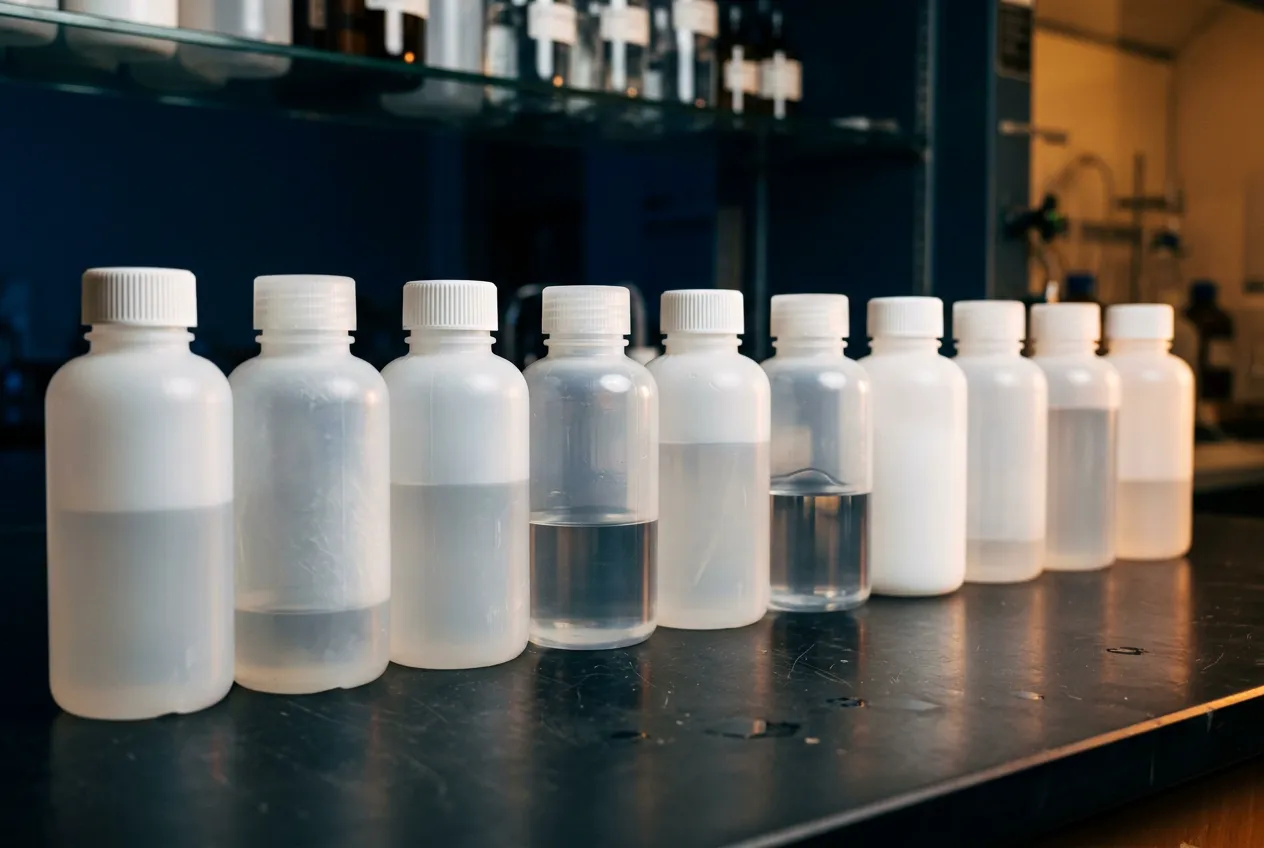
A process spec lands on the purchasing desk reading only “hydrofluoric acid.” That single phrase covers at least four different products: 49% aqueous, 70% aqueous, anhydrous HF, and electronic grade, each with a different hazard class, a different container, a different price, and a different right job. Order the wrong one and you either bought something that will not do the work or something far more dangerous than the application needed.
The short version: hydrofluoric acid (CAS 7664-39-3) is bought by both concentration and grade. The aqueous workhorse is 49%; 70% is more aggressive; anhydrous HF (AHF) is effectively 100% and ships as a liquefied gas. By purity, the ladder runs technical/industrial, reagent/ACS, and electronic (semiconductor) grade. Match both axes to the application, and remember that a lower concentration, or ammonium bifluoride, is often the safer way to do the same job.
Concentration: 49% vs 70% vs anhydrous
This is the axis buyers get wrong most often, partly because HF behaves counterintuitively.
| Form | Concentration | Typical density (20 °C) | Boiling point | Notes |
|---|---|---|---|---|
| Aqueous, standard | 49% (48–52%) | ~1.17 g/cm³ | ~105 °C | Industrial workhorse; lower vapor pressure; room-temperature, unpressurized storage |
| Aqueous, high-strength | 70% | ~1.23 g/cm³ | ~65 °C | More aggressive; boils lower than 49% (above the HF–water azeotrope); fumes more |
| Anhydrous (AHF) | ~100% | liquefied gas | ~19.5 °C | A liquefied gas (DOT UN1052); a superacid; steel cylinders; feedstock chemistry |
Two facts surprise people and are worth designing around. First, HF solutions above roughly 48% fume spontaneously in air, which is one reason 49% is the practical industrial standard. Second, 70% boils lower than 49% (about 65 °C versus 105 °C) because it sits above the maximum-boiling HF–water azeotrope. These behaviors come straight from the concentration-specific properties, not from intuition. Background on the molecule is in what is hydrofluoric acid.
Grade: technical, reagent, and electronic
Purity is the second axis, and it matters most in electronics.
- Technical / industrial grade is the right choice for metal pickling, glass etching and frosting, and oil-well acidizing, where trace metal impurities do not matter.
- Reagent / ACS grade is for analytical and laboratory use, to defined purity specifications.
- Electronic / semiconductor grade is purified to very low alkali and heavy-metal ion content, because in silicon-wafer processing those impurities wreck device yield. Semiconductor etching uses dilute HF (often 1 to 49%) or buffered oxide etch (BOE), an ammonium fluoride and HF blend (commonly NH4F:HF 5:1 to 10:1) for a controlled, buffered etch rate.
Anhydrous versus aqueous: two different products
Anhydrous HF and aqueous HF are not interchangeable. AHF (PubChem CID 14917, boiling point ~19.5 °C per the NIOSH pocket guide) is a liquefied gas shipped under UN1052 in steel cylinders, used as a superacid and a feedstock for fluorocarbons and alkylation. Aqueous HF ships under UN1790 in HDPE or lined totes and is what you use for etching, pickling, and acidizing. If a spec calls for one, the other will not substitute.
How to choose, and when to step down the hazard
Match concentration and grade to the job: 49% technical for most etching, pickling, and acidizing; 70% only where the application genuinely needs the higher strength; electronic grade only for microelectronics; AHF only for the synthesis chemistry that requires it.
The honest position is to use the least hazardous option that does the work. For many lighter glass-frosting, metal-brightening, and cleaning jobs, ammonium bifluoride (NH4HF2, a solid that releases HF gradually in water) does the job with far easier shipping and storage, as covered in ammonium bifluoride vs hydrofluoric acid. A distributor worth using will tell you when you do not need the stronger acid.
Buying hydrofluoric acid to specification
See the Hydrofluoric Acid product page. We also supply ammonium bifluoride where a lower-hazard fluoride source fits. Tell us your application, the grade and concentration you need, and your materials of construction, and we will confirm the right product and packaging.
Frequently asked questions
What is the difference between 49% and 70% hydrofluoric acid?
49% is the industrial standard: lower vapor pressure and easier room-temperature storage. 70% is more aggressive, fumes more, and counterintuitively boils lower (around 65 °C versus 105 °C) because it sits above the HF–water azeotrope. Use 49% unless the application specifically needs higher strength.
What concentration of hydrofluoric acid should I buy?
For most etching, pickling, and acidizing, 49% technical grade. Use 70% only where required, electronic grade only for semiconductor work, and anhydrous HF only for synthesis chemistry that calls for it. Confirm the concentration on the CoA.
What is electronic-grade hydrofluoric acid?
HF purified to very low alkali and heavy-metal ion content for semiconductor and microelectronics use, where trace impurities harm device yield. It is often used dilute or as buffered oxide etch (an ammonium fluoride and HF blend).
Is anhydrous HF the same as aqueous hydrofluoric acid?
No. Anhydrous HF is effectively 100% HF, a liquefied gas shipped in steel cylinders under UN1052 and used as a superacid and feedstock. Aqueous HF is a water solution shipped under UN1790 for etching, pickling, and acidizing. They are different products.
Could ammonium bifluoride replace hydrofluoric acid?
For many lighter etching, frosting, and metal-cleaning jobs, yes. Ammonium bifluoride is a solid that releases HF gradually in water, with easier shipping and storage and lower acute hazard. For aggressive etching, deep pickling, or semiconductor work, HF is still required.
Editorial note. This article is general technical and procurement guidance for industrial and professional buyers of hydrofluoric acid. Hydrofluoric acid is acutely hazardous: it can be fatal on skin contact, inhalation, or ingestion, causes severe burns, and can cause systemic toxicity even from dilute solutions. Nothing here is medical, safety, or treatment advice. Hazard, transport, and property references (PubChem, NIOSH, supplier SDS) are sourced facts to verify and apply through your own SDS, EHS program, and qualified professionals. HF is for industrial and professional use only by trained personnel with appropriate engineering controls and medical support. Concentration and property figures are typical values; the Certificate of Analysis governs the material you buy. Always consult the current Safety Data Sheet (SDS) before handling. RawSource makes no warranty, express or implied, and assumes no liability for use of this information.
Search 1,300+ industrial chemicals by name or CAS, or send us your spec — we quote by the drum, tote, or container.
Browse the Chemical Index → Request a Quote