
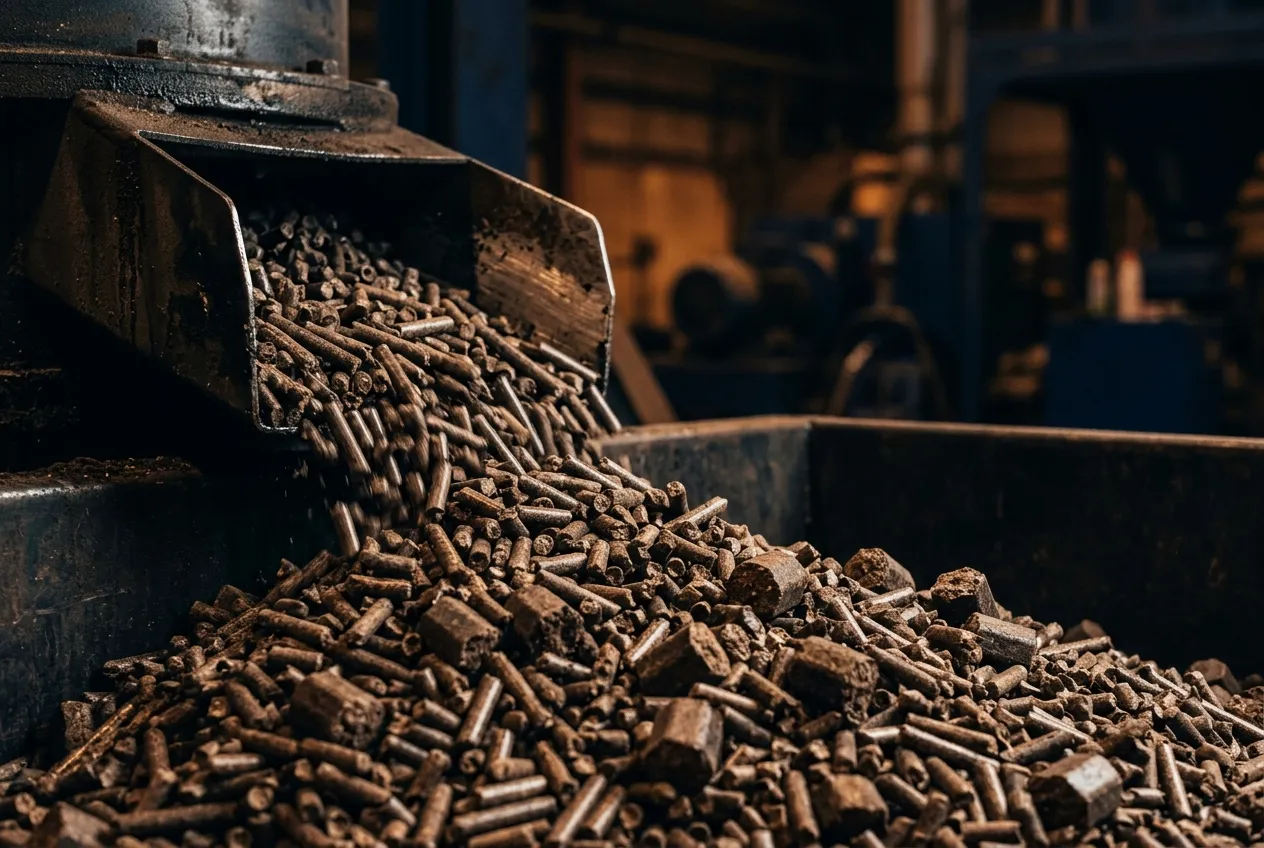
A pile of fines is a problem looking for a binder. Iron-ore and metal-powder fines are too small to charge to a furnace, coal and coke fines are dusty and hard to handle, animal-feed pellets crumble back to dust in the bag, and a foundry mold needs green strength to hold its shape. The cheap, wood-derived binder that fixes all of these is lignosulfonate: mix it in, press or pelletize, and the fines hold together as strong, handleable pellets and briquettes.
The short version: lignosulfonate is a natural, wood-derived binder used to agglomerate powders and granular materials into strong pellets and briquettes. It binds iron ore and lead and zinc powders, pulverized coal and coke, animal feed, foundry (casting) sand, bricks, ceramics, and floor tiles, giving high green and dry strength, good stability, lubrication, and clean mold release. It has low toxicity per its SDS, and as a feed pellet binder it is a recognized additive.
The problem: fines that won’t hold together
Fine powders have no inherent strength; pressed or pelletized dry, they crumble and dust. Lignosulfonate (CAS 8061-52-7, PubChem) is a wood-derived polymer that coats the particles and, on drying, sets into a binding film that glues them into a cohesive pellet or briquette. It also lubricates the press, so material flows and releases cleanly from the die or mold. The result is a green pellet strong enough to handle and a dried product strong enough to ship and charge.
What it binds
| Material | Why lignosulfonate suits it |
|---|---|
| Iron ore, lead and zinc powders | Binds metal fines into chargeable pellets and briquettes with high strength |
| Pulverized coal and coke | Briquettes dusty fines into handleable, low-dust fuel and reductant |
| Animal feed | Pellet binder that holds feed pellets together and cuts fines |
| Foundry (casting) sand | Green and dry strength and clean mold release for cast iron and steel molds and cores |
| Bricks, ceramics, floor tiles | Binder and plasticizer for pressed and extruded ceramic bodies |
For animal feed, lignin sulfonates are a recognized pellet binder under 21 CFR 573.600, used within the limits set there.
Why it works as a binder
Three properties make lignosulfonate a good agglomeration binder. It is a polymer, so a thin coating bridges many particles into a network. It dries to a firm but slightly flexible film, so the pellet has strength without being brittle. And it is surface-active and lubricating, so it wets the powder, presses cleanly, and releases from the die. Dose is matched to the material and the strength target, typically a small percentage of the mix, and confirmed by trial.
Calcium versus sodium, and grade
Calcium lignosulfonate is the common, economical binder grade. Sodium lignosulfonate and more purified grades are chosen where higher solubility or lower-ash, lower-sugar binders are wanted. The lignosulfonate content and ash of the grade affect binding strength and residue, so the grade is matched to the product, especially for feed and for materials that are later fired. The dispersant side of the same chemistry is in lignosulfonate as an industrial dispersant.
Buying lignosulfonate as a binder
See the calcium lignosulfonate product page. Tell us the material you are binding and your strength and process needs, and request a sample to trial on your own pellets or briquettes. Its concrete use is in lignosulfonate concrete water reducer.
Frequently asked questions
What is lignosulfonate used for as a binder?
It binds powders and granular materials into strong pellets and briquettes: iron ore and metal fines, coal and coke, animal feed, foundry sand, bricks, and ceramics. It gives green and dry strength, stability, lubrication, and clean mold release.
Is lignosulfonate a good animal feed pellet binder?
Yes. It is a recognized feed pellet binder, used to hold feed pellets together and cut fines, within the limits of the applicable feed-additive regulation. Calcium lignosulfonate is the common grade; confirm the grade and dose for your feed and regulation.
Can lignosulfonate briquette coal and ore fines?
Yes. It binds pulverized coal and coke into handleable, low-dust briquettes and metal-ore and metal-powder fines into chargeable pellets and briquettes with high strength. The dose and any later firing are matched to the material.
How much lignosulfonate is used as a binder?
Typically a small percentage of the mix, set to the strength target and the material, and confirmed by trial. Higher lignosulfonate content and lower ash generally give stronger binding; match the grade to the product.
Is lignosulfonate used in foundry sand?
Yes. It provides green and dry strength and clean mold release in casting sand for cast iron and steel molds and cores, holding the mold’s shape while allowing clean release of the casting.
Editorial note. This article is general technical guidance for industrial, feed, foundry, and ceramics professionals. Binder dose and performance guidance is general and must be validated on your own material and process; the Certificate of Analysis governs the grade you buy. For animal-feed use, confirm the grade and dose against the applicable feed-additive regulation (for example 21 CFR 573.600). Lignosulfonate is a wood-derived material not classified as hazardous or flammable per its SDS; it can irritate skin and eyes, so use appropriate PPE. Always consult the current Safety Data Sheet (SDS) before handling. RawSource makes no warranty, express or implied, and assumes no liability for use of this information.
Search 1,300+ industrial chemicals by name or CAS, or send us your spec — we quote by the drum, tote, or container.
Browse the Chemical Index → Request a Quote