
What is hydrofluoric acid (HF) and what is it used for?
Hydrofluoric acid (HF, CAS 7664-39-3) is a specialty mineral acid. It is used for glass and quartz etching and frosting, semiconductor wet etching, stainless-steel pickling and descaling, as a fluorinating agent and feedstock for fluorochemicals, and in exotic-metal and uranium processing.
- ▸ Glass/quartz etching: frosting and surface etching
- ▸ Semiconductor: wet etchant in device fabrication
- ▸ Metal pickling: stainless-steel descaling
- ▸ Fluorochemicals: fluorinating agent and catalyst feedstock
- ▸ Metal extraction: exotic-metal and uranium processing
A grade-specific Safety Data Sheet (SDS) — with the complete hazard classification, handling precautions, and transport information — is supplied with every shipment and available on request. Confirm all safety and regulatory details against the SDS for your specific grade.
Request SDS →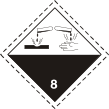
Transport classification per the UN Model Regulations / 49 CFR 172.101 Hazardous Materials Table. Confirm against the grade-specific SDS (Section 14) before shipping.
Hydrofluoric acid (HF, CAS 7664-39-3) is an aqueous solution of hydrogen fluoride and one of the most important fluorine-source chemicals in heavy industry. It is the workhorse reagent wherever silicon dioxide, glass, or metal-oxide scale has to be dissolved and the feedstock from which most commercial fluorochemicals are built. Because HF is uniquely able to attack glass and quartz, no other common acid substitutes for it in etching and microfabrication. It is also extremely hazardous: HF causes severe deep tissue burns, is absorbed through intact skin, and can cause fatal systemic toxicity. This page is written for qualified industrial buyers, EHS, and purchasing teams sourcing bulk material for facilities with the engineering controls, trained personnel, and emergency protocols to handle it. It is not a consumer product.
Typical Properties
Typical reference values, not a specification; the Certificate of Analysis (CoA) for the lot governs.
| Property | Typical Value |
|---|---|
| Chemical Name | Hydrofluoric acid (HF) |
| CAS Number | 7664-39-3 |
| Molecular Formula | HF |
| Molecular Weight | ~20.0 g/mol |
| Appearance | Colorless, fuming liquid (aqueous solution; concentration per grade) |
| Solubility | Miscible with water |
| Grades | Technical; electronic / semiconductor (aqueous %) |
| Hazard / handling | EXTREMELY corrosive and toxic — causes severe, deep, potentially delayed burns and systemic fluoride toxicity; calcium-gluconate first aid; trained/licensed handling only — refer to the current SDS |
Regulatory & registration requirements
- TSCA (US):
- REACH (EU):
- EC number: 231-634-8
Source: EPA TSCA Inventory (July 2025 release) · ECHA CHEM — retrieved 2026-07-12
Industrial applications by sector
Semiconductor and electronics
HF is the standard wet etchant in semiconductor and microelectronics fabrication. It selectively dissolves silicon dioxide while leaving the underlying silicon largely intact, which makes it central to oxide removal, native-oxide stripping, and surface cleaning. Buffered oxide etch (HF buffered with ammonium fluoride) and dilute-HF (DHF) baths are routine. These uses demand electronic / semiconductor-grade material with tightly controlled trace-metal and particle limits, since minor impurities translate directly into device defects.
Metal pickling, cleaning, and stainless passivation
In metal finishing, HF descales and removes oxide and scale from stainless steel and specialty alloys, frequently in a nitric-hydrofluoric pickling mixture. It strips the heat-tint and chromium-depleted layer left by welding and hot working, and supports the cleaning step that precedes passivation, restoring corrosion resistance to the finished surface.
Glass etching and frosting
HF is the only practical acid for etching and frosting glass and quartz. It is used to produce frosted, satin, and decorative surfaces, to mark and number glassware, and for precision polishing in optical and cut-glass work, often in combination with sulfuric acid.
Fluorochemical and fluoropolymer manufacture
HF, and especially anhydrous hydrogen fluoride, is the primary feedstock for the fluorochemical industry. It is the fluorine source for refrigerants and blowing agents (HFCs and their replacements), fluoropolymer monomers, fluorinated specialty chemicals, and inorganic fluorides. It acts both as a fluorinating reagent and as a catalyst in these syntheses.
Aluminum production
HF is consumed in the manufacture of aluminum fluoride and synthetic cryolite, the fluoride feedstocks used in the electrolytic reduction of alumina to aluminum metal.
Oil-well acidizing
In oilfield stimulation, HF is used together with hydrochloric acid as “mud acid” to dissolve silica and clay fines and restore permeability in sandstone formations near the wellbore. The HF component targets the siliceous material that other acids cannot remove.
Refinery alkylation and catalysis
Anhydrous hydrogen fluoride is used as a liquid acid catalyst in HF alkylation units, where it promotes the reaction of isobutane with light olefins to produce high-octane alkylate for gasoline blending. It also serves as a catalyst and fluorinating agent in other petrochemical and synthesis routes.
Grades and forms
HF is supplied in two broad forms. Anhydrous hydrogen fluoride (AHF) is the water-free product, the most reactive form, and the feedstock of choice for fluorochemical synthesis and HF alkylation catalysis. Aqueous hydrofluoric acid is supplied across a range of concentrations to suit the end use — etching, pickling, semiconductor, and acidizing applications each call for different strengths and purities (technical / industrial grade versus high-purity electronic / semiconductor grade). Specify your required concentration, grade, and trace-impurity needs when requesting a quote; the certificate of analysis confirms the assay for the lot you receive. Physical constants such as boiling point and density vary with concentration, so they are referenced to the specific grade rather than to HF in general.
Safety and handling
Hydrofluoric acid is one of the most dangerous industrial chemicals in common use, and the hazard is not proportional to its acid strength. Its GHS classification carries the signal word Danger; depending on concentration it is rated fatal if swallowed, fatal in contact with skin, and fatal if inhaled, and it causes severe skin burns and serious eye damage. Read the SDS before any handling — the points below are an orientation, not a substitute for it, for site EHS, or for medical direction.
- Skin penetration and deep burns. The fluoride ion penetrates intact skin and tissue and continues to cause damage below the surface. Burns from dilute solutions may not be painful or visible immediately, which dangerously delays recognition and treatment.
- Systemic toxicity and hypocalcemia. Absorbed fluoride binds calcium and magnesium in the body, driving down serum calcium (hypocalcemia) and magnesium. This can trigger life-threatening cardiac arrhythmias and cardiovascular collapse. Exposure over even a modest body-surface area, or any inhalation exposure, can be fatal.
- Calcium-based first aid. Industry practice is to keep calcium gluconate (typically a 2.5% gel, with provisions for injectable forms) immediately available at points of use, and to integrate HF exposure into the site emergency-response and occupational-health plan. Specific first-aid and medical treatment must follow the product SDS, facility protocols, and qualified medical professionals — this page does not provide medical advice.
- Engineering controls and PPE. Handle only with the engineering controls (closed transfer, local exhaust ventilation, splash protection) and the specialized acid-resistant PPE specified in the SDS, by personnel trained specifically in HF hazards. Use only HF-compatible materials of construction; HF attacks glass and many metals.
HF is for trained industrial handlers at properly equipped facilities only. RawSource makes no representation that HF is safe to handle, and nothing here qualifies a buyer to handle it — the SDS and your own EHS program govern.
Bulk sourcing from RawSource
RawSource supplies hydrofluoric acid in bulk for qualified industrial buyers, in both anhydrous and aqueous grades, matched to your concentration, purity, and packaging requirements. Material is supplied in HF-compatible drums, totes, and bulk packaging to specification. MOQ, lead time, and pricing are quote-based. Request a bulk quote with your target concentration, grade, and volume, and review the SDS before handling.
Reviewed and updated July 2026 by the RawSource technical team.
Hydrofluoric acid (HF, CAS 7664-39-3) is the aqueous solution of hydrogen fluoride, used industrially to etch glass and silicon dioxide, pickle stainless steel, and make fluorochemicals.
Solutions Using This Product
Process-solution guides on this site that specify this chemistry:
- Acidizing & Well Stimulation Chemicals (Oil, Gas & Mining)
Frequently Asked Questions
What is hydrofluoric acid used for?
Hydrofluoric acid (HF, CAS 7664-39-3) is an aqueous solution of hydrogen fluoride. Industrial uses include semiconductor and electronics wet etching and cleaning, stainless-steel pickling and passivation, glass and quartz etching and frosting, fluorochemical and fluoropolymer manufacture, aluminum-fluoride and cryolite production for aluminum smelting, oil-well acidizing (with hydrochloric acid), and refinery HF alkylation catalysis.
Is hydrofluoric acid dangerous?
Yes — extremely. HF carries the GHS signal word Danger and is, depending on concentration, fatal if swallowed, in contact with skin, or if inhaled. It causes severe deep burns and serious eye damage, penetrates intact skin, and the absorbed fluoride binds the body’s calcium and magnesium, causing hypocalcemia that can lead to fatal cardiac arrhythmias. Dilute-solution burns may be painless and invisible at first, delaying treatment. It must be handled only by trained personnel at properly equipped facilities, with calcium gluconate first aid available and specialized PPE and engineering controls in place. Always follow the SDS; this is not medical advice.
What is the difference between anhydrous and aqueous hydrofluoric acid?
Anhydrous hydrogen fluoride (AHF) is the water-free form, the most reactive, and the preferred feedstock for fluorochemical synthesis and HF alkylation catalysis. Aqueous hydrofluoric acid is HF dissolved in water and is supplied across a range of concentrations for etching, pickling, semiconductor, and acidizing use. Specify the form, concentration, and grade you need when requesting a quote.
What concentrations and grades of hydrofluoric acid are available?
HF is supplied as anhydrous HF and as aqueous solution across a range of concentrations, in technical / industrial grade and in high-purity electronic / semiconductor grade for fabrication use. Specify your required concentration, grade, and trace-impurity limits when requesting a quote; the CoA confirms the lot assay.
What is the UN number for shipping hydrofluoric acid?
Hydrofluoric acid solution ships under UN 1790 (HYDROFLUORIC ACID, SOLUTION). Packaging, labeling, and carrier requirements follow the SDS and applicable transport regulations — RawSource provides the SDS and full shipping documentation with every order.
What bulk packaging and grades does RawSource supply for hydrofluoric acid?
HF is sourced to specification in HF-compatible drums, totes, and bulk packaging; both semiconductor-grade and technical-grade material are available. MOQ, lead time, and pricing are quote-based — request a bulk quote with your target form, concentration, and volume, and review the SDS before handling.
Is hydrofluoric acid a strong acid?
No. Hydrofluoric acid is chemically a weak acid, with a pKa of 3.19, so it can exist in water as undissociated HF molecules rather than fully ionizing. ATSDR notes that although hydrofluoric acid is very corrosive and can etch glass, it is a weak acid. Do not read acid strength as a hazard rating: the fluoride ion causes deep burns and systemic toxicity, and HF is handled as one of the highest-hazard industrial acids.
Can you purchase hydrofluoric acid?
Yes. Hydrofluoric acid is sold in the United States as an industrial chemical, business-to-business to qualified buyers; it is not a consumer product. Plan for hazmat logistics: solutions ship as UN 1790, DOT Class 8 with a 6.1 subsidiary risk. Compliance scales with the quantity you hold: HF at 50% concentration or greater is a regulated toxic substance under EPA’s Risk Management Program with a 1,000 lb threshold quantity, per 40 CFR 68.130.
What not to mix with hydrofluoric acid?
Keep hydrofluoric acid away from metals, and keep anhydrous hydrogen fluoride away from water or steam; NIOSH lists metals and water or steam as its incompatibilities and notes it will attack glass and concrete. Do not use glass for HF storage or transfer; specify HF-compatible polymer containment and lined transfer equipment, and confirm any metal component against the SDS materials-of-construction guidance for your concentration and grade. Acid blends used in pickling and oilfield work are engineered mixtures; check the SDS compatibility section before any mixing or dilution step.
How is hydrofluoric acid made?
Commercial HF starts from acid-grade fluorspar (calcium fluoride). USGS reports that in 2024 domestic CaF2 went to anhydrous hydrogen fluoride production in Louisiana and Texas, the leading use for acid-grade fluorspar. A second route started up in 2024: a North Carolina plant began producing anhydrous HF from fluorosilicic acid, a phosphoric-acid byproduct. For buyers, the supply-chain point matters most; the United States is 100% net import reliant on fluorspar, led by Mexico at 62% of 2020-23 imports.
What is the REACH and TSCA regulatory status of Hydrofluoric Acid (HF)?
Hydrofluoric Acid (HF) (CAS 7664-39-3) is subject to U.S. TSCA Inventory requirements; supplying it into the EU requires valid REACH registration ((EC) No 1907/2006). RawSource cannot verify a third-party supplier's registrations — buyers should require documented TSCA and REACH compliance for their jurisdiction and volume (EC 231-634-8).
What is the molecular formula of Hydrofluoric Acid?
The molecular formula of Hydrofluoric Acid is FH.
What is the molecular weight of Hydrofluoric Acid?
The molecular weight of Hydrofluoric Acid is 20.0064 g/mol (PubChem).
What is the CAS number of Hydrofluoric Acid?
The CAS number of Hydrofluoric Acid is 7664-39-3.
What is the pH of hydrofluoric acid?
Hydrofluoric acid is characterised by its acid dissociation constant rather than a single pH: HSDB (via PubChem) gives a pKa of 3.19 for aqueous hydrofluoric acid and describes it as a weak acid in water. Anhydrous hydrogen fluoride behaves very differently: HSDB calls it one of the most acidic substances known, with a Hammett acidity function (H0) of -10.98.
Is hydrogen fluoride a gas or a liquid?
Both. PubChem describes hydrogen fluoride as a colorless, fuming liquid or gas with a strong, irritating odor, and HSDB gives the boiling point of the anhydrous form as 19.51 °C at atmospheric pressure. It dissolves readily in water to form hydrofluoric acid, and the ILO-WHO International Chemical Safety Cards keep a separate card for each form: ICSC 0283 for anhydrous hydrogen fluoride and ICSC 1777 for the 70% aqueous solution.