
A procurement team rarely buys “an amine.” They buy a specific job: a hardener that cures an epoxy floor overnight, a gas-treating solvent that strips CO₂ from a process stream, a foam booster for a body wash, or a neutralizing amine that protects a boiler’s condensate lines. All of those are amines — one of the most versatile families in industrial chemistry — and choosing the right one starts with understanding how amines are classified and what each class does.
The short version: Amines are organic derivatives of ammonia (NH₃) in which one, two, or three hydrogens are replaced by carbon-containing groups, giving primary, secondary, and tertiary amines (a fully substituted, permanently charged nitrogen gives a quaternary ammonium compound). The nitrogen’s lone pair makes amines basic and nucleophilic, which is the source of nearly all their industrial value. Major industrial families include alkylamines, alkanolamines (ethanolamines), ethyleneamines/polyamines, epoxy-curing diamines, cyclic amines, and fatty-amine derivatives (amine oxides, amido-amines, betaines). They show up across epoxy curing, gas treating, water treatment, surfactants and personal care, agrochemicals, rubber, and pharmaceutical synthesis.
What are amines?
An amine is a compound built around a nitrogen atom bonded to carbon. Because nitrogen keeps a lone pair of electrons, amines act as bases (they accept a proton to form an ammonium salt) and as nucleophiles (they attack electron-poor carbons, which is how they react into resins, acylate to amides, and build larger molecules). Small amines are volatile liquids or gases with a characteristic fishy or ammoniacal odor; larger ones are oils, waxes, or solids. Most are at least partly water-miscible and many are flammable and corrosive — properties that drive how they are shipped and handled. Their chemistry is summarized at primary sources such as PubChem.
Types of amines
Amines are classified two ways at once: by how many carbon groups sit on the nitrogen, and by what kind of structure carries the nitrogen.
| Class | Nitrogen substitution | Example (RawSource) | Typical character |
|---|---|---|---|
| Primary (1°) | One carbon group, two N–H | Butylamine, cyclohexylamine | Most reactive/nucleophilic; reacts into resins, acylates |
| Secondary (2°) | Two carbon groups, one N–H | Dimethylamine, morpholine | Reactive building blocks; surfactant & solvent precursors |
| Tertiary (3°) | Three carbon groups, no N–H | Triethylamine, DMCHA | Bases and catalysts (no N–H to react) |
| Quaternary (quat) | Four groups, permanent + charge | quaternary ammonium / quats | Cationic surfactants, biocides, conditioners |
Overlaid on that are the structural families: aliphatic vs aromatic, and specialized backbones such as alkanolamines (an –OH on the chain), polyamines (several nitrogens), and fatty amines (a long fatty tail). The structural family usually tells you the application; the 1°/2°/3° level tells you the reactivity.
The major industrial amine families
Alkylamines
Short-chain aliphatic amines — methyl, ethyl, propyl, butyl and their cyclic cousins — are high-volume building blocks and bases. Dimethylamine (DMA), butylamine, propylamine, isopropylamine and cyclohexylamine feed the synthesis of surfactants, agrochemicals, rubber accelerators, water-treatment polymers and pharmaceuticals, while tertiary alkylamines like triethylamine, N,N-dimethylcyclohexylamine (DMCHA) and N-methyldicyclohexylamine serve as bases, acid scavengers and polyurethane catalysts.
Alkanolamines (ethanolamines)
Alkanolamines carry both an amine and a hydroxyl, which makes them water-soluble bases that also esterify and emulsify. Triethanolamine (TEA) is a workhorse pH adjuster, emulsifier precursor (it forms TEA-soaps such as TEA-stearate) and corrosion inhibitor; diethylethanolamine (DEAE) is used in boiler/condensate treatment and as an intermediate. Alkanolamines are also the classic gas-treating solvents for removing CO₂ and H₂S.
Ethyleneamines & polyamines
Molecules with several amine groups along a chain pack many reactive sites into one molecule. Diethylenetriamine (DETA), triethylenetetramine (TETA), tetraethylenepentamine (TEPA) and polyamine (polyethylenepolyamines) are core epoxy curing agents and feedstocks for chelants, fuel and lubricant additives, wet-strength resins, asphalt additives and corrosion inhibitors. Tertiary polyamines such as pentamethyldiethylenetriamine (PMDETA) are polyurethane catalysts.
Epoxy-curing & specialty diamines
Beyond the ethyleneamines, specialized di- and poly-amines tune cure speed, flexibility and heat resistance in coatings, adhesives and composites: 3-(diethylamino)propylamine (DEAPA) (curing accelerator), 4,4′-diaminodicyclohexylmethane (PACM) and cyanoethylated isophoronediamine for tough, light-stable epoxy and polyurea systems.
Cyclic amines
Ring amines bring unique solvency and catalysis. Morpholine is a boiler/condensate neutralizing amine, a corrosion inhibitor and a rubber-accelerator and optical-brightener intermediate; 4-methylmorpholine (NMM) is a base and polyurethane catalyst.
Fatty amines & amine derivatives
Attach a long fatty chain to an amine and it becomes surface-active. This family powers personal care and cleaning: amine oxides such as cocamine oxide, lauramine oxide and stearamine oxide (foam boosters and conditioners); amido-amines like stearamidopropyl dimethylamine (hair conditioning); and amphoteric betaines such as cocamidopropyl betaine. The nitrogen-rich triazine melamine anchors resins and flame-retardant systems.
Properties that drive selection
Three properties decide most amine choices. Basicity sets how well an amine neutralizes acids and how strongly it catalyzes — tertiary amines are chosen as catalysts and bases precisely because they have no N–H to react away. Nucleophilicity / reactivity decides whether an amine cures an epoxy, acylates to an amide, or stays inert as a base; primary amines are the most reactive. Chain length and structure set physical behavior — short amines are volatile, water-miscible and odorous; fatty amines are surface-active; alkanolamines add water solubility and an esterification site. Most amines are also flammable, corrosive and odorous to some degree, so handling, materials of construction and transport classification follow from the specific amine.
Where industrial amines are used
| Application area | What the amine does |
|---|---|
| Epoxy & coatings | Curing agents/hardeners and accelerators (ethyleneamines, DEAPA, PACM); cure speed, toughness, heat resistance |
| Gas treating | Alkanolamine solvents that absorb CO₂ and H₂S from natural gas and process streams |
| Water treatment | Neutralizing/filming amines (morpholine, DEAE) for boilers and condensate; amine-based coagulant and scale-control polymers |
| Surfactants & personal care | Amine oxides, amido-amines and betaines as foam boosters, conditioners and mild co-surfactants; TEA soaps as emulsifiers |
| Polyurethanes | Tertiary-amine catalysts (DMCHA, NMM, PMDETA) controlling foam and elastomer cure |
| Agrochemicals & pharma | Amine intermediates and building blocks for actives, salts and formulations |
| Rubber & polymers | Vulcanization accelerator intermediates; melamine resins and flame retardants |
Buying amines in bulk
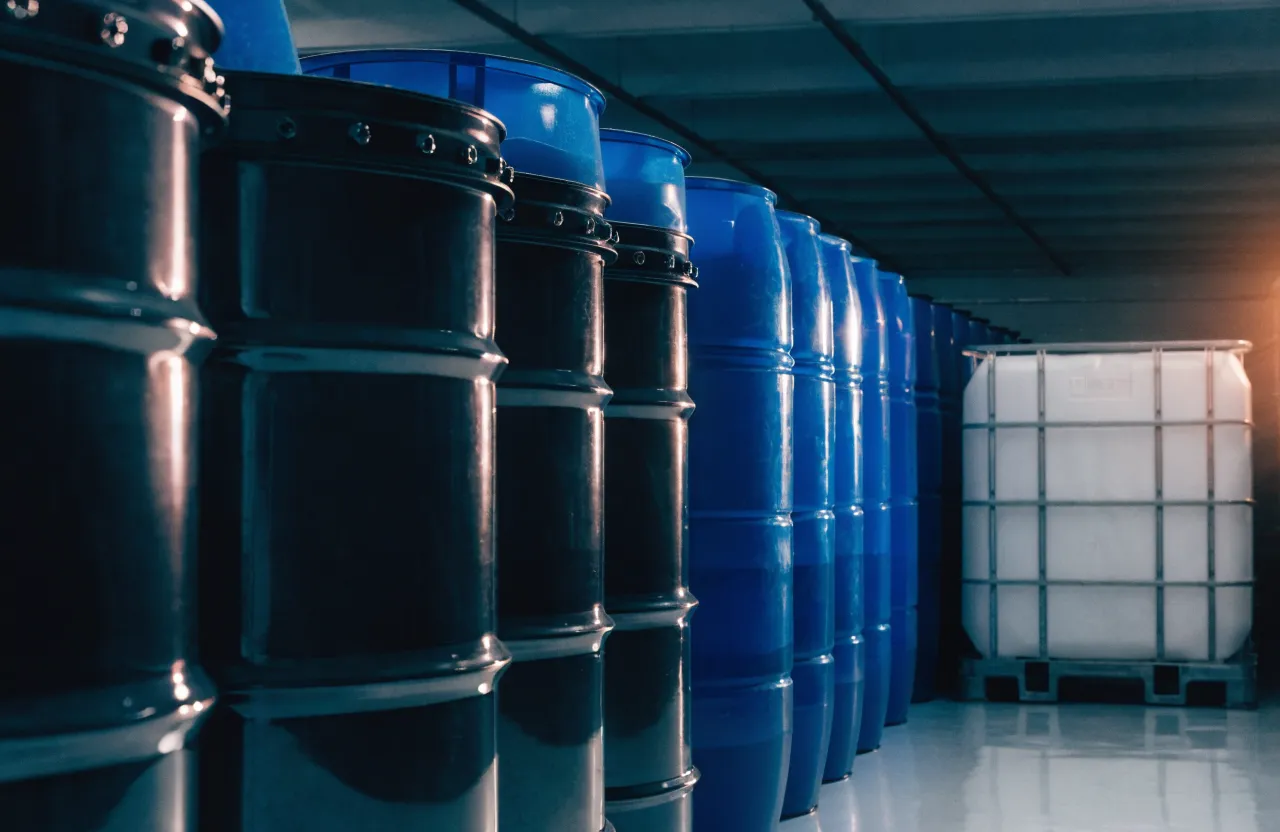
See the Polyamine product page. Many amines are flammable, corrosive and shipped under hazardous-materials rules, so specify the exact amine, grade, concentration (solution vs anhydrous) and packaging on your RFQ, and confirm materials of construction and handling against the current SDS. Tell us the job — the hardener, the catalyst, the surfactant precursor, the gas-treating solvent — and we will quote the right amine with CoA and SDS.
Frequently asked questions
What are amines?
Amines are organic compounds derived from ammonia (NH₃) in which one or more hydrogens are replaced by carbon-containing groups. The nitrogen’s lone pair makes them basic and nucleophilic, which is why they are used as bases, catalysts, curing agents, surfactant precursors and chemical intermediates.
What are the types of amines?
By substitution, amines are primary (one carbon group), secondary (two), or tertiary (three); a fully substituted, permanently charged nitrogen is a quaternary ammonium compound. By structure, important families are alkylamines, alkanolamines (ethanolamines), polyamines/ethyleneamines, cyclic amines and fatty amines.
Are amines basic?
Yes. The nitrogen lone pair accepts a proton, so amines are bases that form ammonium salts with acids. Their base strength varies with structure; this basicity underlies their use as neutralizers, acid scavengers and catalysts.
What are amines used for?
Industrially, amines are used as epoxy and polyurethane curing agents and catalysts, gas-treating solvents (CO₂/H₂S removal), boiler and water-treatment neutralizing amines, surfactants and conditioners (amine oxides, betaines, amido-amines), corrosion inhibitors, and intermediates for agrochemicals, pharmaceuticals and rubber chemicals.
What is the difference between primary, secondary, and tertiary amines?
It is the number of carbon groups on the nitrogen: primary has one (and two N–H), secondary has two (one N–H), tertiary has three (no N–H). More N–H generally means more reactivity toward acylation and epoxy cure, while tertiary amines — having no N–H — are favored as bases and catalysts.
Are amines hazardous?
Many are. Amines are commonly flammable, corrosive and strongly odorous, and several are toxic; handling, storage, materials of construction and transport classification depend on the specific amine. Always work from the current Safety Data Sheet (SDS).
Editorial note. This article is general technical guidance for industrial and professional buyers. Classifications, properties and application mappings are typical, generalized references to validate for your specific amine and application; the Certificate of Analysis governs the grade you buy. Nothing here is a medical, health, or efficacy claim. Many amines are hazardous — always consult the current Safety Data Sheet (SDS) before handling, storage, transport or disposal, and confirm regulatory status and suitability for your application and jurisdiction. RawSource makes no warranty, express or implied, and assumes no liability for use of this information.
Search 1,300+ industrial chemicals by name or CAS, or send us your spec — we quote by the drum, tote, or container.
Browse the Chemical Index → Request a Quote