
- ▸ Epoxy curing: Hardener for epoxy resin and coating systems.
- ▸ Surfactant intermediate: Feedstock for amine-derived surfactants.
- ▸ Fuel and lubricant additives: Building block for additive chemistries.
- ▸ Water treatment: Intermediate for treatment-chemical synthesis.
A grade-specific Safety Data Sheet (SDS) — with the complete hazard classification, handling precautions, and transport information — is supplied with every shipment and available on request. Confirm all safety and regulatory details against the SDS for your specific grade.
Request SDS →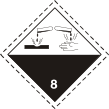
Transport classification per the UN Model Regulations / 49 CFR 172.101 Hazardous Materials Table. Confirm against the grade-specific SDS (Section 14) before shipping.
Polyamine (polyethylenepolyamine) is a blend of higher ethyleneamines used as a cost-effective ambient-cure epoxy hardener for construction and general-purpose systems. Identity: CAS 68131-73-7.
What it is
Polyethylenepolyamine (CAS 68131-73-7) is a liquid mixture of higher ethyleneamines (TETA, TEPA and above). It is an economical, high-functionality hardener widely used where appearance is secondary to performance and cost.
How it cures
Its many amine hydrogens ring-open epoxide groups for a dense ambient cure with high crosslink density and chemical resistance; the higher-MW mix gives lower volatility than single small amines.
Applications
Polyamine is used in construction epoxy (flooring, grouts, adhesives), coatings and general-purpose systems. For low color and flexibility compare polyetheramines.
Forms, grades and handling
Polyamine is supplied as an amber liquid in drums, IBCs and bulk. Properties are typical reference values; the Certificate of Analysis (CoA) for the lot you buy governs. Amine curing agents are typically corrosive and can sensitize skin — handle per the current Safety Data Sheet (SDS). Each lot ships with CoA, TDS and SDS.
Bulk supply and RFQ
RawSource sources Polyamine direct from producers in bulk, with CoA, TDS and SDS per lot. Tell us your resin system, cure schedule (ambient or heat) and the properties you need (pot life, Tg, flexibility, chemical resistance), and we will quote the right hardener. See selection logic in the epoxy curing agents guide.
Typical Properties
Typical reference values, not a specification; the Certificate of Analysis (CoA) for the lot governs.
| Property | Typical Value |
|---|---|
| Chemical / class | Aliphatic polyamine hardener |
| Cure role | Ambient cure (general) |
| CAS Number | 68131-73-7 |
| Handling | Refer to the current SDS |
Regulatory & registration requirements
- TSCA (US):
- REACH (EU):
- EC number: 268-626-9
TSCA Inventory flag XU: a substance exempt from reporting under the Chemical Data Reporting Rule (40 CFR 711) (EPA flag legend).
Source: EPA TSCA Inventory (July 2025 release) · ECHA CHEM — retrieved 2026-07-12
Solutions Using This Product
Process-solution guides on this site that specify this chemistry:
- Cationic Dye-Fixing / After-Fix Agent (Formaldehyde-Free) (Textiles)
- Oil & Grease Removal: Demulsifiers & Coagulants (Water Treatment)
Frequently Asked Questions
What is polyamine (polyethylenepolyamine) used for?
Polyamine (CAS 68131-73-7) is a cost-effective blend of higher ethyleneamines used as an ambient-cure epoxy hardener in construction (flooring, grouts, adhesives), coatings and general-purpose systems.
How is bulk polyamine supplied and quoted?
RawSource supplies polyamine in bulk with CoA, TDS and SDS per lot. Pricing is quote-based on grade and volume; submit an RFQ with your resin system and cure schedule.
What is the REACH and TSCA regulatory status of Polyamine (Polyethylenepolyamines)?
Polyamine (Polyethylenepolyamines) (CAS 68131-73-7) is subject to U.S. TSCA Inventory requirements; supplying it into the EU requires valid REACH registration ((EC) No 1907/2006). RawSource cannot verify a third-party supplier's registrations — buyers should require documented TSCA and REACH compliance for their jurisdiction and volume (EC 268-626-9).
What is the CAS number of Polyamine?
The CAS number of Polyamine is 68131-73-7.