
COCAMIDOPROPYL BETAINE- ▸ Foam boosting: raises and stabilizes foam in surfactant cleansing systems
- ▸ Viscosity building: thickens liquid cleansers and washes without added salt
- ▸ Conditioning: antistatic and conditioning function in hair and skin care
- ▸ Co-surfactant: paired with anionic primary surfactants to lower irritation
Supplied for industrial formulation and manufacturing use; not for retail or consumer sale.
Supplied for industrial formulation and manufacturing use; not for retail or consumer sale.
Supplied for industrial formulation and manufacturing use; not for retail or consumer sale.
- ▸ Cocamidopropyl Betaine 30% (HI&I grade) Technical Data Sheet (RS-CAPB_30-H) PDF · TDS
- ▸ Cocamidopropyl Betaine 30% (personal care grade) Technical Data Sheet (RS-CAPB_30-P) PDF · TDS
- ▸ Cocamidopropyl Betaine 45% Technical Data Sheet (RS-CAPB_45) PDF · TDS
Values shown are typical for the current commercial grade. A lot-specific Certificate of Analysis accompanies every shipment; the grade-specific SDS is available on request.
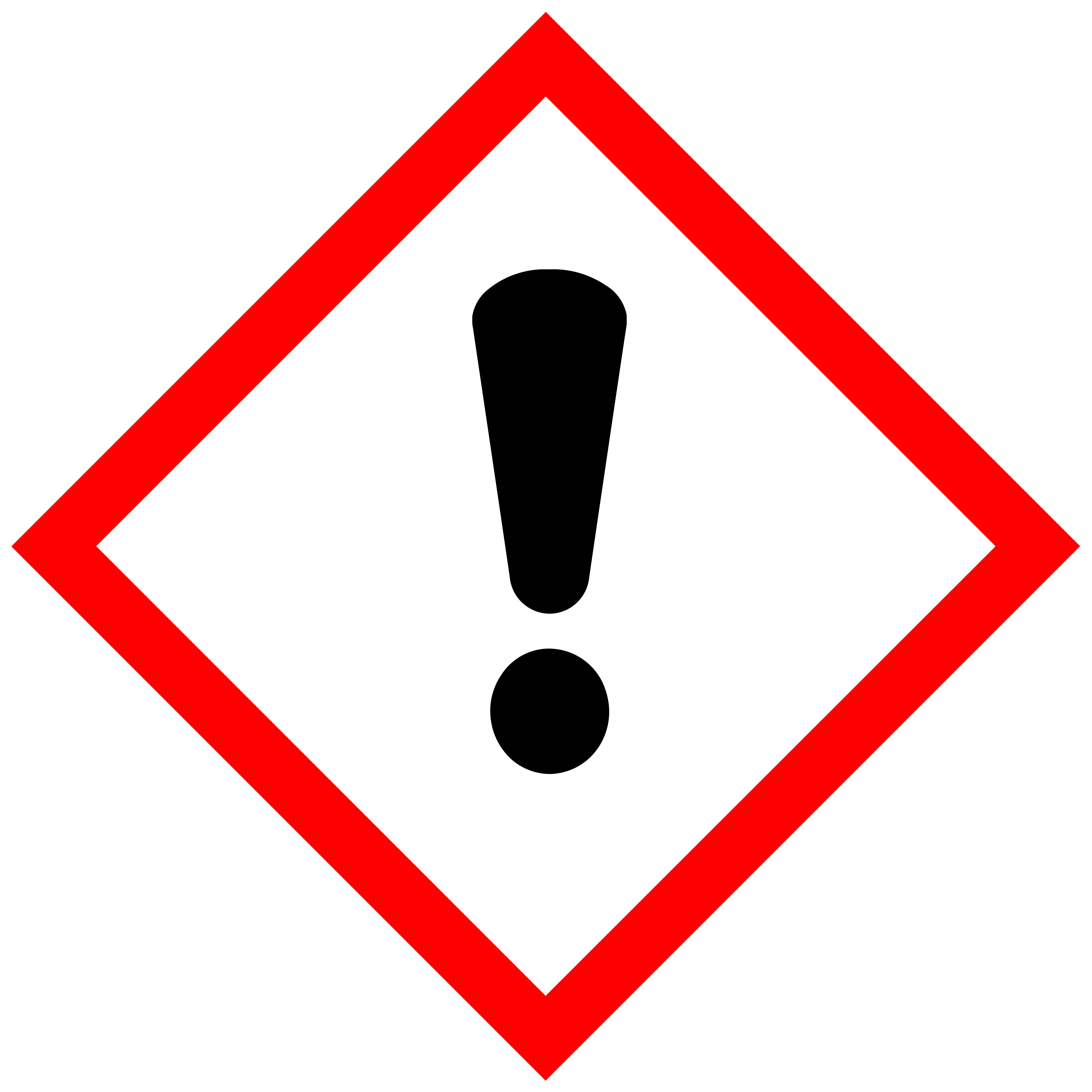
GHS07
- H315 Causes skin irritation
- H319 Causes serious eye irritation
Source: Supplier SDS, Section 2, by grade: RS-CAPB_30-H Warning (H315, H319); RS-CAPB_30-P Warning (H315, H319); RS-CAPB_45 Warning (H319)
A grade-specific Safety Data Sheet (SDS) — with the complete hazard classification, handling precautions, and transport information — is supplied with every shipment and available on request. Confirm all safety and regulatory details against the SDS for your specific grade.
Request SDS →Cocamidopropyl betaine (CAPB, CAS 61789-40-0) is a coconut-derived amphoteric surfactant — the industry-standard secondary surfactant for boosting foam, building viscosity, and softening the irritation of anionic cleansing systems. It is supplied as a pale-yellow aqueous solution, typically around 30% active.
Cocamidopropyl Betaine: Why It Is Everywhere
CAPB is amphoteric (zwitterionic): cationic in acid and anionic in alkali, so it is compatible with anionic, nonionic, and cationic surfactants alike. Paired with a primary anionic such as SLES it lifts and stabilizes foam, thickens the base (often without added salt), and measurably lowers the irritation of the system — which is why it appears in the great majority of shampoos, body washes, facial and hand cleansers, baby washes, and dish liquids. It also brings light conditioning and antistatic character to hair care.
Amphoteric Surfactants Compared
How CAPB stacks up against the amphoteric surfactants buyers weigh against it, by foam, mildness, and electrolyte tolerance:
Building a sulfate-free base? CAPB pairs naturally with nonionic alkyl polyglucoside (APG). Send your target active level, primary surfactant, and pH on an RFQ and we will quote the right CAPB grade.
Regulatory & registration requirements
- TSCA (US):
- REACH (EU):
- EC number: 263-058-8
Source: EPA TSCA Inventory (July 2025 release) · ECHA CHEM — retrieved 2026-07-12
Frequently Asked Questions
What is cocamidopropyl betaine used for?
Cocamidopropyl betaine (CAPB, CAS 61789-40-0) is an amphoteric secondary surfactant used to boost and stabilize foam, build viscosity, and reduce irritation in shampoos, body washes, facial and hand cleansers, baby products, and dish detergents. It is paired with a primary anionic surfactant such as sodium laureth sulfate. RawSource supplies CAPB in bulk against the CoA.
Is cocamidopropyl betaine the same as coco-betaine?
No. Cocamidopropyl betaine is the amidopropyl betaine made from coconut fatty acids and is milder, while coco-betaine (cocobetaine) is the older alkyl betaine without the amidopropyl group and carries higher irritation potential. They are different INCI materials; reference CAS 61789-40-0 to confirm CAPB on an RFQ.
Is cocamidopropyl betaine mild or irritating?
CAPB is widely used precisely because it lowers the irritation of anionic surfactant systems and is generally well tolerated. It is, however, a recognized contact allergen in a minority of sensitive individuals, an effect attributed to residual manufacturing impurities (amidoamine and DMAPA); high-purity grades minimize these. Confirm grade and impurity limits against the CoA.
How is cocamidopropyl betaine supplied in bulk?
RawSource supplies cocamidopropyl betaine as a pale-yellow aqueous solution, typically ~30% active, in drums, IBCs, and bulk. Grade, active content, and MOQ are confirmed at quotation against the CoA. Submit a bulk RFQ with your target active level and application.
What is the REACH and TSCA regulatory status of Cocamidopropyl Betaine?
Cocamidopropyl Betaine (CAS 61789-40-0) is subject to U.S. TSCA Inventory requirements; supplying it into the EU requires valid REACH registration ((EC) No 1907/2006). RawSource cannot verify a third-party supplier's registrations — buyers should require documented TSCA and REACH compliance for their jurisdiction and volume (EC 263-058-8).