
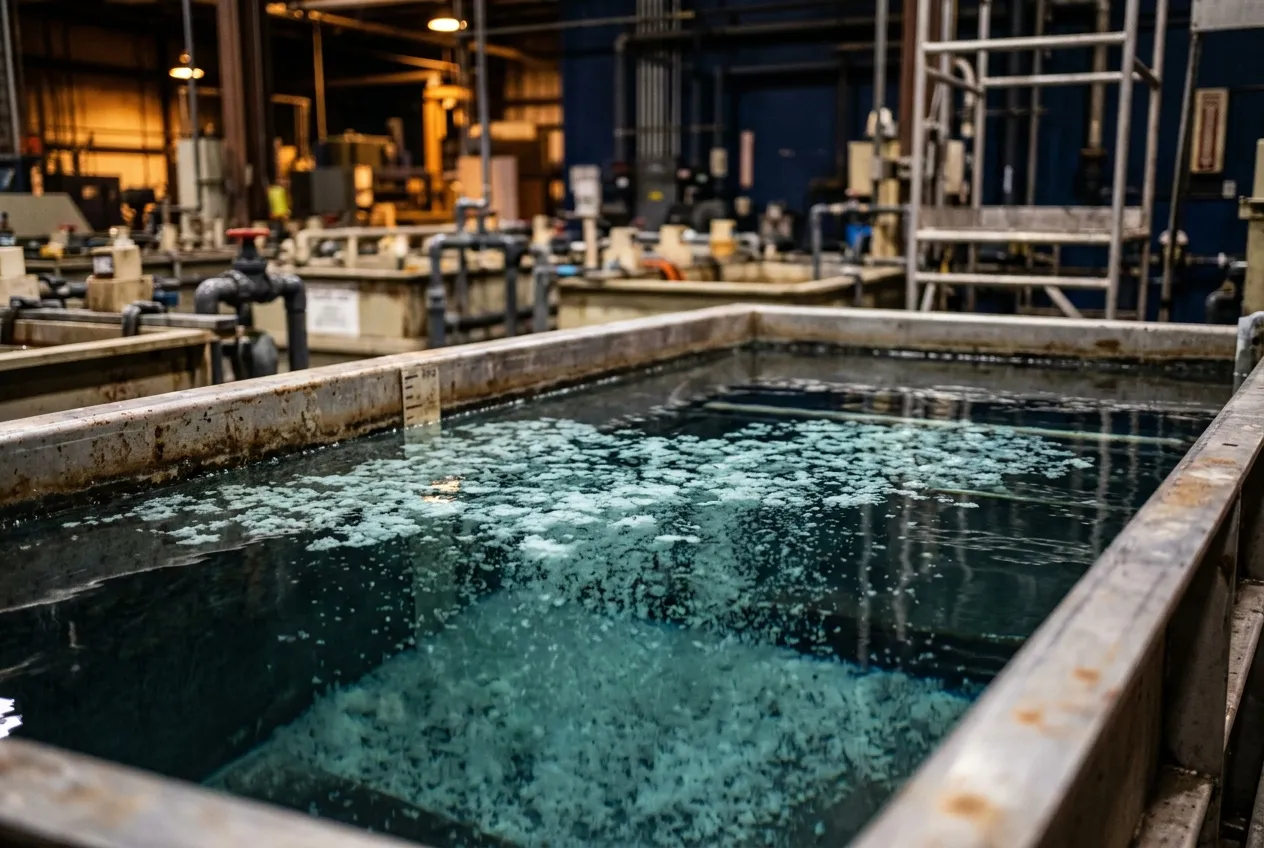
A metal-finishing shop lives and dies by its discharge permit. The plating line, the pickling tanks, and the rinses generate wastewater loaded with dissolved metals, and the treatment system has to get the metals out before the water leaves the site. Even after the metals are precipitated to hydroxides, the fine precipitate often will not settle, the clarifier stays cloudy, and the effluent metals creep over the limit. Polyacrylamide is the polymer that drops that precipitate out.
The short version: in metal-finishing and metallurgical wastewater, the metals are first precipitated as metal hydroxides by raising the pH, then a coagulant such as polyaluminum chloride neutralizes charge to form pinflocs, and a polyacrylamide flocculant bridges those pinflocs into large, fast-settling flocs that clear the water and capture the metals. Anionic polyacrylamide suits the high-turbidity, inorganic solids of steel, plating, and mineral-processing wastewater; cationic suits high-organic metallurgical streams. Typical doses are a few grams of polyacrylamide per ton of wastewater.
The problem: precipitate that won’t settle
Precipitating dissolved metals to hydroxides is only half the job; the hydroxide floc is fine, light, and slow to settle, so the clarifier overflow stays turbid and carries metals out with it. Polyacrylamide (CAS 9003-05-8, PubChem) finishes the job: after a coagulant forms small pinflocs, the high-molecular-weight polymer bridges them into large, dense flocs that settle fast, leaving clear water and a compact sludge that meets the metal limit and dewaters well.
How the treatment train uses it
A typical metal-finishing or metallurgical wastewater train runs:
1. pH adjustment / precipitation: raise pH to precipitate dissolved metals as hydroxides. 2. Coagulation: add a coagulant such as polyaluminum chloride to neutralize charge and form pinflocs; reported dosing is roughly tens to a hundred grams of coagulant per ton. 3. Flocculation: add polyacrylamide, on the order of a few grams per ton, to bridge the pinflocs into large, settleable flocs. 4. Clarify and dewater: settle the floc, decant clear water to discharge, and dewater the metal-hydroxide sludge.
Anionic polyacrylamide is the common choice for the inorganic, high-turbidity solids of steel-mill, plating, and mineral-processing wastewater; cationic is used where the stream carries high organic colloid content. The selection logic is in anionic vs cationic vs nonionic polyacrylamide.
Beyond effluent: metallurgical processing
The same flocculation chemistry serves the metals industry upstream, in mineral processing and metal recovery, where polyacrylamide thickens and dewaters ore slurries, concentrates, and tailings, closely related to its mining use in polyacrylamide in mining. Across both, the polymer’s job is the same: turn a fine, slow-settling solid into a fast-settling floc.
Selecting and dosing
The right charge type, charge degree, and molecular weight depend on the metal, the precipitate, the coagulant, and the pH, so the polymer is chosen by jar test on the actual effluent. Dose is optimized to the lowest level that clears the water and meets the metal limit; overdosing wastes polymer and can re-disperse the floc.
Buying polyacrylamide for metals wastewater
See the Polyacrylamide Flocculant product page. Tell us your effluent, metals, coagulant, and discharge target, and request samples to jar-test on your own wastewater.
Frequently asked questions
How does polyacrylamide treat metal-finishing wastewater?
After dissolved metals are precipitated as hydroxides by raising pH and a coagulant forms pinflocs, polyacrylamide bridges those pinflocs into large, fast-settling flocs. That clears the water, captures the metals in a compact sludge, and helps the effluent meet its discharge limit.
Which polyacrylamide is used for electroplating wastewater?
Usually anionic polyacrylamide, because plating and steel-mill effluents carry inorganic, high-turbidity solids that respond to a negative high-molecular-weight polymer after coagulation. Cationic is used for high-organic metallurgical streams. Confirm by jar test.
How much polyacrylamide do I dose for metal wastewater?
Typically a few grams of polyacrylamide per ton of wastewater, after a larger coagulant dose (tens to about a hundred grams per ton). Optimize both by jar test to the lowest dose that clears the water and meets the metal limit.
Is polyacrylamide used in metallurgy and metal processing?
Yes. Beyond effluent treatment, polyacrylamide thickens and dewaters ore slurries, concentrates, and tailings in mineral processing and metal recovery, the same flocculation chemistry used in mining.
Will polyacrylamide help my effluent meet metal discharge limits?
It clears the metal-hydroxide precipitate so the discharged water is low in suspended solids and the captured metals leave in the sludge, which helps meet limits. It is part of a treatment train (precipitation, coagulation, flocculation, clarification), not a standalone fix; validate on your effluent.
Editorial note. This article is general technical guidance for metal-finishing and metallurgical professionals. Treatment-train, charge-type, and dose guidance is general and must be validated by jar testing on your own effluent; the Certificate of Analysis governs the grade you buy, and discharge compliance is the buyer’s responsibility. Polyacrylamide polymer has low toxicity per its SDS and is not classified as hazardous for transport. Spilled product and polymer solution are extremely slippery when wet. Always consult the current Safety Data Sheet (SDS) before handling. RawSource makes no warranty, express or implied, and assumes no liability for use of this information.
Search 1,300+ industrial chemicals by name or CAS, or send us your spec — we quote by the drum, tote, or container.
Browse the Chemical Index → Request a Quote