
Solution Approach
RawSource supplies the base chemicals that go into these programs. We can help with product selection, grade matching, and sourcing from multiple origins for supply security.
Typical Formulation Workflow
1
Concept & Claim Definition
Define the product type, sensory and claim targets, and the regulatory and label framework (INCI, regional cosmetic regulations, certifications).
2
Ingredient Selection
Match emollients, emulsifiers, surfactants, actives, preservatives, or rheology modifiers to the formula, skin-feel, and compatibility window.
3
Bench Formulation
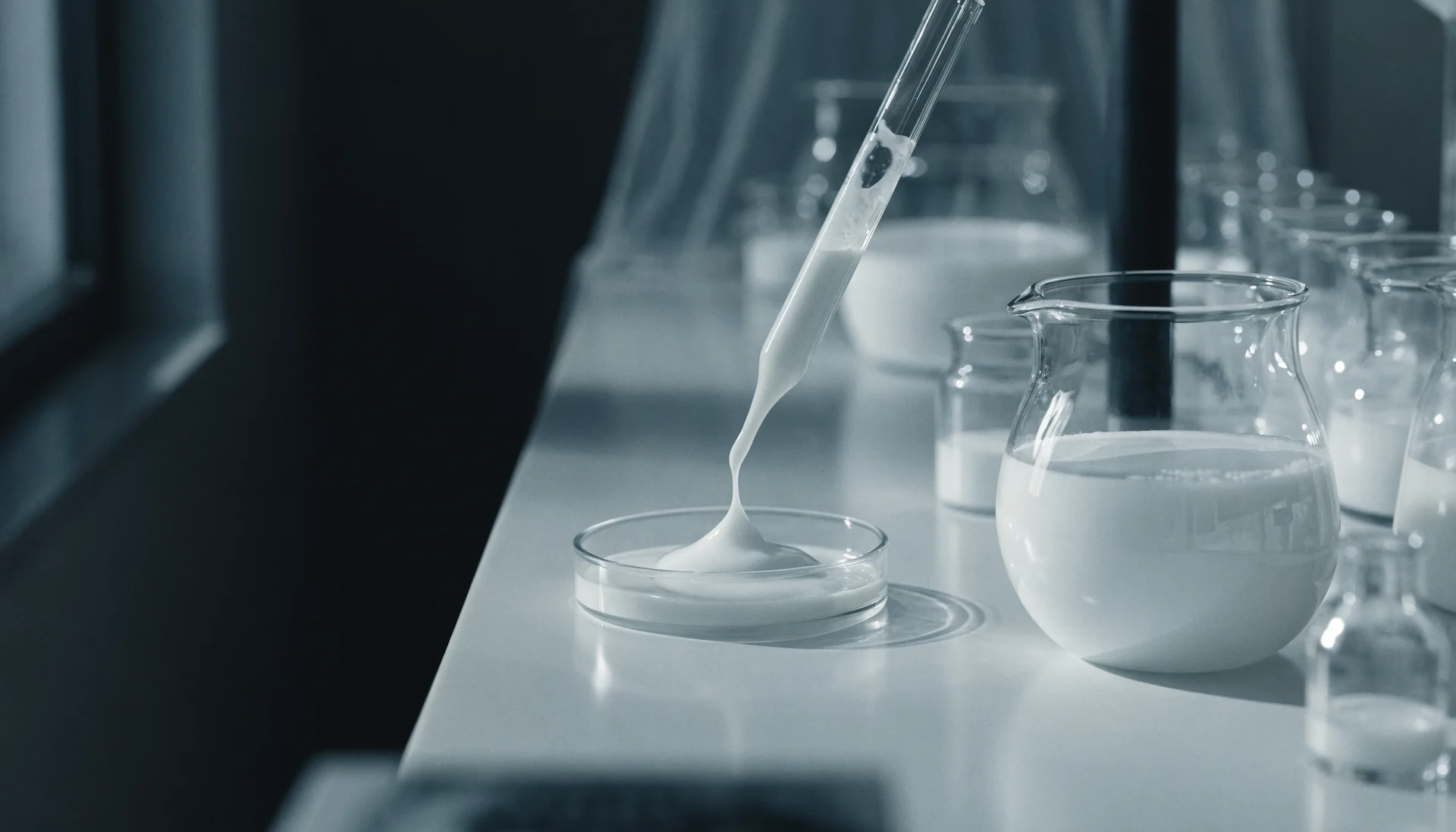
Build and stabilize the emulsion or system at the bench, checking pH, viscosity, preservative efficacy, and aesthetics.
4
Stability & Compliance Validation
Run stability and compatibility testing, confirm preservative efficacy, and finalize the INCI, CoA, and documentation.
Recommended Chemistries (5)
Zinc Pyrithione (Zinc Pyrion NF)
CAS 13463-41-7
Specialty Additives
Conditioning
2811 (ZINC PYRITHIONE) · Class Antifungal active that limits growth of scalp Malassezia yeast; coordination compound supplied as a cosmetic/OTC raw material
Melting Point: 240 °C, decomposes Density: 1.782 at 25 °C Solubility: Insoluble (<1 mg/ml at 21 °C)
Quick view
Full Details
Piroctone Olamine
CAS 68890-66-4
Amines & Amides
Preservation
Hydroxamic-acid antifungal that chelates metal ions essential to Malassezia metabolism; common zinc-pyrithione alternative
Quick view
Full Details
Climbazole
CAS 38083-17-9
Imidazole-class antifungal that inhibits fungal ergosterol synthesis; used at low percent in scalp formulas
Quick view
Full Details
Salicylic Acid
CAS 69-72-7
Keratolytic beta-hydroxy acid that loosens and helps lift scalp flakes; pairs with antifungal actives
Quick view
Full Details
Selenium Disulfide
CAS 7488-56-4
Antifungal and antiproliferative inorganic scalp active; OTC-monograph material, supply framing only
Quick view
Full Details
Related Product Families
● Available
Emollients & Slip Agents
Esters, silicones, and hydrocarbon emollients for spreadability, after-feel, and occlusion in leave-on and rinse-off systems
EmolliencySlipLubricationConditioning
12 chemistries
View family
● Available
Rheology Modifiers & Thickeners
Carbomers, cellulosics, gums, and associative thickeners controlling viscosity, yield value, and flow across emulsion and gel systems
ViscosityGel FormationSuspension
11 chemistries
View family
● Available
Emulsifiers & Dispersants
Nonionic, anionic, cationic, and amphoteric surfactants for O/W, W/O, and multiple emulsion architectures. Includes pigment dispersants
EmulsificationWettingDetergencyFoam
12 chemistries
View family
● Available
Sensory Modifiers
Microspheres, powders, pigments, and film-forming polymers for tactile feel, mattifying, blur, and texture perception
Film FormationPigmentationFilling
11 chemistries
View family
● Available
Solvents & Carriers
Cosmetic-grade glycols, esters, and volatile solvents as carriers, solubilizers, and co-solvents for serums, sprays, and anhydrous systems
SolvencyCarrierHumectancy
9 chemistries
View family
● Available
Stabilizers & Processing Aids
Chelators, antioxidants, preservative boosters, pH buffers, and UV filters protecting formulation integrity through processing and shelf life
AntioxidantpH BufferPreservationUV
8 chemistries
View family
● Available
Surfactants & Cleansing Agents
Anionic sulfates, mild glucosides, betaines, and amphoterics that generate foam and lift soil in rinse-off shampoos, body washes, and facial cleansers.
SurfactancyCleansingFoamWetting
16 chemistries
View family
● Available
Humectants
Glycerin, glycols, polyols, and natural moisturizing factors that bind water to the skin and hair for lasting hydration and suppleness.
Moisture ControlHydrationConditioning
16 chemistries
View family