
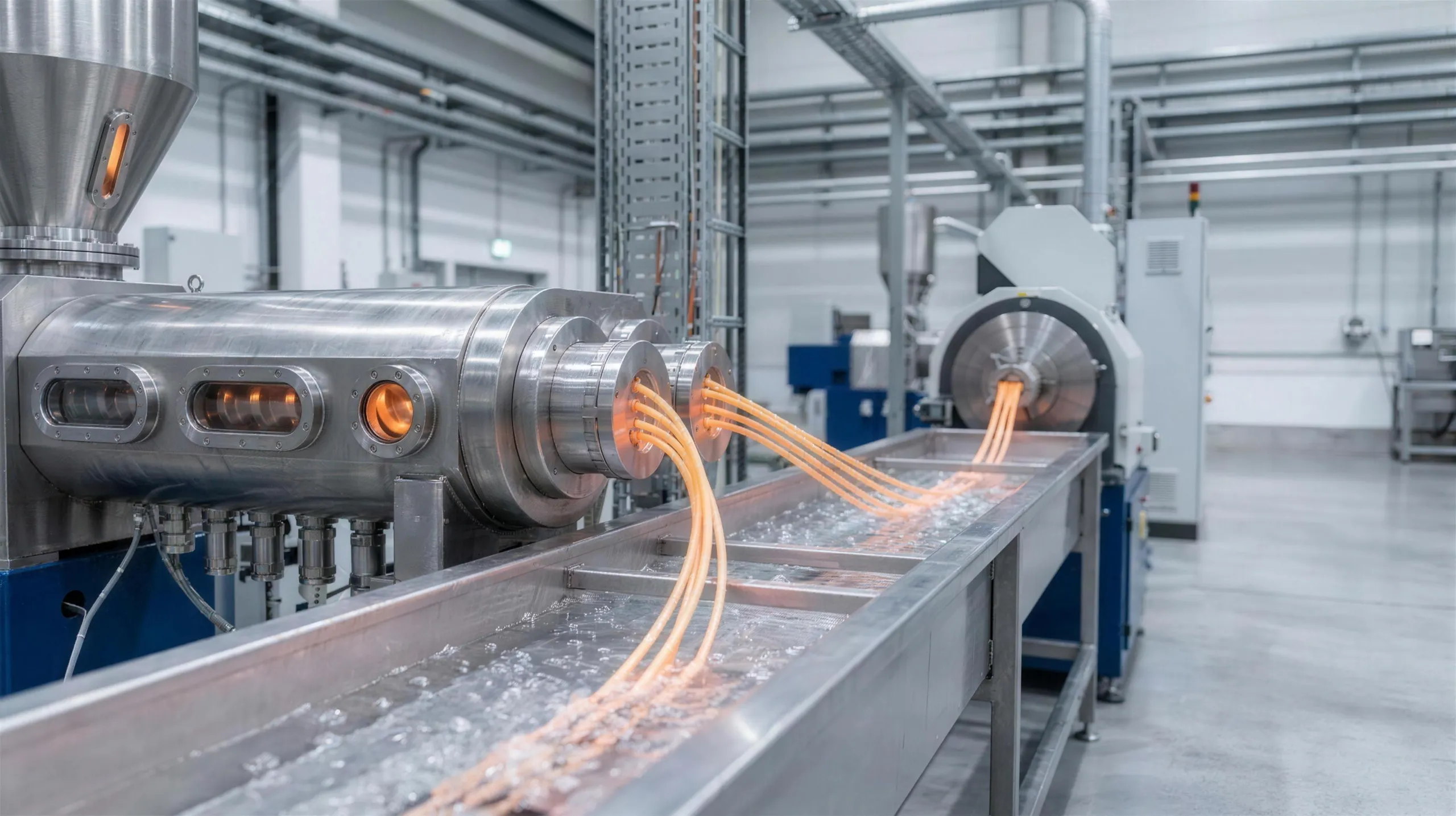
Antimony trioxide (Sb2O3, CAS 1309-64-4) is a white inorganic oxide of antimony used primarily as a flame-retardant synergist with halogenated additives and as a polycondensation catalyst for PET polyester. Beyond those two anchor markets it also serves as a fining and decolorizing agent in glass, an opacifier in ceramic glazes and enamels, and a white pigment. It is, however, a hazardous material: antimony trioxide is regarded as a suspected human carcinogen, and inhalation of its dust is the controlling exposure concern for everyone who handles it in bulk. This guide covers what ATO is, exactly how each of its industrial roles works, the grades and particle sizes that matter to formulators, bulk handling, and the safety facts purchasing and EHS teams need before they buy.
On this page
- What is antimony trioxide?
- Flame-retardant synergist (the #1 use)
- PET / polyester polycondensation catalyst
- Glass & ceramics: fining, decolorizing, opacifying
- Pigment, opacifier & minor uses
- Grades, particle size & bulk handling
- Safety: carcinogenicity, exposure limits & PPE
- Frequently asked questions
- Source antimony trioxide in bulk
What is antimony trioxide?
Antimony trioxide is the trivalent oxide of antimony, formula Sb2O3, the single most commercially important antimony compound. Sold commercially as Antimony Trioxide (Antimony(III) Oxide, ATO), it is a fine, odorless white crystalline powder. It is only very slightly soluble in water, melts around 655 degC and boils near 1425 degC, and is amphoteric, dissolving in both strong acids and strong bases. That high boiling point is not a footnote: it is the reason ATO needs a halogen partner to function as a flame retardant, because the antimony has to be carried into the gas phase by a more volatile species rather than evaporating on its own.
Industrially it is produced either by roasting and re-oxidizing antimony metal or by processing stibnite (antimony sulfide) ore. The result is sold in well-defined purity grades distinguished by Sb2O3 assay, color (whiteness), and average particle size. Those three variables, more than anything else, determine which application a given lot is suited for.
Flame-retardant synergist (the #1 use)
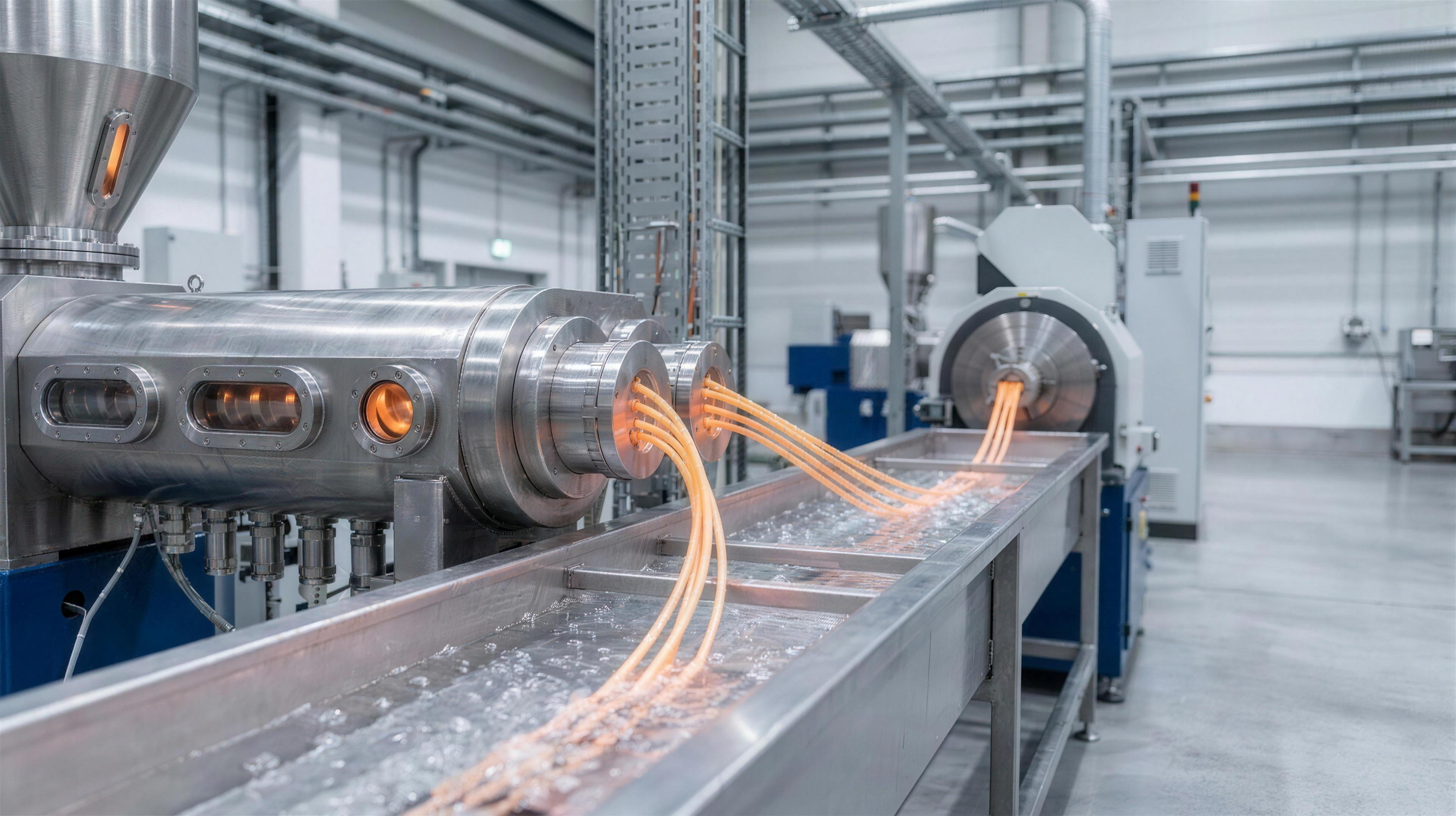
The largest market for antimony trioxide by far is flame retardancy. On its own, ATO does almost nothing to stop a fire. Its value is as a synergist: paired with a halogenated (brominated or chlorinated) flame retardant, it sharply increases the fire performance of the combined system, letting formulators hit standards such as UL 94 V-0 at lower total additive loadings than either component could alone. This synergy is why ATO shows up across rigid and flexible PVC, polyolefins, styrenics (ABS, HIPS), engineering thermoplastics, unsaturated polyester and epoxy thermosets, rubber, textile back-coatings, and architectural and industrial coatings.
The mechanism is gas-phase, and it depends on the halogen. When a flame-retarded part is exposed to fire, heat drives the antimony trioxide and the halogen source to react in the condensed phase, generating volatile antimony trihalides (SbX3) and antimony oxyhalides (SbOX). Those volatile antimony-halogen species rise into the flame, where they release antimony and halogen radicals that scavenge the high-energy H· and OH· radicals that sustain combustion. Interrupting that radical chain reaction starves the flame. In short, the halogen delivers the antimony into the vapor where the firefighting happens; without a halogen donor, ATO’s high boiling point keeps it locked in the solid and it contributes little. The two are typically used together in a roughly defined ratio tuned to the polymer and the target rating.
Because the function is additive and physical rather than chemical bonding, antimony trioxide is normally let down into the resin during compounding, frequently via a masterbatch to control dust and improve dispersion. Wire and cable jacketing, electrical connectors and housings, transportation interiors, and flame-retardant fabrics are representative end products.

PET / polyester polycondensation catalyst
The second major use of antimony trioxide is completely unrelated to fire. It is the dominant polycondensation catalyst for poly(ethylene terephthalate) – the PET used in bottles, packaging film, and polyester fiber. During the polycondensation step, antimony (delivered as Sb2O3 or antimony triacetate) catalyzes the chain-building reaction that drives the polymer to high molecular weight, and it remains the industry workhorse because it is effective, inexpensive, and gives good color.
The catalyst is used at trace levels relative to the polymer – on the order of a few hundred parts per million of antimony metal in typical commercial resin – so it ends up as a residual constituent of the finished PET rather than a bulk ingredient. This residual-antimony reality is what drives ongoing scrutiny of antimony migration from PET into food and beverages, and it is why some specialty and food-contact resins are made with alternative (for example titanium- or germanium-based) catalyst systems. For the vast majority of commodity PET, however, antimony catalysis remains standard, making polyester production one of the steadiest demand centers for high-purity ATO.
Glass & ceramics: fining, decolorizing, opacifying
In glassmaking, antimony trioxide is valued as a fining and decolorizing agent. As a fining agent it releases oxygen as the melt heats, and those gas bubbles sweep through the molten glass, coalescing and carrying out the tiny seeds and bubbles that would otherwise mar clarity. As a decolorizer it helps neutralize the unwanted tints introduced by iron and other impurities, yielding water-white glass. It can also act as an oxidizing or stabilizing agent in specialty glass formulations.
In ceramics and vitreous enamels, antimony trioxide functions as an opacifier, producing a dense milky-white or opaque finish in glazes and porcelain enamel coatings. It is more common in lower-firing and historically leaded systems, and in many modern glazes it has been partly displaced by zirconium- and titanium-based opacifiers, but it remains in use where its particular optical and melting behavior is wanted.
Pigment, opacifier & minor uses
Owing to its brilliant whiteness and high refractive index, antimony trioxide has long been used as a white pigment and opacifier in paints and plastics, although titanium dioxide dominates that role today on cost and performance. ATO also appears in a range of smaller applications: as a catalyst and intermediate in other antimony-chemical production, as a component in certain phosphors and specialty electronics materials, and as a heat and light stabilizer in select polymer systems. These minor uses are real but collectively far smaller than the flame-retardant and PET-catalyst markets that drive global demand.
| Application | Function of antimony trioxide | Typical end products |
|---|---|---|
| Flame retardancy | Synergist with halogenated flame retardants; gas-phase radical scavenging via antimony halides | PVC, ABS/HIPS, polyolefins, thermosets, rubber, cable jacketing, FR textiles & coatings |
| PET / polyester | Polycondensation catalyst (trace level, residual in finished polymer) | Bottle & film PET, polyester fiber |
| Glass | Fining (bubble removal) and decolorizing agent; oxidizer/stabilizer | Clear container and specialty glass |
| Ceramics & enamel | Opacifier for a milky-white, opaque finish | Glazes, porcelain enamel coatings |
| Pigment / other | White pigment, opacifier; chemical intermediate; specialty stabilizer | Legacy paints, antimony chemicals, niche electronics |
Grades, particle size & bulk handling
Commercial antimony trioxide is sold in graded purities, commonly in the 99.0% to 99.9% Sb2O3 range, with the higher-assay, high-whiteness grades reserved for PET catalysis and demanding flame-retardant and pigment work, and broader industrial grades used where color and trace metals matter less. Particle size is the other defining specification. Fine and ultrafine (small average particle size) grades disperse more readily and give better synergist efficiency and a whiter, more opaque result, which is why flame-retardant masterbatch and pigment applications favor them; coarser grades are acceptable in some glass and metallurgical uses. Always source against a Certificate of Analysis that states assay, color/whiteness, particle size, and trace-metal limits for the specific application.
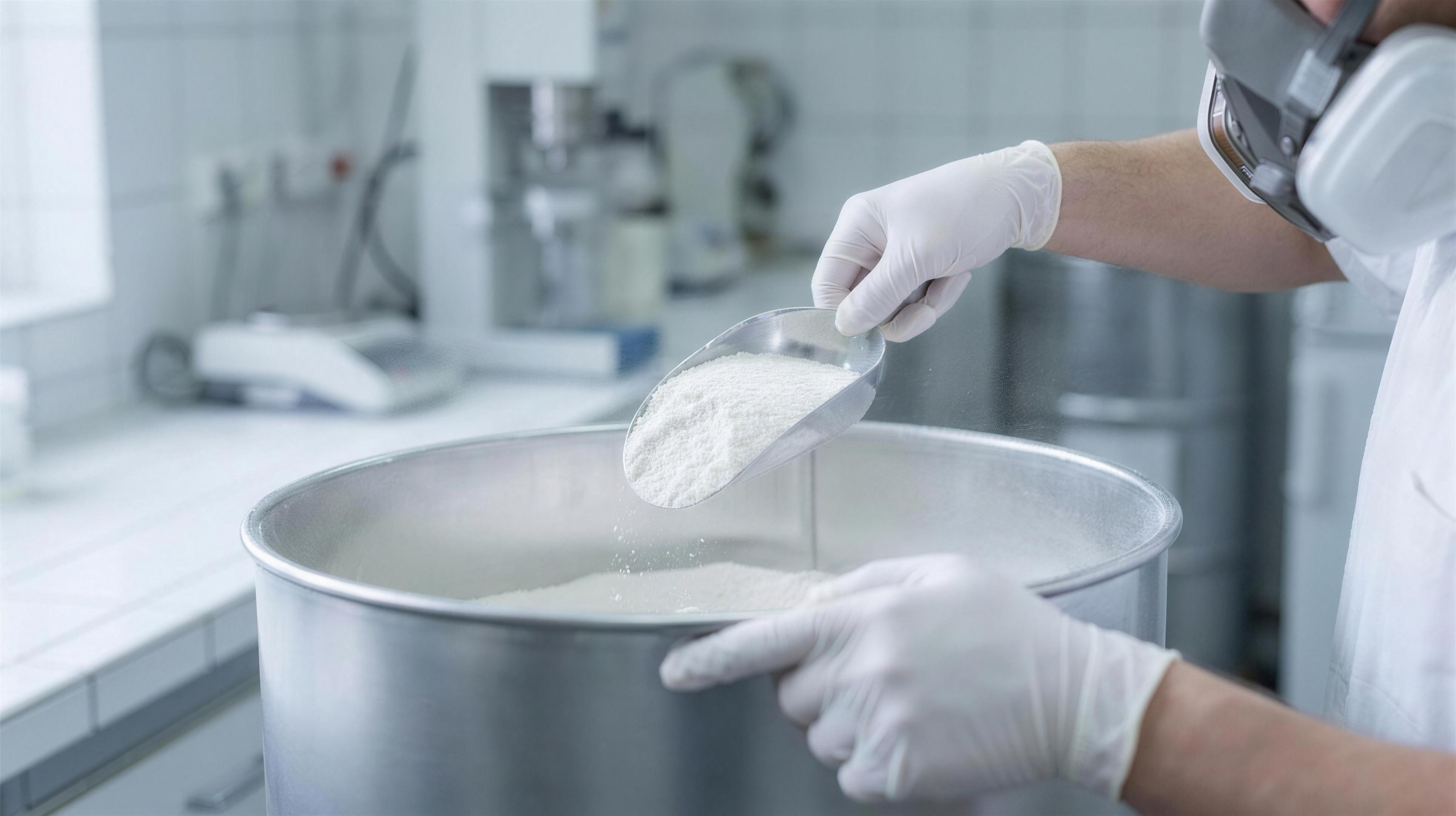
ATO is a dense, fine powder and ships in moisture-protected multiwall bags (commonly 25 kg), bulk bags / super-sacks, and drums, palletized for freight. Because the hazard is driven by airborne dust (see below), bulk handling should be engineered for dust control: closed transfer, local exhaust ventilation at transfer and weighing points, masterbatch or pre-dispersed forms where feasible, and good housekeeping to prevent accumulation of settled powder.
Safety: carcinogenicity, exposure limits & PPE
Antimony trioxide is a hazardous substance and must be handled accordingly. The controlling concern is inhalation of its dust. Antimony trioxide is considered a suspected human carcinogen. The International Agency for Research on Cancer (IARC) has evaluated antimony trioxide as possibly carcinogenic to humans (Group 2B), supported by sufficient evidence of carcinogenicity in experimental animals (lung tumors in inhalation studies) together with mechanistic data; the U.S. National Toxicology Program likewise lists antimony trioxide as reasonably anticipated to be a human carcinogen. It is the subject of ongoing regulatory scrutiny in the U.S. and under REACH in the EU. This is not an “eco” or “green” material, and nothing here should be read as a claim that it is safe.
Occupational exposure is controlled by limiting airborne particulate. The OSHA permissible exposure limit (PEL) for antimony and its compounds, measured as antimony (Sb), is 0.5 mg/m³ as an 8-hour time-weighted average; some jurisdictions have adopted, or proposed, substantially lower limits specifically for antimony trioxide as a respirable fraction, reflecting the carcinogenicity concern. Operations should verify and design to the exposure limits in force at their site.
Practical controls for handling bulk antimony trioxide include:
- Engineering controls first – enclosed handling, local exhaust ventilation at all dust-generating points, and dust-suppressed or pre-dispersed (masterbatch) forms wherever the process allows.
- Respiratory protection – appropriate particulate respirators selected against the measured airborne concentration and the applicable exposure limit.
- Skin and eye protection – chemical-resistant gloves, coveralls, and eye protection to prevent contact and avoid carrying dust out of the work area.
- No ingestion, no smoking, no eating in handling areas, with hand and face washing before breaks and at end of shift, and procedures that prevent take-home contamination.
- Read the SDS for the specific grade and follow it; maintain exposure monitoring and health surveillance where required.
This section is factual guidance for industrial handlers and is not medical advice. Always defer to the supplier Safety Data Sheet, your industrial hygienist, and the regulations applicable to your facility.
Frequently asked questions
Is antimony trioxide toxic or carcinogenic?
Yes – it is treated as a suspected human carcinogen. IARC classifies antimony trioxide as Group 2B (possibly carcinogenic to humans), based on sufficient evidence in animals plus mechanistic data, and the U.S. NTP lists it as reasonably anticipated to be a human carcinogen. The primary route of concern is inhalation of dust, so exposure is controlled with ventilation, enclosed handling, and respiratory PPE. It should not be ingested and is not a “safe” or “green” material.
Why is antimony trioxide used with flame retardants instead of alone?
By itself ATO is a weak flame retardant – its high boiling point keeps it locked in the solid phase. It works as a synergist: paired with a brominated or chlorinated flame retardant, it forms volatile antimony halides during a fire that move into the gas phase and scavenge the radicals driving combustion. The halogen is what carries the antimony into the flame, which is why the two are always used together.
What is antimony trioxide’s role in PET plastic?
It is the standard polycondensation catalyst for poly(ethylene terephthalate). Used at trace levels (a few hundred ppm of antimony), it drives the polymer to high molecular weight during manufacture and remains as a residual constituent of the finished PET. It is favored for being effective, low-cost, and color-friendly, though some food-contact and specialty resins use titanium- or germanium-based alternatives.
What grades and pack sizes does antimony trioxide come in?
It is sold in graded purities (commonly ~99.0% to 99.9% Sb2O3) and in a range of particle sizes, with finer, high-whiteness grades preferred for flame-retardant masterbatch, PET, and pigment work. Bulk packaging is typically moisture-protected 25 kg multiwall bags, bulk bags / super-sacks, and drums, palletized for freight. Buy against a Certificate of Analysis specifying assay, color, particle size, and trace metals.
What exposure limit applies to antimony trioxide?
The OSHA PEL for antimony and its compounds (as Sb) is 0.5 mg/m³ over an 8-hour TWA. Some jurisdictions apply or propose lower limits for antimony trioxide as a respirable particulate because of its carcinogenicity classification. Confirm the limit in force at your location and design dust controls to meet it.
Source antimony trioxide in bulk
See the Antimony Trioxide product page. We support grade selection – assay, whiteness, and particle size – against your application and supply with full SDS and Certificate of Analysis documentation. Tell us your grade, particle-size, volume, and packaging requirements and we will source it. Request a quote on antimony trioxide.
Search 1,300+ industrial chemicals by name or CAS, or send us your spec — we quote by the drum, tote, or container.
Browse the Chemical Index → Request a Quote