
- ▸Technical data sheet: on request
- ▸Safety data sheet: on request
- ▸Certificate of analysis: issued per lot with each shipment
- ▸ Disinfection: sanitizing agent for food and industrial settings
- ▸ Bleaching: oxidative bleaching of paper, pulp and textiles
- ▸ Organic synthesis: epoxidation and oxidation reagent
- ▸ Polymerization: polymerization catalyst and chemical intermediate

GHS06

GHS09
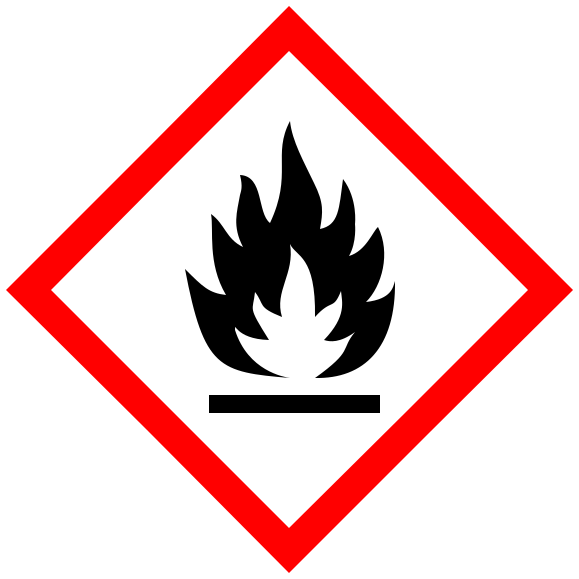
GHS02

GHS07

GHS08

GHS05
- H370: Causes damage to organs [Danger Specific target organ toxicity, single exposure]
- H312 (99.8%): Harmful in contact with skin [Warning Acute toxicity, dermal]
- H302: Harmful if swallowed [Warning Acute toxicity, oral]
- H331 (10.6%): Toxic if inhaled [Danger Acute toxicity, inhalation]
- H410: Very toxic to aquatic life with long lasting effects [Warning Hazardous to the aquatic environment, long-term hazard]
- H242: Heating may cause a fire [Danger Self-reactive substances and mixtures; Organic peroxides]
- H411: Toxic to aquatic life with long lasting effects [Hazardous to the aquatic environment, long-term hazard]
- H330: Fatal if inhaled [Danger Acute toxicity, inhalation]
- H318: Causes serious eye damage [Danger Serious eye damage/eye irritation]
- H335 (27.2%): May cause respiratory irritation [Warning Specific target organ toxicity, single exposure; Respiratory tract irritation]
- H227: Combustible liquid [Warning Flammable liquids]
- H310: Fatal in contact with skin [Danger Acute toxicity, dermal]
- H226: Flammable liquid and vapor [Warning Flammable liquids]
- H400 (100%): Very toxic to aquatic life [Warning Hazardous to the aquatic environment, acute hazard]
- H301 (35.2%): Toxic if swallowed [Danger Acute toxicity, oral]
- H314 (100%): Causes severe skin burns and eye damage [Danger Skin corrosion/irritation]
- H372: Causes damage to organs through prolonged or repeated exposure [Danger Specific target organ toxicity, repeated exposure]
- H332: Harmful if inhaled [Warning Acute toxicity, inhalation]
- H341: Suspected of causing genetic defects [Warning Germ cell mutagenicity]
- H290: May be corrosive to metals [Warning Corrosive to Metals]
Precautionary statement codes: P210, P233, P234, P235, P240, P241, P242, P243, P260, P261, P264, P270, P271, P273, P280, P301+P317, P301+P330+P331, P302+P352, P302+P361+P354, P303+P361+P353, P304+P340, P305+P354+P338, P316, P317, P321, P330, P362+P364, P363, P370+P378, P391, P403, P403+P235, P405, P410, P411, P420, P501, P264+P265, P284, P301+P316, P319, P320, P403+P233, P262, P308+P316, P361+P364, P390, P406, P203, P318
Source: PubChem, compound CID 6585, Safety and Hazards: GHS Classification
A grade-specific Safety Data Sheet (SDS) — with the complete hazard classification, handling precautions, and transport information — is supplied with every shipment and available on request. Confirm all safety and regulatory details against the SDS for your specific grade.
Request SDS →
UN number source: PubChem, compound CID 6585, Transport Information. Class, packing group and proper shipping name: 49 CFR 172.101 Hazardous Materials Table. Confirm against the grade-specific SDS (Section 14) before shipping.
Peracetic Acid (CAS 79-21-0) is an organic peroxyacid supplied as an aqueous oxidizing solution. Established uses include disinfection and sanitizing in food and industrial settings, bleaching of paper and textiles, epoxidation in organic synthesis, and service as a polymerization catalyst and chemical intermediate.
Regulatory & registration requirements
- TSCA (US):
- REACH (EU):
- EC number: 201-186-8
Source: EPA TSCA Inventory (July 2025 release) · ECHA CHEM — retrieved 2026-07-12
Solutions Using This Product
Process-solution guides on this site that specify this chemistry:
- Sanitizing Produce Wash and Flume Water (Agriculture)
- Chemistry for Controlled-Atmosphere Storage (Agriculture)
- Peracetic Acid (PAA) Wastewater Disinfection (Water Treatment)
Frequently Asked Questions
What is peracetic acid used for?
Peracetic acid (CAS 79-21-0) is an organic peroxyacid supplied as an aqueous oxidizing solution. Established industrial uses include disinfection and sanitizing in food and industrial settings, oxidative bleaching of paper, pulp and textiles, epoxidation and oxidation in organic synthesis, and service as a polymerization catalyst and chemical intermediate.
What is another name for peracetic acid?
Peracetic acid is also called peroxyacetic acid (and abbreviated PAA), with the molecular formula C2H4O3 under CAS 79-21-0. It is typically supplied as an equilibrium aqueous solution containing acetic acid and hydrogen peroxide.
Does peracetic acid dissolve plastic?
Peracetic acid is a strong oxidizer supplied in aqueous solution, and material compatibility depends on the specific polymer, concentration, and temperature. Consult the SDS and verify compatibility of contact materials before use; RawSource can provide the SDS to support your handling and containment review.
How is bulk peracetic acid packaged and shipped?
Peracetic acid carries HS code 2915.90 and ships under UN 3107 as an oxidizing/organic-peroxide-class material, so it is handled under the applicable DOT/transport requirements for that classification. Contact RawSource for available bulk packaging and the SDS to confirm compliant shipping for your destination.
What is the cost of bulk peracetic acid?
Pricing varies with concentration, grade, volume, and packaging. Request a bulk quote with your target concentration and quantity rather than relying on a list price, and we will return current pricing with the SDS.
What is the REACH and TSCA regulatory status of Peracetic Acid (Peroxyacetic Acid, PAA)?
Peracetic Acid (Peroxyacetic Acid, PAA) (CAS 79-21-0) is subject to U.S. TSCA Inventory requirements; supplying it into the EU requires valid REACH registration ((EC) No 1907/2006). Buyers should require documented TSCA and REACH compliance for their jurisdiction and volume (EC 201-186-8).
What is the molecular formula of Peracetic acid?
The molecular formula of Peracetic acid is C2H4O3.