
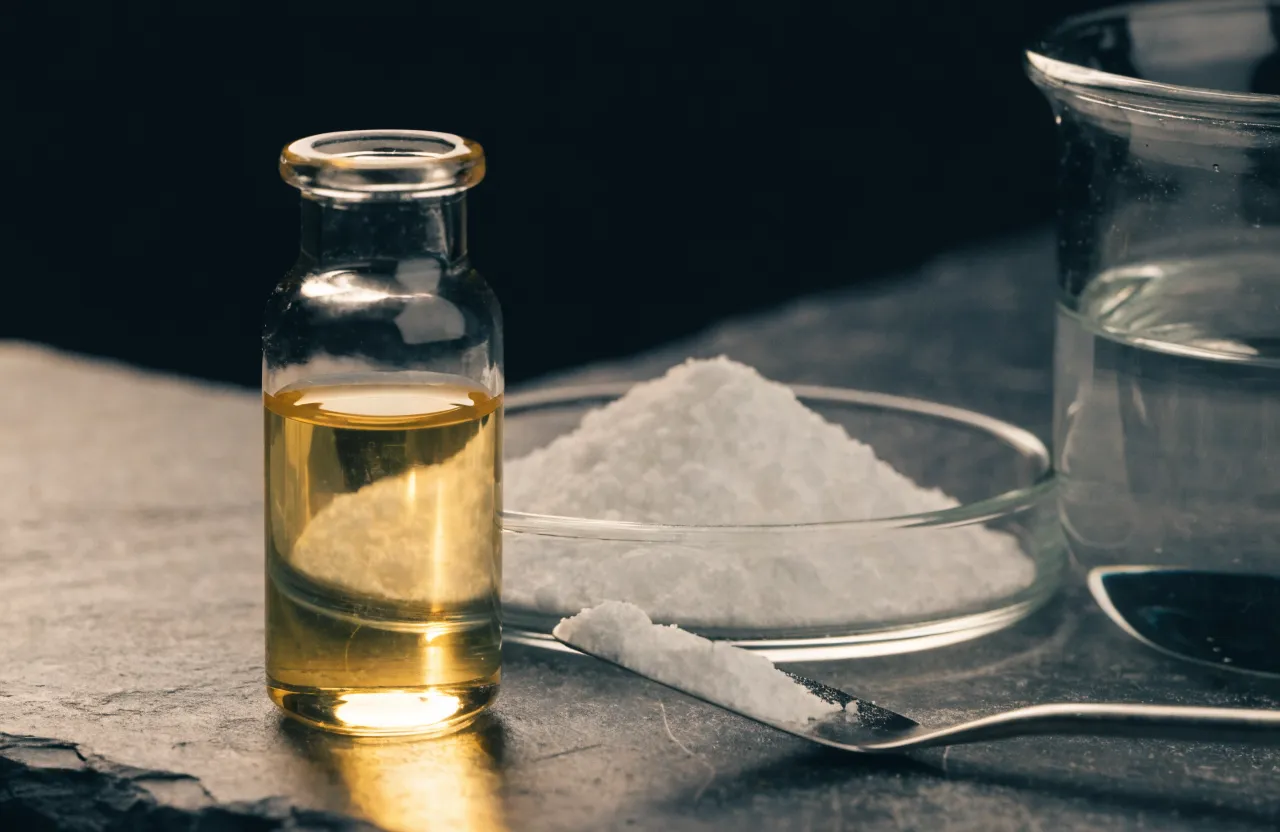
“Preservative” covers two unrelated failure modes. Fats and oils go rancid — an oxidation reaction that antioxidants slow. Higher-moisture foods spoil — mold, yeast and bacterial growth that antimicrobial preservatives slow. Choose from the wrong family and the additive does nothing for the job: an antioxidant does not address mold on bread, and a sorbate does not slow oxidation in frying oil.
Which preservative for which job
| Shelf-life goal | Preservative | Why it works |
|---|---|---|
| Rancidity control in frying oils & high-heat processing (carry-through into the fried food) | TBHQ | Chain-breaking antioxidant with strong stability in vegetable oils and good carry-through |
| Rancidity in animal fats, snacks, cereals & baked goods | BHA + BHT | Chain-breaking phenolics, typically blended; BHA gives carry-through, BHT is low-cost and volatile — synergistic together |
| High-potency antioxidant to boost a BHA/BHT blend | Propyl gallate | Very active radical scavenger; pair with citric acid to avoid iron-contact discoloration |
| Clean-label / natural oil-phase antioxidant | Mixed & alpha tocopherols (Vitamin E) | Natural-source radical scavengers that partition into the fat phase |
| Natural, heat-stable antioxidant for oils & meats | Rosemary extract | Carnosic-acid chain-breaker; label-friendly, holds up to processing heat |
| Water-phase antioxidant, oxygen scavenging, color & flavor protection | Ascorbic acid (Vitamin C) | Reducing agent; scavenges dissolved oxygen and regenerates tocopherol in the aqueous phase |
| Cure accelerator & reductant in meats (no vitamin cost/flavor) | Sodium erythorbate | Ascorbate isomer; speeds cure color development and limits nitrosamine formation |
| Suppress metal-catalyzed oxidation (synergist) | Citric acid / disodium EDTA | Sequester trace copper and iron that catalyze rancidity, multiplying antioxidant efficacy |
| Mold & yeast inhibition up to ~pH 6.5 (cheese, bakery, beverages, dressings) | Potassium sorbate / sorbic acid | Weak-acid preservative; broad mold/yeast control at a higher pH ceiling than benzoate |
| Yeast, mold & bacteria in acidic products, pH < 4.5 (sodas, dressings, condiments) | Sodium benzoate | Cost-effective at low pH, where benzoic acid — the active form — predominates |
| Microbial spoilage + browning control + antioxidant (wine, dried fruit, juices) | Potassium metabisulfite | Releases SO₂: combines microbial spoilage control with oxidative & enzymatic browning control; sulfites require allergen declaration above 10 ppm |
| Cured-meat color, flavor & anaerobic spoilage control | Sodium nitrite | Fixes cure color (nitrosylmyoglobin) and builds cured flavor in the meat-cure system; used in anaerobic cured meats at regulated ppm limits |
| Rope & mold in bread; mold control + flavor in meats | Sodium diacetate | Weak-acid buffer salt; slows rope-forming bacteria and mold while contributing a vinegar note |
The first fork: oxidation vs microbial spoilage
Decide what is actually degrading the product. If the fat oxidizes — off-flavors, rancid aroma, faded color in oils, nuts, snacks, cereals and full-fat dairy — you need an antioxidant. If organisms grow — visible mold, gas, ferment or slime in bread, beverages, dressings, cheese and cured meats — you need an antimicrobial preservative. Many finished products carry both because they fail both ways: a snack with a susceptible oil and enough surface moisture, for example.
Within the antioxidants there is a second sort. Oil-soluble chain-breakers (BHA, BHT, TBHQ, propyl gallate, tocopherols, rosemary) partition into the fat where oxidation actually happens. Water-soluble reductants (ascorbic acid, sodium erythorbate) protect the aqueous phase and mop up dissolved oxygen. And synergists/chelators (citric acid, disodium EDTA) sequester the trace copper and iron that catalyze the whole chain. The durable workhorse is the three-part system — a primary antioxidant, a reductant, and a metal chelator — not any single additive.
The second decision: the pH rule for weak-acid preservatives
Sorbate, benzoate, sulfite and diacetate are weak-acid preservatives. Only the undissociated (protonated) acid crosses the microbial cell membrane, so activity falls as pH rises toward the acid’s pKa. Benzoic acid (pKa ~4.2) is efficient below about pH 4.5, which is why it dominates sodas, dressings and condiments. Sorbic acid (pKa ~4.75) keeps useful activity up to roughly pH 6–6.5, extending it to cheese, baked goods and higher-pH beverages. That pH window — together with the target organism — is what selects the acid. Sulfite and nitrite are special cases: sulfite pairs microbial control with browning and oxidation control in wine, dried fruit and juice; nitrite is specific to the cured-meat system.
Food preservatives & antioxidants
FCC/NF food-grade, bulk and sample quantities. Match the chemistry to the failure mode, then the grade and form to your process.
Grades, forms & related selection guides
Frequently asked questions
Do I need an antioxidant or an antimicrobial?
It depends on how the product fails. Fats and oils degrade by oxidation — rancid aroma, off-flavor, faded color — which calls for an antioxidant such as TBHQ, BHA/BHT, tocopherols or rosemary extract. Higher-moisture foods fail by microbial growth — mold, yeast or bacteria — which calls for an antimicrobial preservative such as sorbate, benzoate, sulfite or nitrite. Products that fail both ways use one of each.
Synthetic (BHA/BHT/TBHQ/propyl gallate) or natural (tocopherols/rosemary/ascorbic) antioxidants?
Synthetic phenolics are highly effective per unit and strong on carry-through, which is why TBHQ dominates frying oils and BHA/BHT protect snacks and cereals. Natural antioxidants — mixed tocopherols and rosemary extract — support clean-label positioning and partition into the oil phase, often paired with ascorbic acid in the water phase and a chelator to sequester metals. The trade-off is typically cost-in-use and label rather than mechanism.
How does product pH decide which antimicrobial works?
Sorbate, benzoate, sulfite and diacetate are weak-acid preservatives that only act in their undissociated form, so efficacy drops as pH climbs toward the acid’s pKa. Benzoate (pKa ~4.2) is best below about pH 4.5; sorbate (pKa ~4.75) holds useful activity up to roughly pH 6–6.5. Fix the product pH first, then choose the acid whose window covers it and whose spectrum matches the target organism.
Why blend an antioxidant with citric acid or a chelator?
Rancidity is largely catalyzed by trace copper and iron picked up from equipment, water and raw materials. Citric acid or disodium EDTA sequester those metals so the primary antioxidant is not spent fighting metal-driven chains, which multiplies its effective life. Propyl gallate in particular is usually paired with citric acid to prevent the dark discoloration it forms on iron contact.
How are food preservatives specified and quoted?
They are supplied to FCC/NF food-grade specifications, defined by grade, particle form (crystal, granular, powder or liquid dispersion) and where relevant Kosher status. Send the failure mode you are controlling, the product pH and matrix, and your volume for a quote; the Certificate of Analysis governs the delivered specification, and additives such as nitrite and sulfites carry their own use-limit and labeling requirements.
Disclaimer
Information on this page describes the food-technology function of preservative and antioxidant ingredients and is provided for general reference. Values are typical and are not a guaranteed specification; the Certificate of Analysis governs. Products are sold for professional food and beverage manufacturing use. Nothing here is a medical, health, nutritional or safety claim. Permitted additives, use levels and labeling — including nitrite use limits and sulfite allergen declaration — are set by applicable food regulations; confirm status, use level and suitability for your product and jurisdiction, and always consult the current Safety Data Sheet before handling.
Search 1,300+ industrial chemicals by name or CAS, or send us your spec — we quote by the drum, tote, or container.
Browse the Chemical Index → Request a Quote