
Your two-part adhesive gels fine in the summer, but the same batch in an unheated January shop is still soft the next morning and the line backs up. Or the anhydride potting compound on the data sheet wants six hours at temperature you would rather not pay for. The fix in both cases is usually not a different primary hardener. It is a few parts of a tertiary-amine accelerator that lowers the activation energy and pulls the cure forward, and the one most formulators reach for first is 2,4,6-tris(dimethylaminomethyl)phenol.
The short version: 2,4,6-Tris(dimethylaminomethyl)phenol, CAS 90-72-2, is a low-viscosity amber tertiary-amine liquid (C15H27N3O, ~265.4 g/mol) used as a catalytic accelerator for epoxy systems. It is not a stoichiometric N-H hardener; as a Lewis base it speeds the cure of amine, polyamide, amidoamine, and anhydride curing agents at room temperature, and at higher loadings it can homopolymerize the epoxy on its own. Typical use is a few parts per hundred resin (phr): roughly 0.5-3 phr to accelerate an anhydride cure, 1-5 phr to push an ambient amine or polyamide, and 5-10 phr as the sole catalyst, all starting points to validate on your own system. The honest trade-off: faster cure means a shorter pot life and a higher peak exotherm, and it adds amber color.
What this accelerator actually is
The accelerator is a single compound: 2,4,6-tris(dimethylaminomethyl)phenol, CAS 90-72-2 (PubChem CID 7026), a phenol ring carrying three dimethylaminomethyl arms. That structure is the whole story. Each arm ends in a tertiary amine nitrogen, and the ring carries a phenolic hydroxyl. Because the nitrogens are tertiary, they have no N-H hydrogen to open epoxide rings the way a primary or secondary amine hardener does. This Mannich-base accelerator therefore does not cure epoxy by addition at a fixed stoichiometric ratio. It catalyzes.
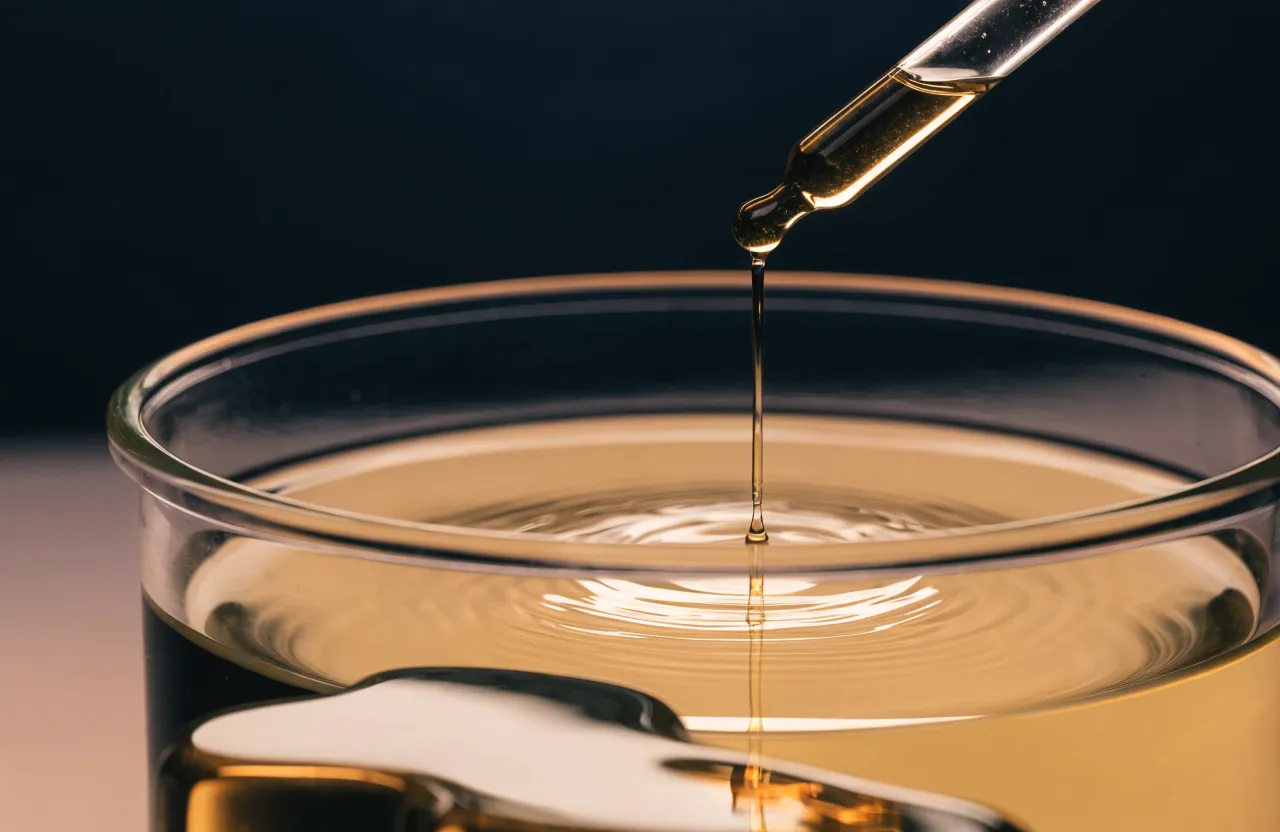
Physically it is a light-yellow to amber (sometimes reddish-brown) liquid with a distinct amine odor, low viscosity near 200 mPa·s at 25 C, and a density just under water at roughly 0.97-0.98 g/cm³. The low viscosity is part of why it is the default accelerator: a few phr blends into a resin or hardener without thickening the mix or needing a solvent.
How the accelerator works
A tertiary amine is a base and a nucleophile, and this one uses both roles. In an amine-cured system, it accelerates the existing epoxy-amine reaction: the basic nitrogen and the phenolic hydroxyl help activate the epoxide and shuttle protons, so the same primary hardener (an aliphatic amine, a polyamide, an amidoamine) reaches gel and through-cure faster and at lower temperature than it would alone. This is the lever the sister chemistries cannot pull on their own in the cold.
In an anhydride-cured system, the mechanism is more direct. The tertiary amine initiates ring-opening, promoting epoxy homopolymerization that generates secondary hydroxyl groups, which in turn open the anhydride ring and propagate the cure. Without an accelerator, anhydride systems are slow and need a long, hot bake; a small dose of the tertiary-amine phenol brings the cure time and temperature down to something a production line can live with.
At higher loadings and with no co-hardener, the accelerator acts as an anionic initiator and homopolymerizes the epoxy itself, building an ether-linked network. That network is real but different from an amine-crosslinked one (see the trade-offs below).
The practical point: this accelerator is dosed catalytically, in a few phr, not at the amine-hydrogen-equivalent-weight stoichiometry you use to set a primary amine ratio. If you are still choosing the primary hardener, our epoxy curing agent selection guide compares the amine classes; this page is about the accelerator you add on top of one.
What the accelerator is used for
Anywhere a system needs to cure faster, cooler, or both, this accelerator is a candidate. The common applications:
- Two-part adhesives. Structural and general-purpose epoxy adhesives use the accelerator to hit a workable fixture time at ambient temperature, including in cool conditions where an unaccelerated amine drags.
- Ambient and low-temperature coatings. Protective and floor coatings that have to cure on a cold slab benefit from the faster room-temperature gel, paired with a polyamide or amidoamine that tolerates the conditions.
- Composites and laminating/casting resins. As an accelerator for amine or anhydride laminating systems, it shortens demold time. With anhydrides it is the classic accelerator for castings and filament winding.
- Anchoring and grouting. Epoxy anchor and repair grouts that must set on a jobsite use a tertiary-amine accelerator to reach handling strength quickly.
- Electrical potting and encapsulation. Anhydride-cured potting and casting compounds, valued for low color and good electrical properties, rely on a tertiary-amine accelerator like this one to cure in a reasonable cycle.
How much accelerator to add
Dose the accelerator to the cure speed and exotherm you actually need, not to a stoichiometric ratio. The loading depends entirely on what it is accelerating. The figures below are widely cited reference ranges; treat them as a starting window and confirm gel time, peak exotherm, and through-cure on your own formulation.
| System being accelerated | Typical 2,4,6-tris(dimethylaminomethyl)phenol loading (phr) | What it does |
|---|---|---|
| Anhydride-cured casting / laminating / potting | ~0.5-3 | Initiates and speeds the anhydride cure; cuts bake time and temperature |
| Ambient amine / polyamide / amidoamine coating or adhesive | ~1-5 | Faster room-temperature gel and through-cure; helps cold cure |
| Liquid epoxy blended with a flexibilizer (e.g. polysulfide) | ~5-15 | Drives cure of slower, flexibilized systems |
| The accelerator as the sole catalyst (epoxy homopolymerization) | ~5-10 | Cures the resin alone via etherification, no co-hardener |
Two rules hold throughout. First, more accelerator means a shorter pot life and a higher peak exotherm: as an illustration, a 100 g mass with about 7 phr of the accelerator in a representative system can fall to a 35-45 minute pot life at 25 C, and a larger mass runs hotter and faster still. Second, dose by weight against your specific resin and hardener and validate, because the right number moves with resin type, mass, film thickness, and temperature.
Mannich-base vs imidazole accelerators
The Mannich-base accelerator is not the only catalytic option, and the choice between it and an imidazole comes down to latency. The tertiary-amine phenol is active at room temperature the moment it is mixed in, which is exactly what you want for a fast ambient two-part cure, and exactly what you do not want if you need a one-component product that ships and stores before it cures.
Imidazoles fill that second role. 2-Methylimidazole and related solid imidazoles are latent at room temperature and fire with heat, and they can homopolymerize epoxy to higher-Tg, low-color networks, which makes them central to one-component adhesives, electronics encapsulants, and powder coatings. 1-Methylimidazole (NMI) is a liquid tertiary-amine catalyst used similarly and as an anhydride accelerator. The rough division of labor:
| 2,4,6-Tris(dimethylaminomethyl)phenol (tertiary-amine phenol) | Imidazoles (NMI, 2-methylimidazole) | |
|---|---|---|
| Activity | Active at room temperature on mixing | Often latent; many fire with heat |
| Best fit | Fast ambient / low-temp two-part cure | One-component, heat-cure, high-Tg networks |
| Form / handling | Low-viscosity liquid, blends easily | Liquid (NMI) or solid (2-MI) |
| Color in cure | Adds amber | Generally lower color |
Combining a tertiary amine with an imidazole is a known way to push cure rate further when neither alone gives the profile you want.
The honest trade-offs
This accelerator is cheap, effective, and forgiving, but it is not free of cost:
- Speed buys a shorter pot life. Each increment that brings the gel forward also cuts working time. Dose to the open time the application needs, not to the fastest possible cure.
- Higher exotherm in mass. Accelerating a thick casting raises the peak exotherm, which can stress, crack, or discolor the part. Thick sections often want the *lowest* effective dose, sometimes with a slower hardener.
- Color. It is an amber liquid and adds color to the cured part, more so at higher loadings and with heat. For water-clear decorative work that is a real limitation, where a cycloaliphatic amine such as isophorone diamine (IPDA) on a low-color route may serve better.
- It is an accelerator, not a primary hardener at low dose. At a few phr it modifies the cure of a stoichiometric amine or anhydride; it does not replace it. Only at high solo loadings does it cure epoxy alone, and that ether-linked network behaves differently (and can be more brittle) than an amine-crosslinked one.
- It does not fix off-ratio or contamination problems. If a fast aliphatic amine like diethylenetriamine (DETA) or triethylenetetramine (TETA) is blushing or mixing off-ratio, an accelerator will not solve that; see amine blush causes and prevention.
Buying the Mannich-base accelerator
See the 2,4,6-tris(dimethylaminomethyl)phenol product page. Tell us your curing agent, your target cure temperature and pot life, and your color tolerance, and request a sample to qualify the loading on your own system.
Frequently asked questions
What is this Mannich-base accelerator used for?
2,4,6-Tris(dimethylaminomethyl)phenol is a tertiary-amine accelerator for epoxy systems. It speeds the room-temperature and low-temperature cure of amine, polyamide, amidoamine, and anhydride curing agents, and at higher loadings it can homopolymerize the epoxy on its own. It is used in two-part adhesives, ambient and cold-cure coatings, composites and laminating/casting resins, anchoring and repair grouts, and anhydride-cured electrical potting and encapsulation.
How much of the accelerator should I add?
It is dosed catalytically, in parts per hundred resin, not at a stoichiometric ratio. As reference starting points: roughly 0.5-3 phr to accelerate an anhydride cure, 1-5 phr to push an ambient amine or polyamide, 5-15 phr with flexibilized systems, and 5-10 phr when 2,4,6-tris(dimethylaminomethyl)phenol is the sole catalyst homopolymerizing the epoxy. More accelerator means a shorter pot life and higher exotherm, so validate gel time and cure on your own formulation.
Does the accelerator cure epoxy by itself?
At higher loadings, yes. As an anionic initiator, 2,4,6-tris(dimethylaminomethyl)phenol can homopolymerize the resin into an ether-linked network with no separate hardener. At the low, few-phr loadings used to accelerate a primary amine or anhydride, it does not cure the system alone; it speeds the cure of the stoichiometric curing agent. The homopolymerized network behaves differently from an amine-crosslinked one and can be more brittle.
What is the difference between this Mannich-base accelerator and an imidazole accelerator?
2,4,6-Tris(dimethylaminomethyl)phenol is active at room temperature as soon as it is mixed, which suits fast two-part ambient and low-temperature cure. Imidazoles such as 2-methylimidazole are often latent and fire with heat, which makes them suited to one-component, heat-cured, and higher-Tg systems like electronics encapsulants and powder coatings. 1-Methylimidazole (NMI) is a liquid tertiary-amine catalyst used similarly and as an anhydride accelerator. The Mannich-base accelerator generally costs less and blends easily but adds more color.
What are the downsides of using this accelerator?
Faster cure comes with a shorter pot life and a higher peak exotherm, which can crack or discolor thick castings, so thick sections often want the lowest effective dose. 2,4,6-Tris(dimethylaminomethyl)phenol is an amber liquid and adds color to the cured part, which matters for clear decorative work. It is an accelerator, not a stoichiometric hardener at low dose, and it will not correct off-ratio mixing or blush. It is also a corrosive amine, so handling requires appropriate PPE.
Editorial note. This article is general technical guidance for adhesive, coating, composite, and electrical formulation professionals. Cure speed, pot life, exotherm, color, and the correct accelerator loading depend on your specific resin, curing agent, ratio, mass or film thickness, and cure environment, and must be validated on your own system; the Certificate of Analysis governs the grade you buy. 2,4,6-Tris(dimethylaminomethyl)phenol is a corrosive tertiary amine and can cause skin and eye burns and respiratory-tract irritation; review the current Safety Data Sheet (SDS) and use appropriate PPE before handling. Products are sold for industrial and professional use only. Nothing here is a medical, health, or safety claim. RawSource makes no warranty, express or implied, and assumes no liability for use of this information.
Search 1,300+ industrial chemicals by name or CAS, or send us your spec — we quote by the drum, tote, or container.
Browse the Chemical Index → Request a Quote