
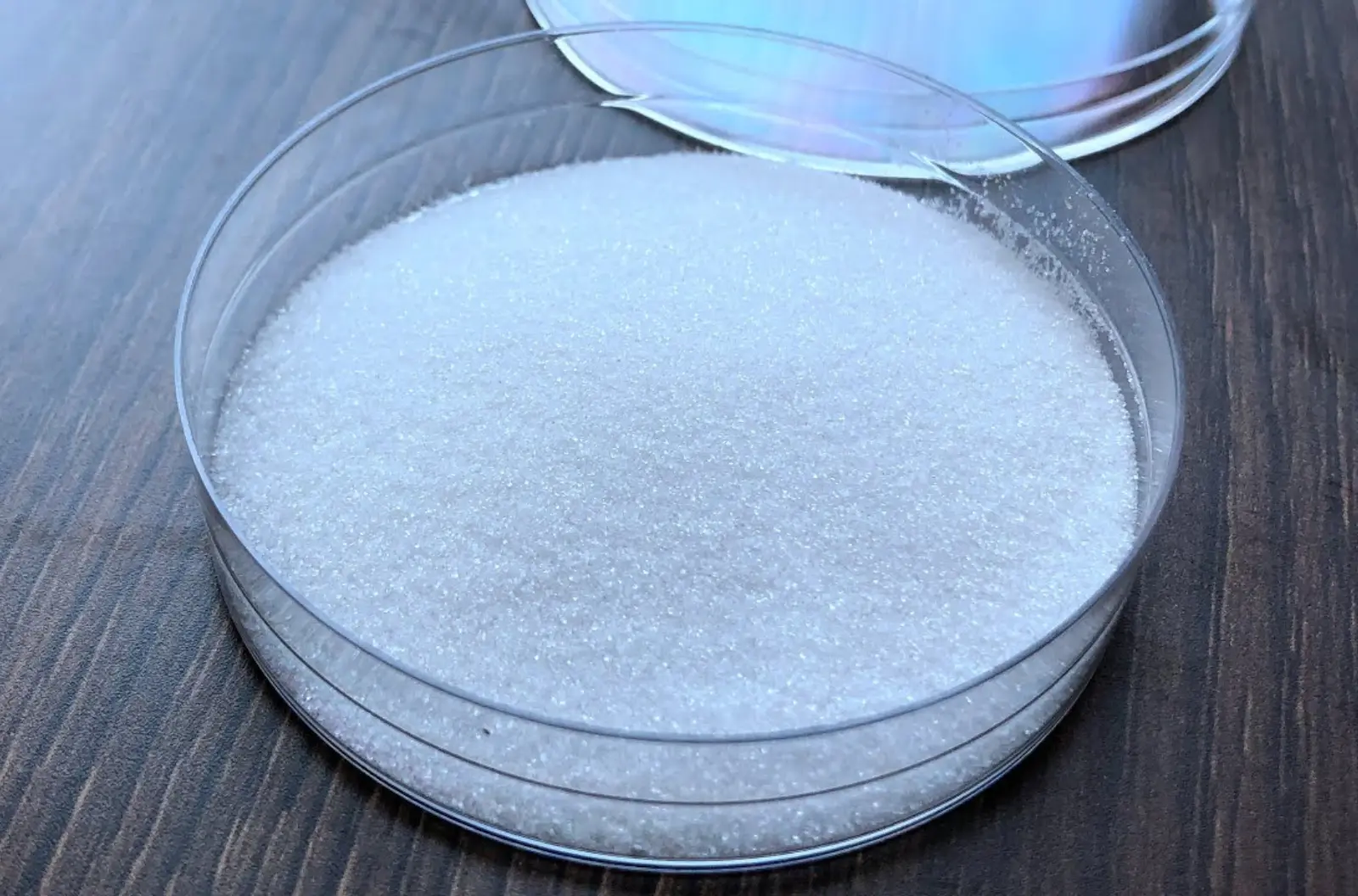
Calcium Formate: Key Features
Calcium formate is a calcium salt of formic acid, offering unique advantages that make it an essential additive in construction:1. Early Strength Development
Calcium formate accelerates the hydration process of cement, enabling quicker setting times and faster early strength gain. This property is especially useful in projects requiring tight timelines or in cold weather conditions where setting time naturally slows.2. Frost Resistance
By promoting rapid hydration, calcium formate minimizes the risk of water freezing in freshly poured concrete during cold weather, thereby enhancing frost resistance and ensuring structural integrity.3. Non-Corrosive Properties
Unlike some traditional accelerators like calcium chloride, calcium formate does not promote corrosion in steel reinforcements. This makes it a safer choice for reinforced concrete structures.4. Eco-Friendliness
Calcium formate is a chloride-free organic salt, an alternative to chloride-based accelerators.| Property | Calcium Formate Advantage |
|---|---|
| Early Strength Development | Speeds up initial hardening process. |
| Frost Resistance | Prevents damage in freezing conditions. |
| Corrosion Resistance | Safe for steel reinforcements. |
| Environmental Impact | Environmental data available on request. |
Looking for High-Quality Chemicals?
Browse our ProductsComparison with Other Additives
Calcium formate is a standout additive in the concrete industry due to its unique properties, but its performance is best understood in comparison to other commonly used additives. Here’s a deeper dive into how calcium formate compares with alternatives like calcium chloride, superplasticizers, fly ash, silica fume, and general accelerators.Calcium Chloride
- Benefits: Calcium chloride is a widely used accelerator, especially in cold-weather concreting. It enhances the early strength development of concrete and reduces setting times, making it suitable for time-sensitive projects. Additionally, it is cost-effective and readily available.
- Drawbacks: Despite its effectiveness, calcium chloride has a significant drawback: it promotes the corrosion of steel reinforcements. This limits its application in reinforced concrete structures, bridges, and buildings that require long-term durability.
- How Calcium Formate Compares: Calcium formate delivers similar acceleration benefits without posing a risk to steel reinforcements. Its non-corrosive nature makes it an excellent alternative for reinforced structures and projects requiring enhanced longevity. Furthermore, calcium formate is safer for use in structures exposed to moisture and harsh environments, where corrosion risks are higher.
Superplasticizers
- Benefits: Superplasticizers are primarily used to improve the workability of concrete without increasing its water content. They allow for the production of high-strength, self-compacting, and pumpable concrete. These additives are ideal for complex and intricate structures requiring excellent flowability.
- Drawbacks: Superplasticizers do not accelerate setting or enhance early strength development, which are crucial in cold climates or projects with tight deadlines. Additionally, their reliance on precise dosing and compatibility with other additives can pose challenges during application.
- How Calcium Formate Compares: Calcium formate effectively counteracts the delayed setting times associated with fly ash. When used together, calcium formate ensures that the early-stage performance of concrete is not compromised while retaining the sustainability and long-term benefits of fly ash. This synergy makes it an excellent choice for environmentally conscious projects requiring efficiency.
Need Reliable and Efficient Chemical Products?
Let us help you find the perfect match for your needs. Get StartedFly Ash
- Benefits: Fly ash is a byproduct of coal combustion, making it a chloride-free choice that supports sustainability. It improves the workability, long-term strength, and durability of concrete while reducing the carbon footprint by replacing a portion of the cement. Fly ash also enhances resistance to chemical attacks and reduces permeability.
- Drawbacks: The use of fly ash delays setting times and early strength development, particularly in cold climates. This limitation makes it less suitable for projects requiring quick turnarounds or rapid strength gain.
- Benefits: Fly ash is a byproduct of coal combustion, making it a chloride-free choice that supports sustainability. It improves the workability, long-term strength, and durability of concrete while reducing the carbon footprint by replacing a portion of the cement. Fly ash also enhances resistance to chemical attacks and reduces permeability.
Silica Fume
- Benefits: Silica fume is known for its ability to significantly enhance the compressive strength, durability, and chemical resistance of concrete. Its ultra-fine particles fill microvoids in the concrete matrix, reducing porosity and increasing resistance to aggressive environments.
- Drawbacks: Despite its benefits, silica fume is expensive and difficult to handle due to its fine particle size. It also requires careful dosing and proper mixing to prevent segregation.
- How Calcium Formate Compares: Calcium formate offers a cost-effective solution for early strength development and can be used alongside silica fume to balance performance. While silica fume focuses on long-term durability, calcium formate addresses the need for faster setting and immediate strength gain, making the two additives complementary.
General Accelerators
- Benefits: General accelerators are additives designed to reduce the setting time of concrete. They are often used in cold-weather concreting, precast applications, and rapid repairs to expedite the construction process.
- Drawbacks: Many accelerators, particularly those containing chlorides, can compromise the durability of concrete by promoting corrosion in steel reinforcements. Additionally, their use may not always align with environmental sustainability goals.
- How Calcium Formate Compares: Calcium formate provides the benefits of acceleration without the associated drawbacks of chloride-based accelerators. It ensures early strength development and rapid setting while maintaining the durability of reinforced structures. Its non-corrosive behavior makes it well suited to a wide range of applications.
Have Questions About Our Product Range?
We’re here to assist you with the right solutions Talk to UsComparison of Calcium Formate with Other Additives
| Additive | Primary Function | Drawbacks | Calcium Formate Advantage |
|---|---|---|---|
| Calcium Chloride | Accelerates strength and setting time | Promotes corrosion in steel reinforcements | Provides non-corrosive acceleration |
| Superplasticizers | Enhances workability and flowability | Does not accelerate strength development | Complements by improving early strength gain |
| Fly Ash | Enhances sustainability and durability | Delays setting time | Counteracts delays while retaining eco-benefits |
| Silica Fume | Increases compressive strength and durability | Expensive and difficult to handle | Offers cost-effective early-stage performance |
| General Accelerators | Reduces setting time | May compromise durability in reinforced concrete | Ensures durability with non-corrosive properties |
FAQs
What is calcium formate used for in construction?
Calcium formate is widely used in construction as a concrete accelerator, improving the setting time and enhancing the strength of concrete at early stages. It is also employed in dry mix mortars, tile adhesives, and grouts to increase durability and resistance to moisture. Additionally, it helps prevent corrosion in reinforced concrete by reducing chloride-induced damage.
Why is calcium used in construction?
Calcium-based compounds, such as calcium carbonate, calcium oxide, and calcium formate, are essential in construction for their ability to improve structural materials. Calcium contributes to the strength and durability of concrete, accelerates cement hydration, and regulates pH levels in building materials, preventing deterioration. It also plays a role in stabilizing soils during construction projects.
What is the use of calcium oxide in agriculture?
In agriculture, calcium oxide (quicklime) is used to improve soil quality by reducing acidity and balancing pH levels. It also enhances nutrient availability for crops and helps control soil-borne pathogens. Additionally, calcium oxide is used in animal bedding to reduce moisture and odor while promoting a hygienic environment for livestock.
What is the pH of calcium formate?
Calcium formate has a pH range of 6 to 8 in aqueous solutions, depending on the concentration. This mild pH makes it suitable for use in various applications, including construction and agriculture, where maintaining a neutral to slightly alkaline environment is beneficial for both materials and biological systems.
What are the uses of formate?
Formates, including calcium formate, have diverse applications across industries. In construction, they serve as accelerators and corrosion inhibitors. In agriculture, they improve soil fertility and act as feed additives for livestock. Formates are also used in de-icing agents, oil drilling fluids, and as intermediates in chemical synthesis. Their biodegradable nature makes them a preferred choice for many applications.
Search 1,300+ industrial chemicals by name or CAS, or send us your spec — we quote by the drum, tote, or container.
Browse the Chemical Index → Request a Quote