
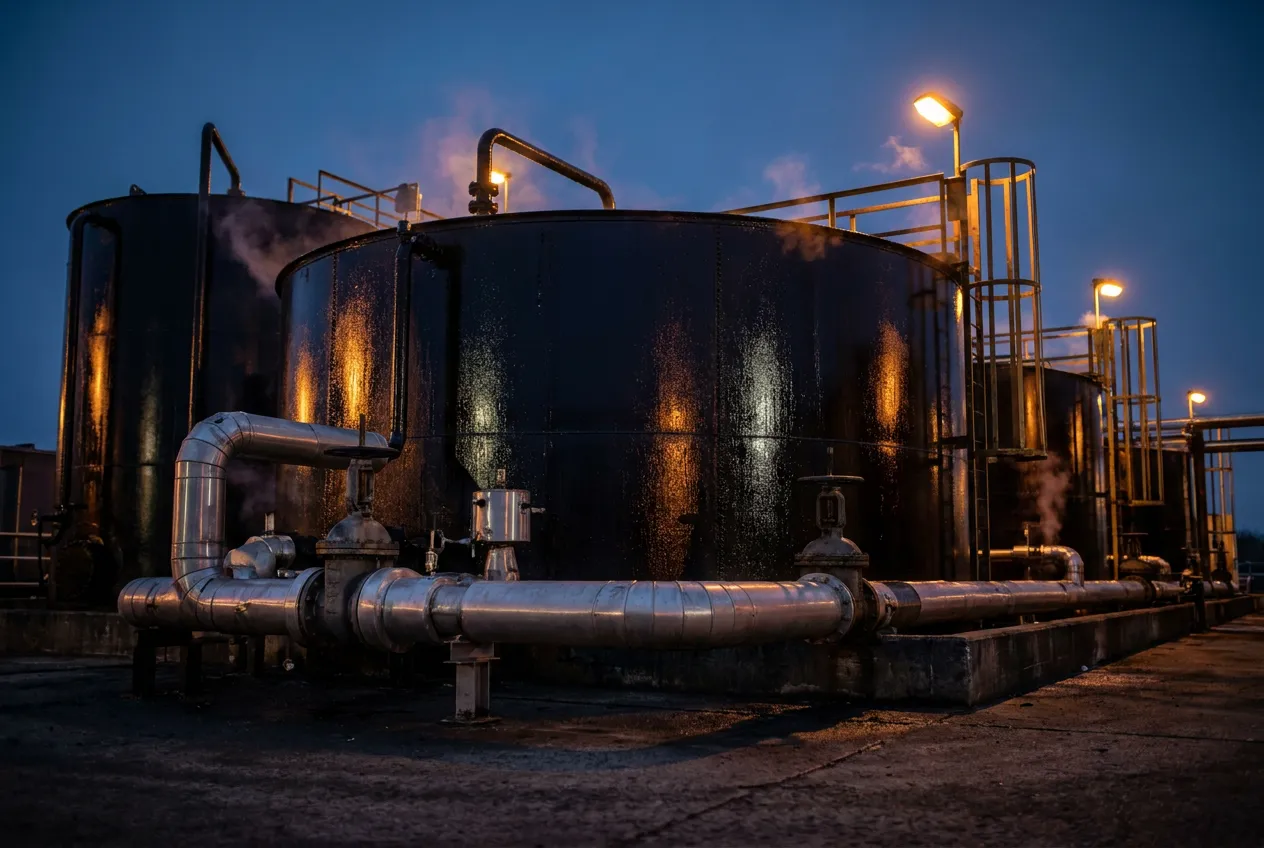
A hot-asphalt tank takes on a load of material carrying a little moisture, and the water flashes to steam inside 300-degree bitumen. The tank foams up, climbs the shell, and threatens to boil over the top. It is a throughput problem, a housekeeping problem, and above all a safety problem, because a foam-over of hot asphalt is a burn and spill hazard.
The short version: asphalt foams when gas is entrained in hot, viscous bitumen, most often from moisture flashing to steam, from air-blowing, or from turbulence during loading. A silicone antifoam controls it at a very low dose, and unlike most foam problems this is one where silicone is clearly the right tool: it works at a few ppm, holds up at asphalt temperatures, and is the standard chemistry for the duty.
Why hot asphalt foams
| Driver | What is happening |
|---|---|
| Moisture in incoming material | water flashes to steam inside hot bitumen and erupts as foam |
| Air-blowing / oxidation | air sparged through asphalt to raise its grade entrains gas and foams |
| Loading and transfer turbulence | filling and pumping whip air into the viscous asphalt |
| High viscosity at temperature | thick bitumen holds the gas instead of releasing it |
The common thread is gas trapped in a hot, viscous liquid that does not drain and burst on its own. The faster you load and the wetter the feed, the worse it gets.
What the foam costs you
Beyond the safety exposure of a boil-over, foam steals working capacity from a tank, slows loading and transfer, and fouls the top of the vessel and the vents. Crews throttle back loading rates to keep the foam in check, which costs throughput at exactly the times a terminal is busiest.
Why silicone is the right antifoam here
A silicone antifoam is built on PDMS carried with hydrophobic silica. Its very low surface tension lets it enter and rupture the gas films in hot bitumen at a few parts-per-million, and it tolerates the temperatures of asphalt storage and air-blowing. That combination of very low effective dose and temperature stability is why silicone is the standard antifoam for asphalt rather than a heavier organic chemistry. A small, well-placed dose breaks the foam and lets the tank take its full load.
How to dose it
Add the antifoam at a low ppm level, ahead of or into the turbulence where the foam forms, and dose up only until the foam is controlled. As with any antifoam, more is not better past the effective dose. Pair the chemical control with the obvious operational fixes, drying or managing moisture in incoming material and moderating loading rate, so the antifoam handles the residual rather than masking a wet-feed problem.
Buying antifoam for asphalt storage
Asphalt terminals, refineries, and hot-mix plants buy antifoam by the drum and tote and dose it routinely through the busy season. The chemistry behind the choice is in silicone vs. organic defoamers, and asphalt sits within oil and gas processing. Trial a sample on your own asphalt before you commit.
Frequently asked questions
Why does hot asphalt foam over?
Gas entrained in hot, viscous bitumen, most often steam from moisture in the incoming material, plus air from air-blowing and turbulence during loading. The hot, thick asphalt holds the gas instead of releasing it, so it foams and can boil over.
Is asphalt foam-over dangerous?
A boil-over of asphalt at storage temperature is a burn and spill hazard, which is why operators throttle loading to control foam. Controlling the foam chemically lets the tank run at full rate more safely.
What antifoam is used for asphalt?
A silicone (PDMS) antifoam at a very low dose is the standard, because it works at a few ppm and tolerates asphalt temperatures. It is one of the clearer cases where silicone is the right chemistry rather than a heavier organic.
How much antifoam do I add?
A few parts-per-million, dosed into or ahead of the turbulence where foam forms, worked up only until the foam is controlled. Combine it with managing moisture in the feed and moderating loading rate.
See the Silicone Antifoam Emulsion (10-50% active) product page.
Editorial note. This article is general guidance for asphalt and bitumen operations, written for industrial and professional use. Hot-asphalt handling carries real safety hazards; follow your site’s safety procedures and the product Safety Data Sheet (SDS). Dose figures are typical literature ranges to validate by trial, not guarantees, and nothing here is a safety or efficacy guarantee. RawSource makes no warranty, express or implied, and assumes no liability for use of this information.
Search 1,300+ industrial chemicals by name or CAS, or send us your spec — we quote by the drum, tote, or container.
Browse the Chemical Index → Request a Quote