
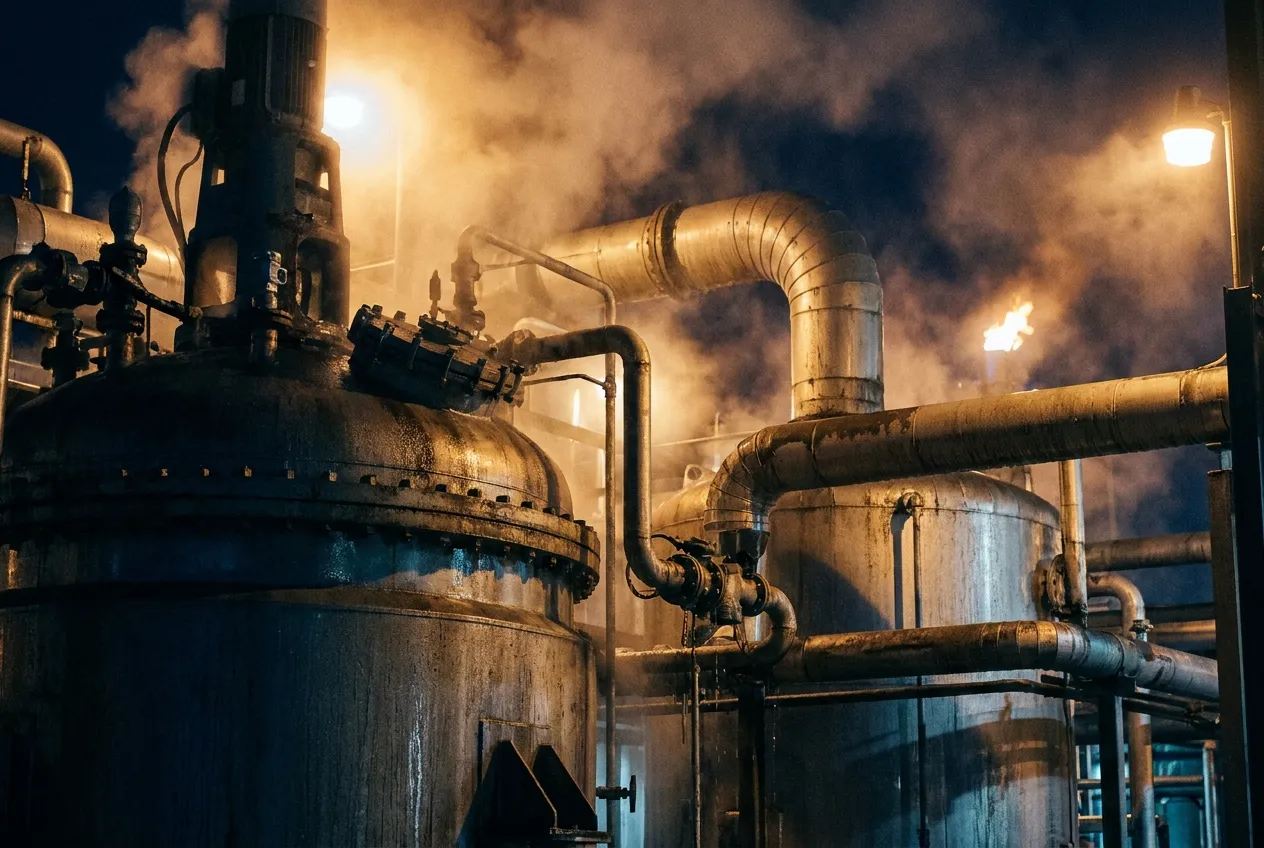
A wet-process phosphoric acid train is foaming at the reactor, and the operator reaches for the silicone defoamer on the shelf. The foam drops. A week later the filter is the problem: throughput is down, the gypsum cake is blinding the cloth, and P2O5 recovery is slipping. The defoamer that was supposed to speed filtration ended up slowing it.
The short version: WPA foam comes from carbon dioxide and hydrogen fluoride evolving out of the acidulation reaction plus organic matter in the phosphate rock acting as a surfactant. A defoamer makes the gypsum cake more porous and lifts P2O5 recovery, but silicone is the wrong chemistry here. It breaks down in hot, strong phosphoric acid, and the silica it leaves behind blinds the vacuum-filter cloth. WPA plants run sulfonated tall oils, fatty acids and esters, and fatty alcohols instead.
Why WPA reactors and filters foam
| Driver | What is happening |
|---|---|
| CO2 and HF gas evolution | the acidulation reaction releases gas that forms foam in the reactor and flash cooler |
| Organic matter in the phosphate rock | rock organics act as surfactants; high-organic rock makes dark acid and stable foam |
| Reaction turbulence and agitation | mechanical energy whips the evolving gas into persistent foam |
When the rock runs high in organics, roughly five to six percent and up, the acid darkens and the foam gets stable enough to overflow the reactor and slow the filter. That is where a defoamer earns its place: by collapsing the foam and keeping the gypsum cake porous, it speeds filtration and recovers P2O5 that would otherwise report to the gypsum stack.
Why silicone is the wrong defoamer here
Silicone is the strongest foam knockdown in most settings, which is why it ends up on the shelf, but the WPA reaction environment turns it into a liability. In hot, strong phosphoric acid the siloxane breaks down, and industry practice and the patent literature attribute filter-cloth blinding to the silica it deposits as it decomposes.
That silica plugs the filter medium, the cake stops releasing, throughput falls, and P2O5 recovery drops, which is the opposite of why the defoamer was added. The tool meant to speed the filter is what blinds it.
What WPA plants run instead
The working chemistries for wet-process phosphoric acid are non-silicone: sulfonated tall oils, fatty acids and their esters, fatty alcohols, and acid-phosphate esters. They knock down the CO2 and HF foam, keep the gypsum cake porous, and do not leave a silica deposit on the cloth.
Plants dose them at the reactor, the flash cooler, and ahead of the filter; reported dose ranges land on the order of tens of grams per tonne of P2O5, though the right figure depends on the rock and the train and should be set by trial.
Buying defoamer for a WPA train
A fertilizer producer buys defoamer by the tote and tanker, and the wrong chemistry costs far more in filter downtime and lost P2O5 than it saves on price.
The same “silicone is the wrong default” logic governs amine gas units, and the broader chemistry comparison is in silicone vs. organic defoamers. Trial a sample on your own acid and rock before you commit to a tote.
Frequently asked questions
What causes foam in wet-process phosphoric acid?
Carbon dioxide and hydrogen fluoride evolving from the acidulation reaction, plus organic matter in the phosphate rock acting as a surfactant. High-organic rock produces dark acid and stable foam that overflows the reactor and slows the filter.
Why shouldn’t I use silicone defoamer in phosphoric acid?
Silicone breaks down in hot, strong phosphoric acid, and the silica it deposits blinds the gypsum filter cloth, cutting throughput and P2O5 recovery. The defoamer added to speed filtration ends up slowing it.
What defoamer do WPA plants use?
Non-silicone chemistries: sulfonated tall oils, fatty acids and esters, fatty alcohols, and acid-phosphate esters. They control the foam and keep the gypsum cake porous without the silica-blinding problem.
Where is the defoamer dosed?
Typically at the reactor, the flash cooler, and ahead of the vacuum filter. Reported doses are on the order of tens of grams per tonne of P2O5, set by trial against the specific rock and train.
Does a defoamer improve P2O5 recovery?
Yes. By collapsing foam and keeping the gypsum cake porous, the right defoamer speeds filtration and recovers P2O5 that would otherwise leave with the gypsum, provided the chemistry does not blind the cloth.
Editorial note. This article is general guidance for wet-process phosphoric acid and fertilizer producers, written for industrial and professional use. The silicone-decomposition and filter-blinding mechanism is attributed to industry practice and patent literature rather than an independent peer-reviewed rate measurement; dose figures are reported ranges to validate by trial, not guarantees. Confirm suitability and consult the product Safety Data Sheet (SDS) before use. RawSource makes no warranty, express or implied, and assumes no liability for use of this information.
Search 1,300+ industrial chemicals by name or CAS, or send us your spec — we quote by the drum, tote, or container.
Browse the Chemical Index → Request a Quote