
Supplied for industrial formulation and manufacturing use; not for retail or consumer sale.
- ▸Technical data sheet, RS-PPDI (PDF)
- ▸Safety data sheet: on request
- ▸Certificate of analysis: issued per lot with each shipment
- ▸ Rigid aromatic diisocyanate used to make high-performance polyurethane elastomers with excellent thermal and dynamic properties
- ▸ Crosslinks polyols/polyamines into PU prepolymers for demanding elastomer and roll-cover applications
- ▸ Delivers high hardness, heat resistance and load-bearing performance in cast PU
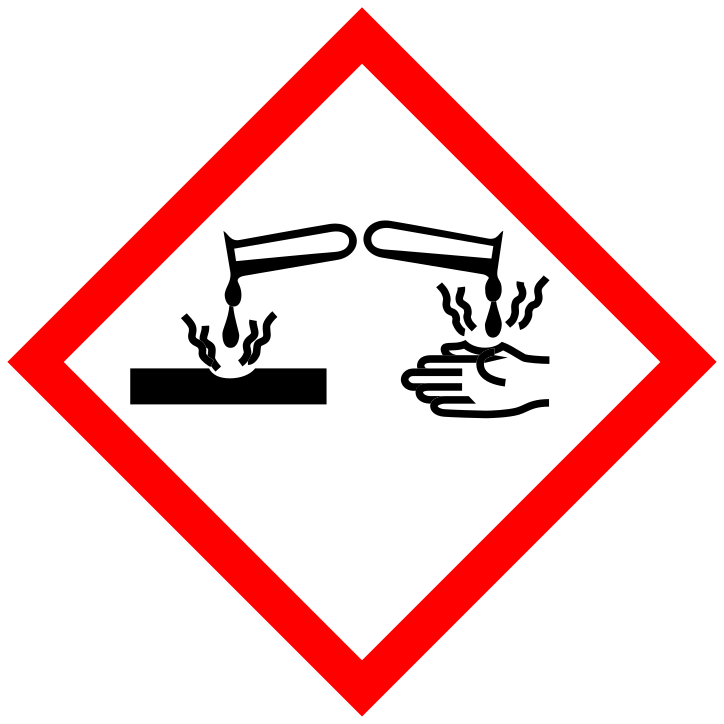
GHS05
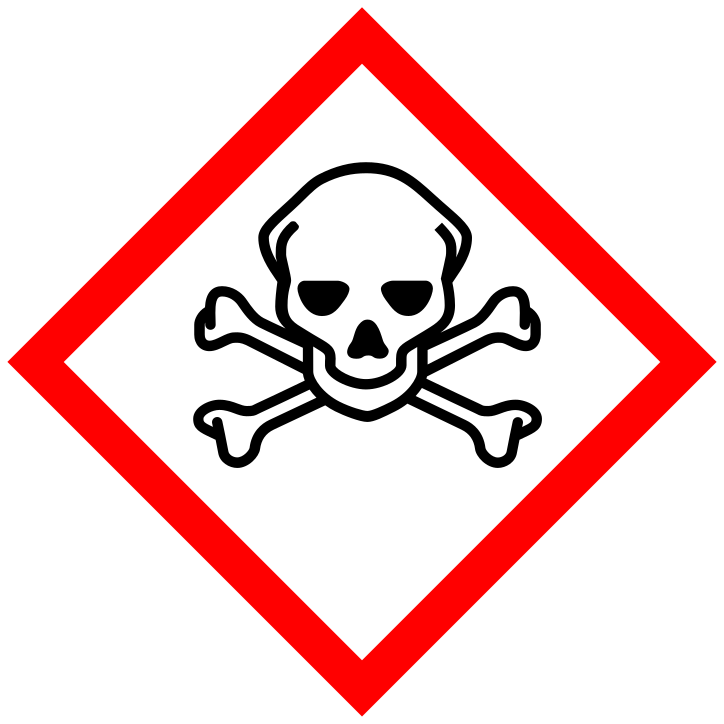
GHS06

GHS07

GHS08

GHS09
- H302 (23.9%): Harmful if swallowed [Warning Acute toxicity, oral]
- H312 (23.9%): Harmful in contact with skin [Warning Acute toxicity, dermal]
- H315 (100%): Causes skin irritation [Warning Skin corrosion/irritation]
- H317 (74.8%): May cause an allergic skin reaction [Warning Sensitization, Skin]
- H318 (24.5%): Causes serious eye damage [Danger Serious eye damage/eye irritation]
- H319 (75.5%): Causes serious eye irritation [Warning Serious eye damage/eye irritation]
- H330 (75.5%): Fatal if inhaled [Danger Acute toxicity, inhalation]
- H332 (23.9%): Harmful if inhaled [Warning Acute toxicity, inhalation]
- H334 (98.8%): May cause allergy or asthma symptoms or breathing difficulties if inhaled [Danger Sensitization, respiratory]
- H335 (31.3%): May cause respiratory irritation [Warning Specific target organ toxicity, single exposure; Respiratory tract irritation]
- H411 (74.2%): Toxic to aquatic life with long lasting effects [Hazardous to the aquatic environment, long-term hazard]
Precautionary statement codes: P233, P260, P261, P264, P264+P265, P270, P271, P272, P273, P280, P284, P301+P317, P302+P352, P304+P340, P305+P351+P338, P305+P354+P338, P316, P317, P319, P320, P321, P330, P332+P317, P333+P317, P337+P317, P342+P316, P362+P364, P391, P403, P403+P233, P405, P501
Source: PubChem, compound CID 61009, Safety and Hazards: GHS Classification
A grade-specific Safety Data Sheet (SDS) — with the complete hazard classification, handling precautions, and transport information — is supplied with every shipment and available on request. Confirm all safety and regulatory details against the SDS for your specific grade.
Request SDS →
para-Phenylene diisocyanate (PPDI) is a high-performance aromatic diisocyanate — its rigid, symmetric structure gives polyurethane elastomers with outstanding dynamic, thermal and hydrolytic performance. Identity: CAS 104-49-4.
What it is
para-Phenylene diisocyanate (CAS 104-49-4) is a crystalline aromatic diisocyanate. Its short, rigid, symmetric structure produces highly ordered hard segments in PU elastomers.
How it works
Its NCO groups react with polyols to form PU; the rigid PPDI hard segment gives elastomers with exceptional dynamic (flex-fatigue), heat and hydrolysis resistance — a premium choice for demanding cast elastomers.
Applications
PPDI is used in high-performance cast polyurethane elastomers (rolls, wheels, dynamic parts) where heat and flex-fatigue resistance are critical. Compare aliphatic TMDI.
Forms, grades and handling
PPDI is supplied as a solid/molten grade in moisture-protected packaging. Properties are typical reference values; the Certificate of Analysis (CoA) for the lot you buy governs. Isocyanates are moisture-sensitive and require respiratory/skin precautions; handle per the current Safety Data Sheet (SDS). Each lot ships with CoA, TDS and SDS.
Bulk supply and RFQ
RawSource supplies para-Phenylene Diisocyanate in bulk, with CoA, TDS and SDS per lot. Tell us your binder system, cure schedule and the performance you need, and we will quote the right grade. See the polyurethane catalysts guide for the catalysts that drive these reactions.
Typical Properties
Typical reference values, not a specification; the Certificate of Analysis (CoA) for the lot governs.
| Property | Typical Value |
|---|---|
| Chemical / class | Aromatic diisocyanate (PPDI) |
| Function | High-performance PU building block |
| CAS Number | 104-49-4 |
| Molecular Formula | C8H4N2O2 |
| Molecular Weight | 160.13 g/mol |
| Handling | Refer to the current SDS |
Used with
Substances this product is used with, each from a cited source or from the product’s own technical data.
- Polytetramethylene ether glycol (Mn ~1000): PPDI at 0.505 mol/min and the glycol at 0.253 mol/min (about 2:1), fed into a twin-screw extruder, give a prepolymer of 6.3% NCO in one published example. (EP 0 316 150 B1)
- 1,4-Butanediol (BDO): cures the PPDI/polytetramethylene glycol prepolymer of 6.3% NCO at 6.4 g per 100 g prepolymer, followed by 5 h at 120 °C, in one published comparative example. (EP 0 316 150 B1)
Made into
What this product is a raw material for.
- thermoplastic polyurethane and cast elastomer: PPDI is a raw material for both.
For industrial and professional use only. Not for supply to the general public.
Safety Data Sheet: provided before or with your first shipment. Request it with your quotation.
Regulatory & registration requirements
- TSCA (US):
- REACH (EU):
- EC number: 203-207-6
Source: EPA TSCA Inventory (July 2025 release) · ECHA CHEM — retrieved 2026-07-12
Frequently Asked Questions
What is para-phenylene diisocyanate (PPDI) used for?
PPDI (CAS 104-49-4) is a high-performance aromatic diisocyanate for premium cast polyurethane elastomers (rolls, wheels, dynamic parts), giving outstanding dynamic, thermal and hydrolytic resistance.
How is bulk PPDI supplied and quoted?
RawSource supplies PPDI in bulk with CoA, TDS and SDS per lot. Pricing is quote-based on grade and volume; submit an RFQ with your binder system and cure schedule.
What is the REACH and TSCA regulatory status of para-Phenylene Diisocyanate (PPDI)?
para-Phenylene Diisocyanate (PPDI) (CAS 104-49-4) is subject to U.S. TSCA Inventory requirements; supplying it into the EU requires valid REACH registration ((EC) No 1907/2006). Buyers should require documented TSCA and REACH compliance for their jurisdiction and volume (EC 203-207-6).