
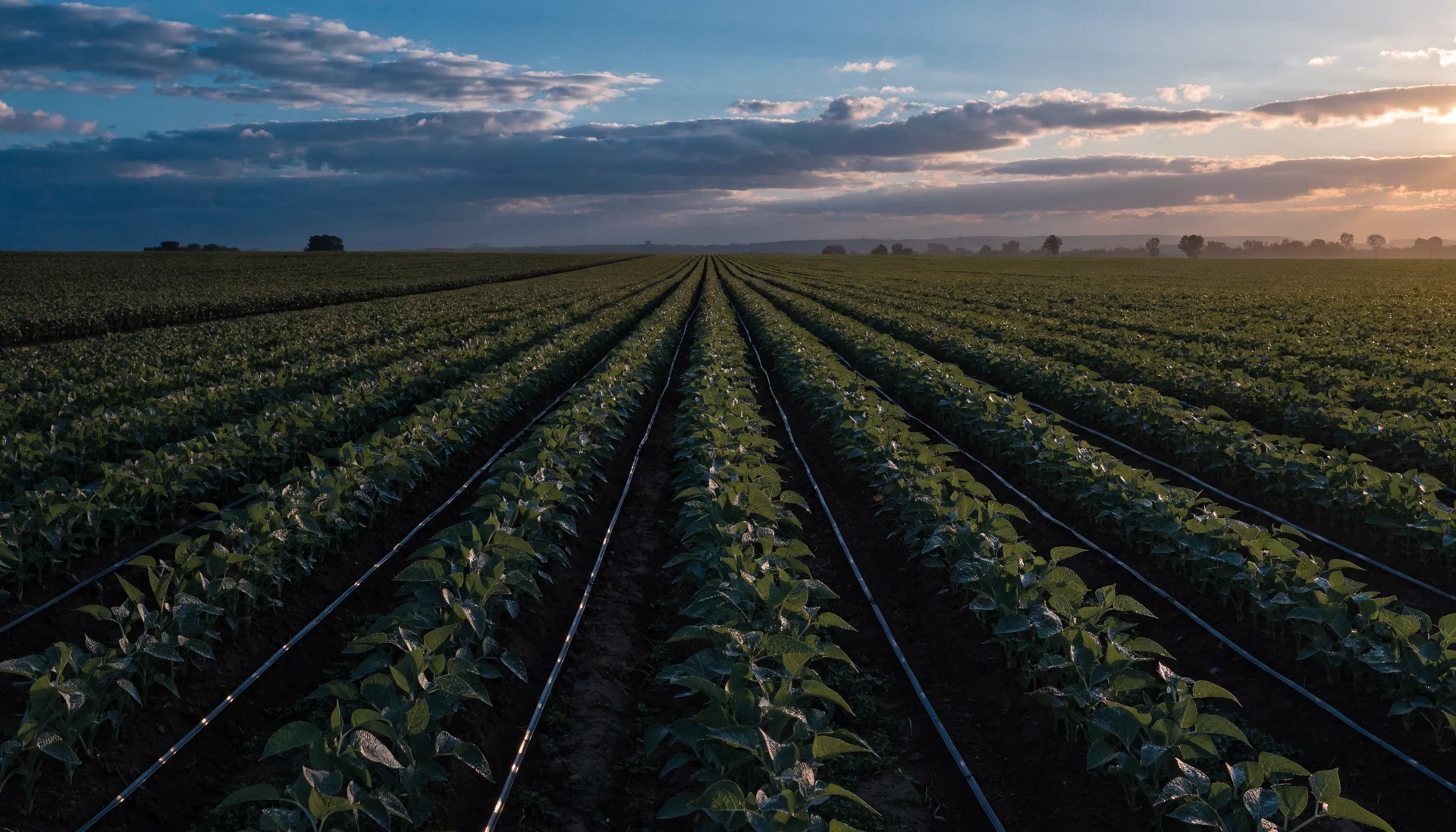
Solution Approach
RawSource supplies the base chemicals that go into these programs. We can help with product selection, grade matching, and sourcing from multiple origins for supply security.
Typical Application Workflow
1
Application & Agronomic Review
Define the use (crop input, adjuvant, soil amendment, post-harvest) and the agronomic, regulatory, and tank-mix requirements.
2
Input & Grade Selection
Match the surfactant or adjuvant, nutrient source, chelate, or formulation aid to the active, water quality, and label.
3
Compatibility & Rate Trial
Confirm tank-mix compatibility, dose, and stability, and size packaging (jugs, drums, totes, bulk) to the season and logistics.
4
Field Validation
Validate efficacy and crop safety in field trials, and lock the spec and supply plan for the season.
Recommended Chemistries (3)
EO/PO Block Copolymer (Demulsifier / Defoamer)
CAS 9003-11-6
Glycols & Polyols
Cleaning / Degreasing
EO/PO block copolymer has inverse-solubility above its cloud point, spreading into foam films to rupture them - a standard non-silicone process defoamer
Quick view
Full Details
Isopropyl Alcohol (IPA)
CAS 67-63-0
Solvents
Solvency
1219 (ISOPROPANOL) · Class Low-surface-tension alcohol destabilizes foam during high-shear mixing for quick knockdown
Melting Point: -88 °C Boiling Point: 82 °C at 760 mmHg Density: 0.785 at 20 °C
Quick view
Full Details
Ethanol
CAS 64-17-5
Solvents
Biocidal Action
1987 (DENATURED ALCOHOL) · Class Acts as a transient antifoam by lowering surface tension in the foam lamella
Melting Point: -114 °C Boiling Point: 78 °C at 760 mmHg Density: 0.79 at 20 °C
Quick view
Full Details
Related Product Families
● Available
Crop Protection Adjuvants
Organosilicone superspreaders, nonionic surfactants, and drift-control polymers that optimize spray deposition, leaf wetting, and active ingredient uptake in tank-mix applications.
WettingDefoamingEmulsificationViscosity Modification
10 chemistries
View family
● Available
Crop Protection Solvents & Carriers
Glycol ethers, aromatic solvents, and polar aprotic carriers for EC, SL, and SC formulation platforms. Selected for solvency power, flash point, and regulatory profile.
SolvencyHumectancyChemical Intermediate
11 chemistries
View family
● Available
Fertilizer Processing Chemicals
Anti-caking agents, conditioners, and coating materials for granular NPK, urea, and specialty fertilizer blending and storage operations.
Anti-cakingCoatingpH AdjustmentChelation
20 chemistries
View family
● Sourcing-only
Soil Conditioning Agents
Polyacrylamide, humates, and superabsorbent polymers that improve soil aggregate stability, water retention, and root-zone nutrient availability.
Soil ConditioningViscosity ModificationHumectancy
6 chemistries
View family
● Available
Seed Treatment Coatings & Binders
Film-forming polymers and adhesive binders for seed coating applications — balancing active adhesion, plantability, and low dust-off characteristics.
Film FormationAdhesion PromotionDispersancy
8 chemistries
View family
● Available
Irrigation & Water Treatment Chemicals
Antiscalants, biocides, and pH adjustment chemicals for drip irrigation, fertigation lines, and greenhouse recirculating systems.
AntiscalingBiocidalpH AdjustmentDispersancy
11 chemistries
View family
● Available
Animal Agriculture Sanitation Chemicals
CIP chemicals, oxidizing and non-oxidizing disinfectants, and water treatment agents for dairy, poultry, and livestock facilities.
BiocidalCleaningpH AdjustmentOxidation
11 chemistries
View family
● Available
Post-Harvest Coatings & Wash Agents
Edible wax coatings, sanitizing wash compounds, and surface treatment agents for fresh produce grading lines.
Film FormationBiocidalAntioxidantCoating
7 chemistries
View family
Related Reading
Technical background and a bulk product for these foam-control programs:
- Complete guide to defoamers — how defoamers and antifoams work, the chemistry families, and how to select and dose them.
- Silicone antifoam emulsion (silicone defoamer) — bulk silicone defoamer for aqueous foam control, with specs, packaging, and starting doses.