
Does every “Ammonium Lauryl Sulfate” carry the same CAS number?
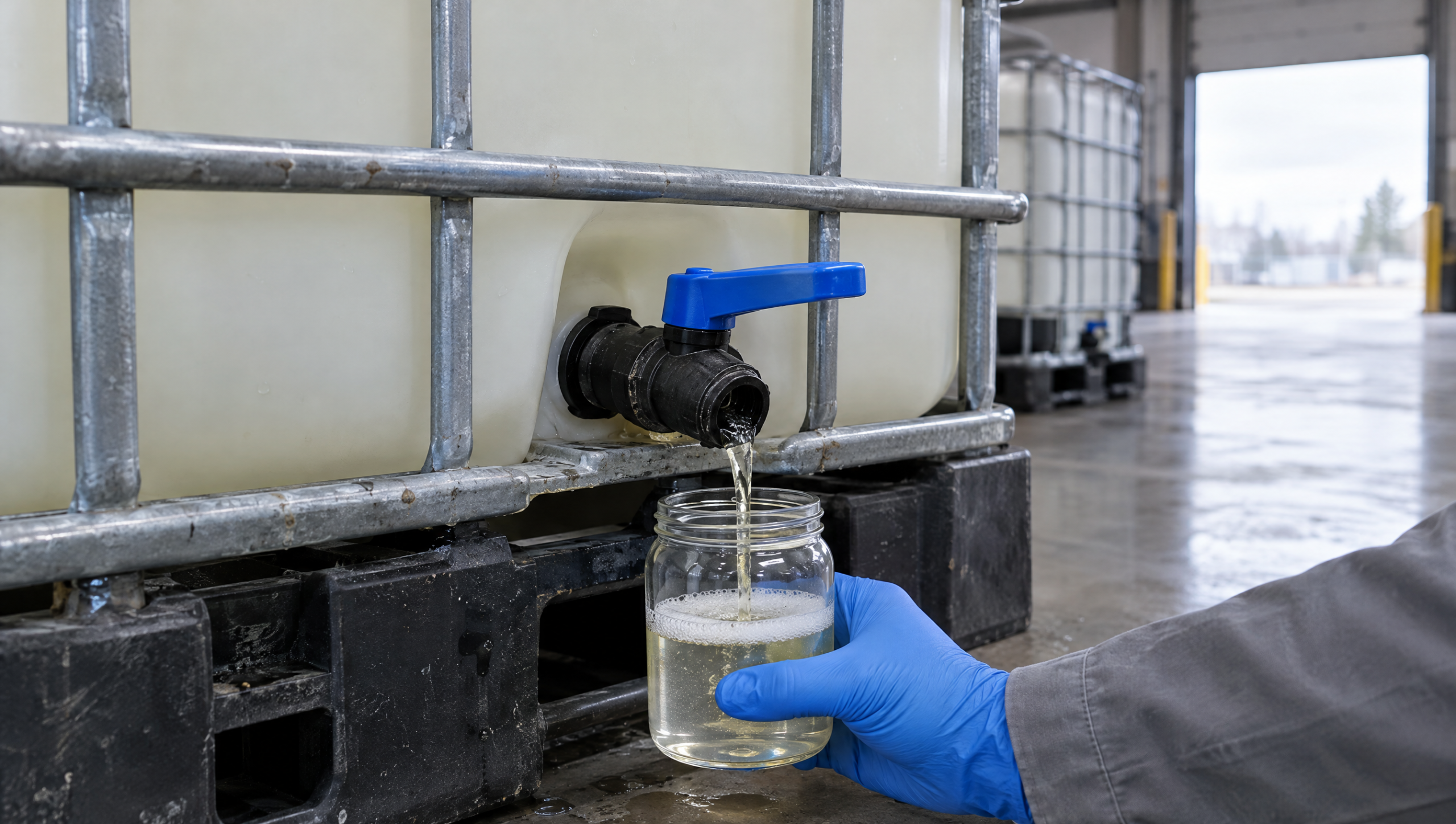
A CoA arrives with your tote of ALS. The INCI name reads “Ammonium Lauryl Sulfate.” The CAS field does not match the 2235-54-3 in your internal spec, your safety dossier and your product information file. QC flags the lot. The supplier insists the material is correct. Both parties are half right.
The EU CosIng database lists only CAS 2235-54-3 under the INCI name “Ammonium Lauryl Sulfate” (European Commission, CosIng, substanceId 74412, EC 218-793-9). That CAS identifies pure C12 ammonium dodecyl sulfate, molecular weight 283.43 g/mol (Environment and Climate Change Canada, Screening Assessment, 2017). But at least one manufacturer’s technical bulletin (dated April 2025) identifies a commercial grade with the same INCI name as a broader C12-14 alkyl-chain cut, with active substance specified at 26.0-28.0% m/m.
Two different chain-length distributions, one INCI name, and a CoA mismatch that your filing did not anticipate. CAS-level specification on the PO prevents it.
Regulatory status: why CAS precision matters for ALS
The regulatory trail is built on CAS, not INCI.
TSCA and EPA. EPA’s Safer Chemical Ingredients List (SCIL) codes ammonium lauryl sulfate under CAS 2235-54-3 as Green Circle in the Surfactants functional class, meaning “verified to be of low concern based on experimental and modeled data” (US EPA, SCIL, 2026). That SCIL listing is CAS-specific. Under FIFRA, EPA ties inert-ingredient registrations to CAS-level identity; identity mismatches trigger cancellation proceedings (Federal Register, 91 FR 73229, November 2026). A surfactant used as an inert in a pesticide formulation must be registered under its precise CAS.
EU Cosmetics Regulation (EC) No 1223/2009. CosIng lists INCI “Ammonium Lauryl Sulfate” with CAS 2235-54-3 only. No Annex entry restricts it, and no maximum concentration is recorded in CosIng (European Commission, CosIng, 2023). But a safety dossier filed for a finished cosmetic product under one CAS cannot simply be swapped to another. The Product Information File must match the CAS on the CoA of the ingredient actually used.
Canada (CEPA). The 2017 federal screening assessment concluded that CAS 2235-54-3, along with SLS and TEA lauryl sulfate, does not meet any criteria of CEPA section 64 (Environment and Climate Change Canada; Health Canada, 2017).
CIR. The Cosmetic Ingredient Review panel found ALS safe in rinse-off formulations and capped leave-on products at 1% maximum concentration (CIR, JACT 2(7):127-81, 1983; confirmed in 2002 re-review, IJT 24(S1):89-98, 2005).
The practical risk: if your PIF or EPA filing references CAS 2235-54-3 and your incoming CoA carries a different CAS for a broader-cut grade, you have a documentation mismatch that an auditor or border reviewer will catch.
What does a CAS 2235-54-3 grade look like on a spec sheet?
| Property | CAS 2235-54-3 (Pure C12) |
|---|---|
| Chemical name | Sulfuric acid, monododecyl ester, ammonium salt |
| Molecular weight | 283.43 g/mol (single defined structure) |
| CosIng INCI mapping | Yes (substanceId 74412) |
| ECHA EC number | 218-793-9 |
| EPA SCIL status | Green Circle (Surfactants) |
| Typical solids | 27-29% at 125 °C (one commercial grade TDS) |
| Specific gravity | 1.03 at 68 °F (NOAA CAMEO Chemicals, citing USCG 1999) |
| Nature | Anionic |
| Physical form | Liquid (aqueous solution) |
The solids line deserves attention. The TDS for the pure C12 grade reports “Solids (125 °C)” at 27-29%, which is an oven-dry total-solids measurement. A C12-14 grade bulletin from a different manufacturer reports “active substance” at 26.0-28.0% m/m, likely a titrated value. The two numbers are not directly comparable. When evaluating suppliers, confirm the analytical method before concluding the assays are equivalent.
Note also that TDS values are typical of recent production and do not constitute a sales specification; the lot-specific CoA governs for any shipment.
Why this chemistry, and where the CAS choice matters in formulation
ALS is an anionic surfactant used primarily for cleaning and degreasing. It is manufactured by sulfating n-dodecyl alcohol (with chlorosulfonic acid or SO3) and neutralizing with ammonia (PubChem, HSDB record 2101). The ammonium counter-ion gives ALS a lower pH in solution than SLS and slightly different rheology, which is why personal care formulators choose it for shampoos, body washes, cleansers and shaving creams (Environment and Climate Change Canada, 2017).
Typical use levels run 5-25 wt% anionic surfactant in shampoo and conditioning formulations, with 12-18 wt% preferred (US Patent 5,290,482, 1994). One test shampoo formula documents 8.0% ALS with 2.0% cocamidopropyl betaine and 0.5% sodium chloride as a viscosity modifier.
Health Canada’s cosmetic notifications show ALS concentrations as high as 70% w/w in hair shampoo and 30% w/w in wash-in permanent hair dye (Environment and Climate Change Canada, 2017, Table 6-2). Those figures likely refer to the ingredient as supplied (aqueous solution), not active matter. The distinction matters: if your formula calls for 8% active ALS and you dose 8% of a 28% solution, you have delivered about 2.2% active.
Where chain-length distribution becomes a formulation variable. Pure C12 (CAS 2235-54-3) is a single-chain-length substance. A broader C12-14 cut introduces myristyl and other homologues that shift the critical micelle concentration and may alter foam density, viscosity response to salt and skin-feel. If you qualified your formula on a pure C12 grade and your supplier ships a broader cut, your QC panel test may drift.
The reverse is also true: if your formula is tolerant of chain-length variation, a broader-cut grade may offer better availability at a comparable price. The trade-off is reproducibility against supply flexibility, and only your own stability and performance data resolve it.
What to verify when sourcing ALS
Write CAS on the PO. The single most effective action is specifying the CAS number, not just the INCI name, on every purchase order and incoming-material spec. If your safety dossier, PIF or EPA filing references 2235-54-3, your PO must call out 2235-54-3.
Compare active-matter test methods. When evaluating a new supplier, request the CoA and confirm whether the reported assay is total solids (oven at 125 °C) or titrated anionic active matter. A CoA that reads “28%” by one method is not interchangeable with “28%” by the other.
Request chain-length distribution data. For any grade, ask the supplier for GC or similar chain-length characterization, not just an aggregate active-matter number. For the pure C12 grade (2235-54-3), confirm that C14 and other homologues fall below whatever threshold your spec requires.
Check storage conditions. The 30% aqueous solution must be kept from freezing. A frozen tote that is thawed and re-homogenized should be retested before release.
Confirm regulatory alignment for your end market. If the finished product enters the EU market, verify that the CAS on the CoA matches the CAS in your CPNP notification and PIF. If the material serves as an inert ingredient in a FIFRA-registered product, the CAS must match the registration. The pattern from EPA’s cancellation proceedings is clear: identity mismatches at the CAS level are not administrative nuisances. They void registrations.
Ammonium Lauryl Sulfate, 30% is available as a pure C12 grade (CAS 2235-54-3) with 27-29% solids. For related INCI-vs-CAS sourcing questions, see Same CAS, Different Drum: Why 63148-62-9 Is Not a Spec.
Request pricing and specification
Request current pricing, availability and a lot-specific Certificate of Analysis for Ammonium Lauryl Sulfate, 30%, specifying CAS 2235-54-3 to match your filing. A CoA confirming CAS, solids or active matter, and chain-length distribution is available on request.
Related on RawSource
- Ammonium Lauryl Sulfate, 30% (CAS 2235-54-3): product page for the pure C12 grade discussed throughout this article.
- Beauty and Personal Care: industry hub for personal care sourcing guides and ingredient resources.
- Lauramine Oxide: INCI and CAS alignment in surfactant sourcing: related post on navigating INCI-vs-CAS gaps for another common surfactant.
- Silicone Antifoam: Wastewater and Foam Dressing Applications: related post on CAS identity issues in another specialty chemical category.
Frequently asked questions
Is ammonium lauryl sulfate the same as sodium lauryl sulfate?
Does ammonium lauryl sulfate precipitate in hard water?
What storage precautions apply to ALS solutions?
Sources & methodology
Figures are RawSource sourcing data unless attributed to a named source. Regulatory citations are current as of publication. Chemical identities verified by CAS number against the RawSource catalog.
Search 1,300+ industrial chemicals by name or CAS, or send us your spec — we quote by the drum, tote, or container.
Browse the Chemical Index → Request a Quote