TABLE OF CONTENTS
TABLE OF CONTENTS
Sourcing bulk chemicals has become significantly more complex in 2026. With tariff shifts, supply chain disruptions, and tightening regulatory requirements, procurement teams need a disciplined approach to find the right material, at the right specification, from the right bulk chemical supplier. According to Grand View Research, the global chemical distribution market is projected to reach $403 billion by 2030, and the competition for reliable supply is intensifying across every sector.
This guide walks through a practical five-step framework for sourcing bulk chemicals: from defining your specifications through supplier evaluation, compliance, pricing negotiation, and logistics planning.
Why Bulk Chemical Sourcing Demands More Rigor in 2026
The sourcing environment has shifted dramatically. According to a Baker Tilly analysis, 86% of supply chain leaders now report significant operational impacts from recent trade policy changes. A separate Supply Chain Dive report found that 65% of companies are actively changing their sourcing patterns.
For chemical procurement specifically, these shifts create three compounding pressures:
- Tariff exposure. Many chemicals imported from key manufacturing regions now carry additional duties, squeezing margins and forcing supplier diversification.
- Extended lead times. Average global shipping delays reached 20 days in 2024, with some lead times extending to 79 days, according to Deloitte supply chain data.
- Specification drift. Switching suppliers under pressure, without verifying grade equivalence, can introduce quality failures downstream.
Procurement teams that follow a structured sourcing process, rather than reacting to price or availability alone, are better positioned to control cost, ensure quality, and maintain supply continuity.
Step 1: Define Your Chemical Requirements Before Sourcing
The most common and most expensive mistake in bulk chemical procurement is sourcing before the specification is locked. A procurement manager at a coatings manufacturer once switched to a lower-cost solvent supplier to reduce raw material spend. The replacement product met the same CAS number and nominal purity, but its residual moisture content was higher than the original. The result: batch failures, rework, and a net cost increase that exceeded the original savings by a wide margin.
Specifications and Grades
Start every sourcing project by documenting the full technical specification:
- CAS number for unambiguous chemical identification. For example, isopropyl alcohol is CAS 67-63-0; specifying the CAS number eliminates confusion with similar products.
- Purity and grade. Be precise. “High purity” is not a specification. Instead, specify the grade: technical grade (typically 95-99%), reagent grade (99%+), USP/NF grade (pharmaceutical), or food-grade (FDA-compliant). Each carries different pricing and regulatory implications.
- Physical properties. Depending on the chemical, document viscosity, concentration, particle size, pH, color index, or moisture content. For silicones, viscosity grade (e.g., 100 cSt vs. 12,500 cSt PDMS) directly determines application suitability.
- Regulatory requirements. Note whether the end application requires specific certifications: NSF/ANSI 60 for water treatment chemicals, FDA compliance for food-contact materials, or REACH registration for EU export.
Volume and Packaging
Define your volume requirements and acceptable packaging formats:
| Packaging Format | Typical Capacity | Best For |
|---|---|---|
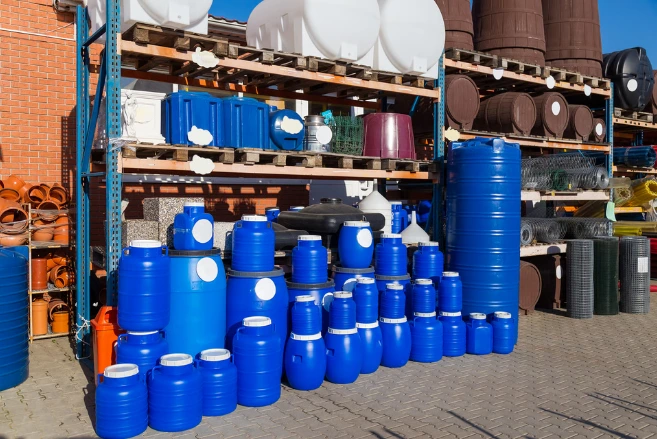
| Drums (steel or poly) | 55 gallons / 200 liters | Moderate volumes, easy handling |
| Totes / IBCs | 275–330 gallons / 1,000 liters | Mid-volume, reduced handling |
| Bulk truck (tanker) | 3,000–5,000 gallons | High-volume, direct delivery |
| ISO tank container | 5,000–6,000 gallons | International shipments |
| Flexitank | Up to 6,300 gallons | Non-hazardous liquids, ocean freight |
| Super sacks / FIBCs | 1,000–4,000 lbs | Dry bulk powders and granules |
Consider your storage infrastructure, delivery frequency, and shelf-life constraints when selecting packaging. Ordering a full tanker load of a shelf-life-sensitive material without sufficient turnover creates waste, not savings.
Step 2: Evaluate and Qualify Bulk Chemical Suppliers
Distributor vs. Manufacturer
Understanding when to source from a manufacturer versus a distributor is a strategic decision, not simply a cost comparison.
Manufacturers are typically the right choice when you need very large volumes of a single product (e.g., railcar quantities), require a proprietary formulation, or need direct access to production scheduling.
Distributors offer advantages when you source multiple chemical families, need smaller or more flexible MOQs (minimum order quantities), require stocked inventory for faster delivery, or need a single partner to consolidate shipments across product categories. A global chemical supply partner with international sourcing networks can also help navigate tariff exposure by qualifying alternate origins for the same material.
Supplier Qualification Checklist
Before approving any new bulk chemical supplier, evaluate these criteria:
- Certifications. Look for ISO 9001 (quality management), ISO 14001 (environmental management), and participation in Responsible Care programs through the American Chemistry Council.
- Documentation standards. The supplier must provide current Certificates of Analysis (CoA) for every lot, Safety Data Sheets (SDS) compliant with GHS labeling requirements, and technical data sheets with complete physical property data.
- Regulatory compliance. Verify that the supplier’s products comply with TSCA (U.S.), REACH (EU), and any industry-specific regulations relevant to your application.
- Financial stability. Request credit references or financial statements. A supplier that cannot sustain operations during a market downturn puts your supply chain at risk.
- Delivery track record. Ask for on-time delivery performance metrics. Consistent 95%+ on-time rates indicate operational reliability.
- Backup sourcing. For critical materials, confirm whether the supplier maintains alternate manufacturing or sourcing channels to mitigate single-source risk.
Step 3: Navigate Regulatory and Compliance Requirements
Regulatory compliance is not optional, and it is not the supplier’s sole responsibility. Procurement teams must verify that every chemical entering their facility meets applicable standards.
U.S. regulatory framework:
- OSHA Hazard Communication Standard (HCS) requires SDS access and proper labeling for all hazardous chemicals.
- EPA TSCA governs the manufacture, import, and use of chemical substances in the U.S.
- DOT regulations apply to hazardous materials transport, including packaging, labeling, and driver certification requirements.
International considerations:
- For chemicals imported from or exported to the EU, REACH registration status must be confirmed.
- GHS-compliant labeling is required in most major markets, though classification details can vary by country.
- Import documentation, including commercial invoices, packing lists, country-of-origin certificates, and bills of lading, must be accurate and complete to avoid customs delays.
For industrial lubricants, oil and gas chemicals, and agricultural chemicals, additional sector-specific regulations often apply. Verify requirements for your specific application before placing orders.
Step 4: Negotiate Pricing and Payment Terms
Price negotiation for bulk chemicals extends well beyond the unit cost per kilogram. Effective procurement professionals evaluate the total cost of ownership (TCO), which includes:
- Unit price. Negotiate based on volume commitments, contract duration, and market conditions.
- Freight and logistics. Delivered pricing (DDP or DAP) versus ex-works pricing can shift cost responsibility significantly. A lower unit price with expensive freight may cost more than a slightly higher price with included delivery.
- Storage and handling. If the supplier provides just-in-time delivery or warehousing services, factor that into the total value.
- Waste and disposal. For chemicals with shelf-life limitations or hazardous waste disposal requirements, factor end-of-life costs into the sourcing decision.
Payment terms also affect total procurement cost. Standard terms range from net 30 to net 60, but early payment discounts (e.g., 2% net 10) can generate meaningful savings at scale. For international transactions, letters of credit provide security for both buyer and supplier.
With 57% of companies now renegotiating supplier contracts according to Baker Tilly, pricing structures are more fluid than usual. Long-term agreements with index-based pricing clauses can help both parties manage volatility without constant renegotiation.
Step 5: Plan Logistics and Delivery for Bulk Chemicals
Logistics planning determines whether your sourcing strategy actually works in practice. A well-negotiated contract fails if the material does not arrive on time, in spec, and in the right packaging.
Freight modes for bulk chemicals:
- Bulk truck for domestic deliveries of 3,000-5,000+ gallons. Most cost-effective for regional sourcing.
- Rail for very large volumes (tank cars of 10,000-30,000 gallons) where rail infrastructure connects supplier and buyer.
- Ocean container for international sourcing. Standard 20-foot containers carry drums, totes, or flexitanks.
- ISO tank containers for international liquid shipments requiring reusable, intermodal packaging.
Hazardous materials compliance applies to most bulk chemical shipments. DOT (domestic) and IMDG Code (international ocean) regulations govern packaging, labeling, placarding, and emergency response documentation. Ensure your logistics provider holds the appropriate hazmat certifications.
Inventory strategy should balance two risks: stockout cost versus carrying cost. For shelf-life-sensitive chemicals, just-in-time delivery with safety stock buffers typically outperforms large-volume single deliveries. For stable, high-turnover materials, larger orders at lower frequency often reduce per-unit logistics cost.
If your supply chain involves international sourcing, understanding defoamers or surfactants imported from multiple origins, for example, working with a distribution partner that manages supply chain solutions and consolidates shipments can reduce complexity significantly.
Sourcing Bulk Chemicals Through a Global Distribution Partner
For procurement teams managing diverse chemical portfolios across multiple applications, working with a chemical raw material supplier that maintains stocked inventory and global sourcing capability simplifies the process. RawSource supports buyers across coatings and construction, beauty and personal care ingredients, textile chemicals, and industrial applications with custom chemical blending, technical support, and flexible packaging options.
Whether you need a single drum of a specialty amine or a full container of bulk acids, RawSource’s sourcing team can provide current availability, competitive pricing, and documentation to support your qualification process.
Key Takeaways for Sourcing Bulk Chemicals
- Specification first. Lock the CAS number, purity grade, and physical property requirements before contacting suppliers. Buying the wrong spec wastes more money than any discount saves.
- Qualify rigorously. Use a structured checklist covering certifications, documentation, compliance, financial stability, and delivery performance.
- Understand total cost. Unit price is only one component. Freight, storage, handling, and disposal costs determine the true procurement cost.
- Plan logistics early. Match packaging format and delivery frequency to your storage capacity and consumption rate.
- Build resilience. Maintain backup suppliers for critical materials and diversify sourcing origins to reduce tariffs and supply chain risk.
Contact Us
Questions or looking for a quote?