
Introduction

The Functional Fabric Fair Winter edition 2026 is one of the most important global events for performance textiles, advanced fabrics, and textile chemical innovation. It brings together fabric manufacturers, chemical suppliers, sourcing professionals, and brands focused on high-performance winter apparel.
Unlike traditional textile exhibitions, Functional Fabric Fair Winter focuses on functional outcomes—warmth, breathability, durability, moisture control, and chemical performance under extreme conditions. These requirements cannot be achieved through fabric construction alone. They depend heavily on textile chemistry and finishing technologies.
Winter clothing has become smarter and more performance-focused. Today, warmth, water resistance, and breathability come not just from the fabric itself, but from special chemical treatments applied to it. That’s why the fair now showcases both advanced fabrics and the chemicals that make them perform.

Functional Fabric Fair Winter: Event Overview

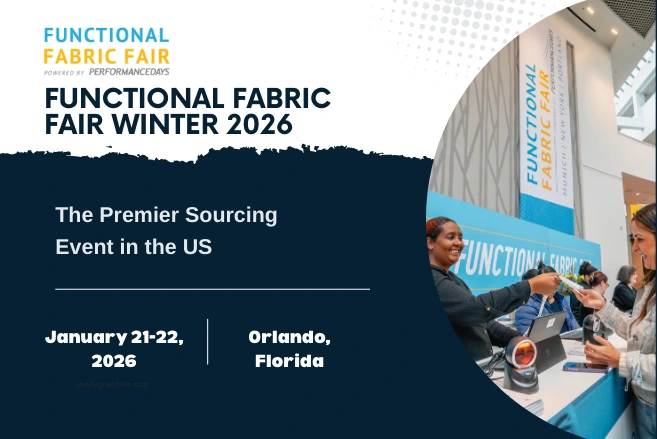
Functional Fabric Fair has expanded its global sourcing platform with a dedicated winter edition for the first time in 2026. This trade-only event takes place January 21–22, 2026, at the Orange County Convention Center (OCCC) in Orlando, Florida, United States.

Why Functional Fabric Fair Winter 2026 Is Important for the Textile Industry

Cold-weather performance fabrics must meet strict technical standards. They need to insulate without adding weight, manage moisture, resist wind, and remain flexible at low temperatures. Achieving this balance requires advanced chemical treatments and coatings, in addition to yarn innovation.
Key industry drivers highlighted at Functional Fabric Fair Winter include:
  • Growing demand for multi-functional winter fabrics
  • Increased focus on chemical compliance and sustainability
  • Replacement of legacy chemicals with safer alternatives
  • Rising dependence on global sourcing for bulk chemicals
  • Integration of smart and reactive fabric finishes
For textile manufacturers and sourcing teams, the fair provides insight into how chemical technologies directly influence fabric performance, scalability, and cost.

Advanced Chemical Technologies Used in Winter Functional Fabrics

Polymer-Based Finishes for Cold-Weather Performance

Modern winter fabrics rely heavily on polymer chemistry to enhance durability, elasticity, and weather resistance. At Functional Fabric Fair Winter, many exhibitors showcase fabrics treated with advanced polymer systems designed specifically for low-temperature environments.
Common polymer technologies include:
  • Polyurethane dispersions (PUDs) for waterproof and breathable membranes
  • Silicone-based elastomers that remain flexible in cold conditions
  • Fluorine-free DWR polymers for water repellency
  • Acrylic copolymers for abrasion resistance and coating stability
These chemicals are applied using controlled finishing processes such as pad-dry-cure, foam finishing, and plasma treatment. The goal is to ensure strong bonding between chemicals and fibers without affecting fabric hand feel or breathability.
For winter fabrics, polymer flexibility is critical. Poor formulation can cause coatings to crack or lose effectiveness at low temperatures.

Thermal Regulation Chemicals and Phase Change Materials (PCMs)

One of the most advanced areas showcased at Functional Fabric Fair Winter 2026 is thermal regulation technology. Many performance fabrics now use Phase Change Materials (PCMs) to manage body temperature actively.
PCMs are chemical compounds that absorb and release heat as they change phase. They help fabrics store excess heat when the body is warm and release it when temperatures drop.
Key chemical factors include:
  • Encapsulation chemistry to protect PCM particles
  • Particle size control for durability and wash resistance
  • Compatibility with fibers such as polyester, nylon, and blends
  • Thermal stability over repeated use
PCMs can be applied as coatings or embedded directly into fibers during extrusion. This deeper integration improves durability but requires precise chemical formulation.

Chemical Compliance and Sustainability in Winter Fabrics

Regulatory-Driven Chemical Innovation

Chemical regulations are reshaping the functional textile industry. At Functional Fabric Fair Winter 2026, many suppliers focus on compliant and sustainable chemical solutions that meet global standards without sacrificing performance.
Major regulations influencing chemical development include:
  • REACH and SVHC restrictions
  • ZDHC MRSL compliance
  • PFAS elimination initiatives
  • OEKO-TEX® and Bluesign® standards
To meet these requirements, chemical manufacturers are developing fluorine-free water-repellent systems, bio-based polymers, and low-impact finishes. These alternatives often rely on complex chemical structures, making sourcing and formulation more challenging.
At Functional Fabric Fair Winter, many companies emphasize direct partnerships with chemical suppliers to ensure traceability, stable supply, and customized formulations. This approach helps manufacturers scale innovation while maintaining consistent fabric performance.

Key Innovation Trends from Functional Fabric Fair Winter

Several clear trends continue to emerge from the winter edition of the fair:
  • Reactive chemical finishes that adjust to temperature and moisture
  • Lightweight insulation technologies using advanced chemistry
  • Bio-based chemical alternatives for performance treatments
  • Multi-functional finishes combining warmth, water resistance, and odor control
  • Digitally optimized chemical formulations for efficiency and consistency
These trends highlight how chemical innovation is becoming central to fabric differentiation.

The Strategic Role of Functional Fabric Fair Winter

Functional Fabric Fair Winter is more than a fabric sourcing event. It is a strategic platform where chemical science, textile engineering, and global sourcing intersect.
Brands that understand the chemical foundation of their fabrics can deliver better performance, longer product life, and stronger sustainability claims. As winter performance standards continue to rise, chemical innovation will remain at the core of functional textiles—and Functional Fabric Fair Winter will continue to shape that future.

Frequently Asked Questions (FAQs)

What is Functional Fabric Fair Winter 2026?

Functional Fabric Fair Winter is a trade fair focused on performance fabrics for cold-weather apparel. It showcases materials and technologies used in winter clothing, outdoor wear, and technical textiles, including fabrics enhanced with chemical treatments for warmth, durability, and weather protection.

What role does RawSource play in the functional fabric industry?

RawSource supports the functional fabric industry by supplying textile chemicals used in fabric finishing and performance enhancement. These chemicals help manufacturers meet winter performance requirements while maintaining consistent quality and regulatory compliance.

How does RawSource support global sourcing for bulk chemicals?

RawSource supports global sourcing for bulk chemicals by connecting manufacturers with reliable international chemical suppliers. This ensures consistent supply, controlled costs, and uniform chemical quality across large-scale textile production.

What types of fabrics at Functional Fabric Fair Winter 2026 rely on chemical sourcing?

Fabrics that rely on chemical sourcing include waterproof fabrics, insulated textiles, wind-resistant materials, soft-shell fabrics, and performance outerwear textiles commonly displayed at Functional Fabric Fair Winter.

How does Functional Fabric Fair Winter 2026 connect fabrics and chemical innovation?

Functional Fabric Fair Winter connects fabrics and chemical innovation by showcasing materials alongside the chemical technologies that give them performance properties such as warmth, water resistance, and durability.

Contact Us
