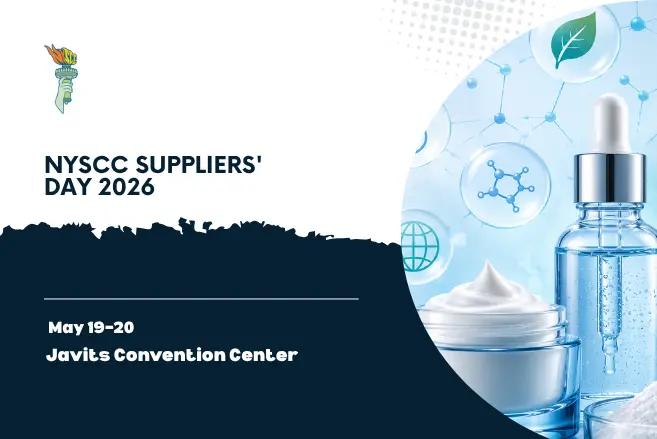
NYSCC Suppliers’ Day 2026 runs May 19–20 at the Javits Convention Center in New York City, bringing together approximately 700 exhibitors and 11,500+ attendees from over 70 countries under the theme “Breaking Beauty Boundaries with Science.” For specialty chemical sourcing teams serving cosmetic and personal care manufacturers, the show’s dominant themes (silicone alternatives, UV filter supply constraints, K-beauty active qualification, and MoCRA compliance) each carry concrete bulk supply decisions that cannot wait until Q4. This edition marks the largest exhibit floor in the show’s history, and the sourcing transitions on display reflect two years of regulatory and market pressure converging simultaneously.
The table below maps the key ingredient launches announced at NYSCC Suppliers’ Day 2026 to their immediate procurement implications for teams ordering in MT and container loads.
Silicone Alternatives at NYSCC 2026: The Supply Chain Transition Has Started
The EU has restricted D4 and D5 cyclosiloxanes in wash-off cosmetics under REACH Annex XVII, with leave-on application restrictions tightening. This is no longer a formulation problem under discussion. It is a procurement problem requiring execution.
For procurement teams, the supply chain reality is concrete: bulk supply chains for these alternative ingredient classes are less mature than for cyclosiloxanes, with 8–14 week lead times from European and US specialty chemical origins, and current pricing running 15–25% above equivalent cyclosiloxane grades while production scale builds. The formulation transition and the bulk supply qualification must happen in parallel, not sequentially. Procurement managers transitioning EU-facing formulations away from silicones should be evaluating at least two alternative ingredient classes simultaneously to maintain supply continuity if one source faces capacity constraints during the transition.
The practical procurement approach is to maintain container-load supply of existing cyclosiloxane grades for non-EU markets while qualifying alternatives specifically for EU-registered product lines. This is a dual-origin requirement, not a single switch.
UV Filter Sourcing: What NYSCC 2026 Reveals About the US-EU Supply Gap
The US UV filter market remains the most constrained of any major cosmetic market. The FDA’s OTC Drug Monograph framework approves 17 UV filters for use in sun care products, versus 30+ approved in the EU. Bemotrizinol (bis-ethylhexyloxyphenol methoxyphenyl triazine), an oil-soluble broad-spectrum filter with strong UVA and UVB performance, is featured prominently at NYSCC 2026. It has been under FDA review for years and remains unapproved for US-market sun care formulations.
For procurement teams managing sun care ingredient supply across both US and EU markets, this creates a mandatory dual-supply-chain structure. US-market formulations are restricted to the approved monograph list including zinc oxide, titanium dioxide, avobenzone, and octinoxate, all of which are stable and available in bulk from Asian origins. EU-market formulations can specify bemotrizinol and other modern filters unavailable in the US, but procurement must maintain separate specifications and supplier relationships for each market rather than a single global formula.
The practical implication: procurement teams should be engaging sun care brand customers now about market-by-market formulation roadmaps for 2027 contracts. UV-grade titanium dioxide and zinc oxide from Asian origins carry 9–12 week lead times, and contract planning for Q1 2027 should begin in Q3 2026.
K-Beauty and Emerging Origins: What NYSCC 2026 Signals for Bulk Supply
NYSCC 2026 includes CACPA’s dedicated session on China’s ingredient innovations alongside K-beauty-inspired formulation content, signaling which new ingredient origins procurement teams are expected to qualify in the next 12 months. Korean cosmetic actives including bifida ferment lysate, fermented plant extracts, centella asiatica derivatives, and mugwort-based ingredients are entering mainstream global formulations at scale, creating qualification requirements for procurement teams that have not yet developed Korean supplier relationships.
These ingredients are available from Korean manufacturers in bulk quantities. Qualification requires either direct manufacturer engagement or established trading relationships with in-market access, and procurement teams new to Korean cosmetic active sourcing should build in 10–14 week qualification timelines including CoA review, documentation alignment, and specification verification. Minimum order commitments and Incoterm structures with Korean manufacturers differ from what most procurement teams have established with their China or India supply base, and commercial terms need to be understood before volumes are committed.
The CACPA China session at NYSCC signals that Chinese manufacturers are scaling commercially in niacinamide derivatives, hyaluronic acid grades, and botanical extracts. For procurement managers already sourcing other chemical raw materials from Chinese suppliers, adding cosmetic actives to existing supplier relationships offers consolidation value, particularly for teams managing 10 or more active ingredient lines simultaneously.
Regulatory at NYSCC 2026: MoCRA, PFAS, and What Is Now Contract-Stage
MoCRA compliance is operational, not pending: The Modernization of Cosmetics Regulation Act’s facility registration, product listing, and adverse event reporting requirements took full effect in phases through 2025. For procurement teams supplying cosmetic ingredient importers in the US, CoA traceability, supplier facility registration status, and allergen disclosure are now regulatory requirements that belong in supplier qualification documentation, not optional quality preference lists.
PFAS state-level restrictions are expanding: California, New York, and Colorado have enacted cosmetic PFAS restrictions covering specific fluorinated ingredients including certain film-forming polymers and water-repellent actives. The Independent Beauty Association’s post-show regulatory forum at NYSCC 2026 addresses the current state of these requirements directly. Procurement teams should be mapping their fluorinated ingredient exposure across the personal care portfolio now, starting with supplier documentation that confirms PFAS content.
Sustainability documentation is entering contract requirements: The Discover Sustainability track at NYSCC 2026 reflects a shift procurement teams have already begun encountering at the contract stage. Sustainability ratings, carbon footprint data, and Responsible Care certification are transitioning from brand marketing preferences to supplier qualification criteria appearing in contract annexures. Teams qualifying new ingredient suppliers in 2026 should build sustainability documentation requests into the standard qualification process from the outset.
Sourcing Cosmetic Ingredients in Container Loads: Raw Source
For procurement teams sourcing beauty and personal care ingredients in container-load quantities, the supply chain transitions highlighted at NYSCC 2026 (silicone alternatives, UV filter restructuring, K-beauty active qualification, and MoCRA compliance documentation) require a sourcing partner with cross-category capability and the commercial infrastructure to execute ingredient qualification quickly without sacrificing supply continuity.
Raw Source operates as a bulk supply partner for cosmetic and personal care ingredient procurement, with 1 MT as the minimum and container-load quantities as the operating standard. Four core personal care materials supplied by Raw Source are directly relevant to the sourcing transitions highlighted at NYSCC 2026:
- Silicone emollients and polymers, including cyclosiloxane-alternative grades for EU D4/D5 compliance transitions in hair care and skin care
- Emollient esters, including bio-based grades qualifying as siloxane alternatives for leave-on and rinse-off formulations
- Surfactants and conditioning agents for mild cleansing and conditioning systems across personal care categories
- Cosmetic actives and botanical extracts, including skin care actives and fermented Korean-origin ingredients
The silicone transition specifically creates a procurement management challenge that single-supplier relationships cannot fully address. Teams need to maintain existing cyclosiloxane supply for non-EU markets while qualifying alternative ingredient classes for EU-facing formulations. A multi-category bulk supply partner manages this parallel requirement more efficiently than separate supplier relationships for each ingredient class. Raw Source’s position across the silicones category and related personal care ingredients means procurement teams can explore alternative ingredient sourcing through an existing supply relationship rather than initiating a full new supplier qualification from scratch.
For procurement teams building Korean or Chinese cosmetic active supplier relationships for the first time, Raw Source’s position in global chemical trade provides established sourcing access and documentation infrastructure. CoA traceability, supplier qualification support, and specification alignment are available for procurement managers working on compressed reformulation timelines. Container-load pricing, Incoterm flexibility, and supply continuity planning are standard commercial terms.
The MoCRA and PFAS compliance implications from NYSCC 2026 have direct supply chain documentation dimensions that supplier partners need to be prepared for. CoA documentation, allergen disclosure data, facility registration status, and fluorinated ingredient content mapping are areas where a procurement team’s supply base must be able to respond on request. Raw Source supports procurement teams with the CoA-backed quality documentation and supplier traceability that current US regulatory requirements demand.
For procurement teams attending NYSCC 2026 with an ingredient transition roadmap, or building one based on what they encounter at Javits this week, the next step is a sourcing conversation. Request a bulk quote for your cosmetic ingredient requirements, including silicone alternatives, UV actives, personal care raw materials, and K-beauty active ingredients in container-load quantities.
Frequently Asked Questions
What is NYSCC Suppliers' Day 2026?
NYSCC Suppliers’ Day 2026 is the largest cosmetic and personal care ingredients trade show in North America, organized by the New York Society of Cosmetic Chemists. It runs May 19–20, 2026, at the Javits Convention Center in New York City, with approximately 700 exhibitors and 11,500+ attendees from over 70 countries.
What are the key ingredient sourcing themes at NYSCC Suppliers' Day 2026?
The dominant sourcing themes are silicone alternatives driven by EU D4/D5 cyclosiloxane restrictions, UV filter supply chain restructuring for US versus EU markets, K-beauty-inspired active ingredients entering global supply chains at scale, microbiome science actives as an emerging bulk procurement category, and regulatory compliance driven by MoCRA and expanding state-level PFAS restrictions.
What is driving demand for silicone alternatives in personal care procurement?
The EU has restricted D4 and D5 cyclosiloxanes in wash-off cosmetics, with restrictions expanding into leave-on applications under REACH Annex XVII. This forces global reformulation, creating procurement demand for branched hydrocarbons, bio-based esters, and polymer-based alternatives. Bulk supply chains for these alternatives currently carry 8–14 week lead times and 15–25% price premiums over established cyclosiloxane grades while production scale builds.
What does MoCRA compliance require from cosmetic ingredient procurement teams?
MoCRA requires US cosmetic manufacturers and importers to register facilities, list products, and report adverse events. For procurement teams, this means CoA traceability, supplier facility registration status, and allergen disclosure are now regulatory requirements that must be verified during supplier qualification, not optional best practices.
Are silicone alternatives available in bulk container-load quantities?
Yes. Silicone alternative ingredients including branched hydrocarbons, bio-based esters, and specialty polymers are available from European, US, and emerging Asian manufacturers in container-load quantities. Procurement teams should plan for 8–14 week lead times and initiate supplier qualification before Q3, as EU restriction timelines tighten and bulk demand for alternatives increases through H2 2026.
Which UV filters are approved for sun care products in the US?
The FDA OTC Drug Monograph framework approves 17 UV filters for US sun care use, including zinc oxide, titanium dioxide, avobenzone, and octinoxate. Modern filters widely used in EU formulations, including bemotrizinol, remain under FDA review and are not approved for US-market products. Sun care procurement teams sourcing for both markets must maintain separate ingredient supply chains and specifications for US and EU formulations.