The 2026 IEEE PES Transmission & Distribution Conference opens May 4-7 in Chicago with 15,000+ utility engineers, grid operators, and equipment manufacturers converging on McCormick Place. While session programming covers AI-driven grid management and wildfire mitigation infrastructure, procurement teams at utilities and equipment OEMs are tracking different signals: what the conference’s dominant themes mean for transformer fluid supply, SF6 alternative availability, and the growing chemical bill behind grid-scale energy storage.
As a bulk chemical supplier focused on grid and infrastructure sectors, we’ve identified four chemical procurement realities shaping the show.
Transformer Oil Supply: Lead Times Have Nearly Doubled
Grid modernization and aging infrastructure replacement mean transformer replacement cycles are accelerating. Each transformer requires 5,000 to 30,000 liters of insulating oil (mineral-based or synthetic ester). The shift toward fire-resistant locations (urban substations, underground networks) is driving substitution from mineral oil to synthetic ester fluids, a meaningful procurement category shift.
In March 2026, a regional utility sourcing manager reported 14-week lead times on synthetic ester transformer fluid from her primary suppliers—up from 8 weeks just 18 months prior. Price differential between mineral and synthetic ester had widened to 18-22%, forcing budget resets across procurement cycles. Lead time extensions for synthetic esters have compound causes: European grid upgrades (driven by renewable integration and aging asset replacement across the EU) are competing with North American electrification programs for the same production capacity.
Procurement teams attending T&D 2026 need to lock Q3/Q4 2026 contracts now. Waiting until summer means accepting spot market premiums or extended lead times that delay substation deployment schedules.
SF6 Phase-Out: Procurement Teams Must Qualify Alternative Suppliers Now
SF6 (sulfur hexafluoride) is under phase-out pressure across the EU (F-Gas Regulation effective 2026 for medium voltage, 2030+ for high voltage) and faces tightening scrutiny in North America through state-level environmental regulations. Switchgear manufacturers at T&D 2026 are showcasing three primary alternatives: vacuum interrupters, clean air (N₂/CO₂ mixtures), and g³ (fluoronitrile-based) solutions. Each alternative requires different dielectric fluids and specialty gases with distinct supply chain characteristics.
A regional transmission operator is actively evaluating g³ gas suppliers for 2027-2028 switchgear upgrades. Supplier lead times for g³ filled equipment are running 16-20 weeks—materially longer than traditional SF6-based switchgear. Procurement teams planning switchgear upgrades need to qualify new chemical suppliers now, before equipment lead times force reactive buying at spot market prices.
The regulatory timeline creates procurement exposure. EU-facing manufacturers will begin prioritizing EU customers in 2026, potentially deprioritizing North American orders unless procurement commitments are made before the summer peak.
How Raw Source Supports Grid Sector Chemical Procurement
Raw Source specializes in bulk chemical sourcing for grid infrastructure and electrical applications. We supply transformer insulating oils (mineral and synthetic ester), electrical-grade silicones for insulators and seals, specialty polymers and resins for composite applications, and solvents for formulation and processing.
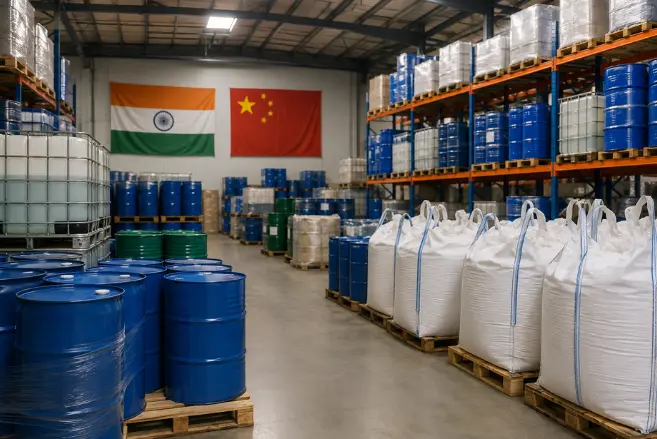
Our procurement advantage: we work in container-load volumes (25 MT and above) with direct relationships to refineries and chemical manufacturers across North America, Europe, and India. Lead times for specialty electrical insulation materials are typically 8-12 weeks versus 14-20 weeks through spot market channels. We can support rapid supplier qualification for utilities and OEMs evaluating SF6 alternatives or energy storage chemistry suppliers.
Utilities and equipment manufacturers planning 2026-2027 procurement cycles for grid modernization chemicals should begin contract negotiations now. Request a bulk quote for your transformer fluid, silicone, or specialty polymer requirements. We can provide competitive MT pricing, multiple-origin sourcing for supply chain resilience, and technical support for specification development and supplier qualification.
Energy Storage Chemicals: Supply Concentration Risk Is Rising
The conference dedicates significant programming to grid-scale energy storage. Lithium iron phosphate (LFP) batteries are dominant at the utility scale, with emerging interest in flow batteries (vanadium, iron-air) for longer-duration storage. Each chemistry has distinct raw material supply chains with different geographic concentration and lead time profiles.
A battery system integrator reported in February 2026 that lithium carbonate lead times had extended to 12-14 weeks from Chinese suppliers—the dominant source for North American battery manufacturers. Spot market prices for lithium carbonate spiked 8-12% week-over-week, driven by restocking demand ahead of Q2 grid deployment cycles. Vanadium electrolyte supply is even more concentrated: 60%+ of global production is controlled by three Chinese producers, with limited secondary supply from Russia and South Africa.
Iron-air battery adoption remains pilot-stage, but supply chains for raw material inputs (iron powder, molten salt electrolyte chemistry) are still being qualified. First-mover procurement teams have advantage in supplier relationship building. Thermal management fluids for battery enclosures and fire suppression chemicals for energy storage systems represent emerging procurement categories that utilities should begin specifying now, before widespread deployment forces standardization around whatever suppliers have available capacity
Key Takeaways from IEEE PES T&D 2026
- Transformer fluid supply is tightening structurally
- SF₆ replacement is creating new supplier dependencies
- Energy storage is introducing volatile raw material exposure
- Silicones and epoxies are emerging as critical bottlenecks
Procurement teams that act early will:
- Lock pricing
- Secure allocation
- Avoid project delays
Frequently Asked Questions
How much longer are transformer insulating fluid lead times right now?
Synthetic ester transformer fluid is running 12-16 weeks from primary suppliers as of May 2026. Mineral oil is typically 6-8 weeks. The gap reflects European procurement pressure and capacity constraints at specialty ester manufacturers. Utilities should lock contracts for Q3/Q4 delivery in May-June to avoid summer spot market premiums.
Is SF6 being phased out in the US, or just the EU?
The EU F-Gas Regulation is the binding legal requirement (2026 effective for medium voltage switchgear, 2030+ for high voltage). The US does not have a federal SF6 ban, but the EPA is tightening reporting requirements and some states (California, New York) are implementing phase-out timelines. Utilities should assume SF6 alternatives will be required for new equipment by 2027-2028.
Which SF6 alternatives have reliable supply chains right now?
Vacuum interrupters have the most mature supply chain (Eaton, ABB, Siemens all producing at scale). Clean air solutions (N₂/CO₂ mixtures) have shorter lead times than g³. The g³ (fluoronitrile) alternative has the longest lead times (16-20 weeks) because it's newer and has fewer qualified suppliers. Procurement teams should evaluate all three based on equipment lead times and supplier capacity.
Is lithium supply really constrained for grid storage applications?
Yes. Lithium carbonate lead times are 12-14 weeks from China as of Q2 2026, and spot prices are volatile (8-12% week-to-week swings). For grid-scale LFP battery deployments (50-500 MWh), lithium sourcing is a material constraint on project timelines. Procurement teams should begin lock-in contracts with suppliers 6 months before deployment target dates.
Why is silicone supply tighter than other electrical insulation materials?
Silicone capacity has not fully recovered from COVID-era curtailments. Specialty electrical-grade silicones (high-temperature, high-voltage rated) have lower production volumes than commodity silicones. Contract supply is allocated to existing long-term customers; spot market access is more available but at higher cost and variable lead times (10-14 weeks vs. 6-8 weeks for contract supply).
Can we source epoxy resins for composite insulators from non-Chinese suppliers?
Yes, but with lead time and cost trade-offs. Chinese producers (Sino-polymers, others) offer competitive MT pricing but 12-16 week lead times. North American and European producers (Huntsman, Epoxy, others) have 8-10 week lead times at 12-18% cost premium. Raw Source can evaluate multi-origin sourcing to balance cost, lead time, and supply resilience for your procurement requirements.