TDI prices surged 52% in a single month. US tariffs are adding 8 to 15% to imported coatings raw materials, and resin costs are shifting contract economics overnight. For procurement teams heading to the American Coatings Show 2026 in Indianapolis this May, the exhibit floor conversations will be dominated less by new formulations and more by one urgent question: where do we source from next?
As a bulk chemical supplier serving the coatings value chain, Raw Source breaks down the raw material dynamics that will shape supplier discussions at North America’s largest paints and coatings event. ACS 2026 arrives at a moment when every major coatings raw material category faces cost pressure, supply uncertainty, or regulatory disruption, often all three simultaneously.
Procurement teams that prepare for this event as a structured sourcing exercise rather than a technical walkthrough will walk away with qualified alternatives in their pipeline. Those who treat it as a trade show will leave with brochures.
This guide simplifies cosmetic ingredient sourcing into a repeatable framework. From understanding emollients and surfactants to navigating FDA and EU regulations, you’ll learn how to evaluate suppliers, manage costs, and ensure compliance across markets. If you’re a cosmetic formulator, indie brand founder, or procurement manager, this is your operational blueprint.
The State of the Coatings Raw Materials Market Heading into ACS 2026
The coatings raw materials market, valued at $18.8 billion in 2025 and projected to reach $26.9 billion by 2032, is entering ACS 2026 under significant cost pressure across every major input category. Unlike the relatively stable sourcing environment of 2023 and 2024, the current market is defined by simultaneous shocks: tariff policy changes in North America, restocking cycles rebounding faster than supply, petrochemical feedstock volatility, and accelerating regulatory pressure on legacy chemistries.
Each of these forces, on its own, is enough to reshape a procurement plan. Together, they are forcing sourcing teams to rethink supplier rosters they spent a decade building.
Coatings manufacturers have resumed TiO2 restocking cycles in early 2026, with North American rutile-grade pricing holding at approximately $2,970/MT, well above the $2,120/kg benchmark still available in Northeast Asia. The spread itself tells a story: regional arbitrage opportunities exist, but only for buyers willing to diversify origin countries and absorb longer lead times.
The real volatility, however, sits in petrochemical derivatives. Crude oil accounts for over 40% of coating production costs, and upstream price movements have cascaded through epoxy resins, acrylic derivatives, and isocyanates with a speed that is outpacing most procurement contracts’ price-adjustment clauses. More than 20 Chinese coatings companies announced price hikes across architectural, industrial, and waterproofing lines in Q1 2026, a direct signal that raw material cost pass-throughs are accelerating globally.
Raw Material Category | 2026 Status | Procurement Implication |
TiO2 (rutile) | Restocking underway; ~$2,970/MT North America | Secure Q3/Q4 volumes now; demand rebounding across automotive and architectural coatings |
Resins (epoxy, acrylic) | Under pressure; TDI +52% in one month | Evaluate alternative resin origins; lock pricing before next crude oil spike |
Solvents (xylene, MEK, ethyl acetate) | Volatile; petroleum-linked pricing | Monitor feedstock movements; consider water-based reformulation timelines |
Additives & defoamers | Stable supply; rising sustainability specs | Source PFAS-free alternatives ahead of regulatory deadlines |
Pigments (iron oxides, organics) | Tariff-exposed from China origins | Diversify to India and Middle East suppliers to offset 8-15% duty increases |
For procurement teams, the table above is not a reading exercise; it is a to-do list. Every row represents a supplier conversation that should be scheduled during ACS 2026, either to renegotiate existing contracts or to qualify new origins.
Why ACS 2026 Is a Procurement Event, Not Just a Technical One
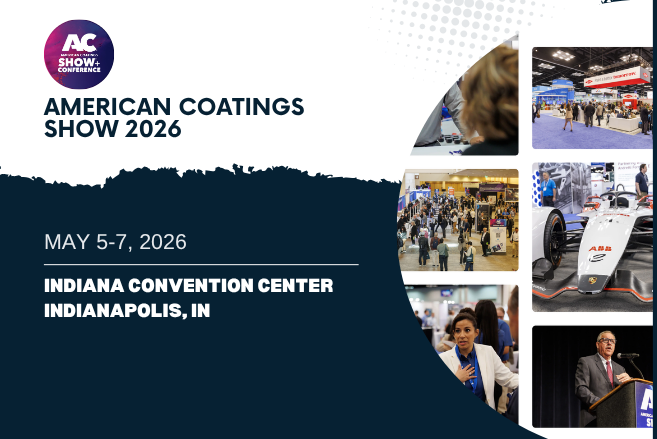
ACS 2026 runs May 5 to 7 at the Indiana Convention Center, bringing together 500+ exhibitors and over 12,000 attendees from 45+ countries across 138,000 square feet of exhibit space. The concurrent American Coatings Conference features 96 presentations across 16 technical tracks, nine pre-conference tutorials, and a keynote from Dr. Bedri Erdem, CTO of Rust-Oleum and RPM Consumer Group, titled “Reimagining Chemistry as the Catalyst.”
On paper, this reads as a formulator’s event. Historically, that is how it has been positioned and covered by industry press. The attendee profile, however, tells a different story.
An estimated 67% of ACS attendees hold purchasing authority, and 43% represent companies generating over $50 million in annual revenue. That is not a trade show demographic; that is a buying audience.
For senior sourcing managers in the coatings value chain, ACS is the single most concentrated procurement opportunity in North America. In three days, a buyer can meet face-to-face with raw material suppliers from every major producing region, benchmark landed costs against live tariff conditions, and evaluate qualification samples that would otherwise take months of email follow-up to secure. The exhibitors already know this; the procurement teams that treat the event with equivalent intentionality will be the ones closing Q3 and Q4 contracts before their peers. Full event registration and exhibitor lists are available through the official American Coatings Show website.
Three Themes Procurement Teams Should Watch at ACS 2026
Beyond individual supplier meetings, three cross-cutting themes will dominate floor conversations at ACS 2026. Each has direct and measurable implications for sourcing strategy.
PFAS alternatives are reshaping sourcing requirements: the conference program dedicates significant programming to PFAS-free formulation strategies, driven by the cascade of federal and state-level restrictions that are moving from proposed rulemaking into enforceable deadlines. For procurement, this is not just a technical curiosity; it means qualifying entirely new raw material supply chains for fluorine-free surfactants, leveling agents, and water-repellent additives.
The challenge is that many PFAS-alternative chemistries are supplied by a narrower set of manufacturers than the incumbent fluorinated products. Early qualifiers lock in capacity, while late movers face allocation risk. Sourcing teams attending ACS should map which exhibitors offer PFAS-alternative chemistries, collect technical data sheets on fluorine-free equivalents, and begin qualification conversations now. Raw Source’s complete guide to defoamers covers one adjacent additive category where sourcing-side qualification discipline directly affects coating performance.
Biobased and low-VOC materials are moving from niche to mainstream: over 45% of coatings manufacturers are now integrating sustainable raw materials into their formulations, and an additional cohort is channeling R&D resources into nanostructured additives and engineered bio-based resins. Erdem’s keynote is centered on sustainability-driven innovation, and the surrounding technical tracks will feature case studies from major formulators on bio-acrylic resins, plant-derived solvents, and reduced-VOC architectural systems.
For procurement, this shift has a dual implication. On the demand side, ESG reporting requirements from downstream customers are making sustainable input sourcing a contractual obligation rather than a preference. On the supply side, bio-based raw material pricing is still volatile as capacity scales.
Procurement teams should use ACS 2026 to evaluate bio-based resin suppliers, low-VOC solvent alternatives, and sustainably sourced additives that meet both performance specs and ESG reporting requirements. Request volume-tiered pricing across multi-year horizons to smooth out the current volatility in bio-based inputs.
Supply chain diversification is no longer optional: with US tariffs projected to raise chemical costs 8 to 15% for coatings manufacturers, particularly on resins, pigments, solvents, and additives sourced from China, procurement teams are actively exploring alternative origins. The average effective tariff rate reached 13.7% in February 2026, and the direction of travel suggests further escalation rather than relief.
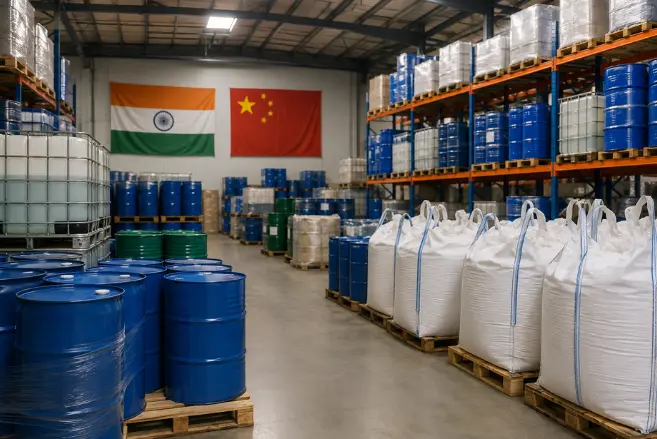
India and the Middle East are emerging as competitive supply sources for coatings raw materials, with Indian manufacturers in particular scaling capacity in silicones, silanes, specialty solvents, and performance additives. Companies like Axalta and RPM International are already exploring secondary sourcing markets in India and Eastern Europe where trade conditions remain more favorable.
ACS 2026 is the venue to evaluate these suppliers face-to-face, to audit their quality systems in person, and to begin the multi-month qualification process that serious procurement diversification requires.
Sourcing Strategy: How to Make ACS 2026 Count
Procurement professionals attending ACS 2026 should treat the event as a structured sourcing exercise, not a passive walkthrough. That means preparation, execution, and follow-up disciplines that mirror how a well-run RFP process is managed, compressed into a three-day window.
Before the show, build the sourcing gap analysis: identify your tariff-exposed raw material categories and rank them by cost exposure, not by volume. A low-volume pigment subject to an 8 to 15% tariff premium may be a more urgent sourcing problem than a high-volume solvent that is sourced domestically.
Build a target list of exhibitors by origin country and raw material category, and pre-schedule meetings with the suppliers offering alternative origins for your highest-cost-risk inputs. The 500+ exhibitor list is published well in advance of the event; use it. Procurement teams that walk in without meeting schedules will spend most of their three days in reactive conversations, while teams arriving with a structured agenda will have closed qualification plans before the last day.
At the show, focus on alternative origins and qualification timelines: prioritize conversations with Indian silicone and silane manufacturers, Middle Eastern petrochemical derivative producers, and Eastern European specialty additive suppliers. Request technical data sheets, COA samples, and FOB and CIF pricing per metric ton for container-load quantities at each meeting.
Benchmark against your current landed costs including the tariff premium. Ask each prospective supplier for references from existing North American customers and for a realistic qualification timeline. A supplier that can ship product in 60 days but cannot pass your quality system audit for six months is not a short-term solution, and that distinction needs to be established on the exhibit floor, not after a purchase order is cut.
Post-event, lock contracts before the next feedstock shift: the intelligence window is narrow. Lock in Q3 and Q4 contract pricing while your supplier evaluation is fresh and before the next round of feedstock price adjustments hits.
Consolidate meeting notes within 72 hours of returning, circulate supplier shortlists to quality and formulation stakeholders, and begin qualification sample requests within the first week. Coatings procurement cycles typically run 90 to 180 days from first sample to approved supplier status, which means the qualification work started at ACS 2026 in May will determine your Q4 2026 and Q1 2027 supplier flexibility.
Sourcing Coatings Raw Materials Through Raw Source
Raw Source supports coatings procurement teams across the raw material categories most exposed to tariff and supply volatility, including silicone fluids, silanes, defoamers, specialty solvents, and industrial additives. Whether the immediate priority is securing tariff-hedged volumes for Q3 and Q4 contracts, qualifying a second-source supplier for an existing resin or additive, or evaluating PFAS-alternative chemistries ahead of regulatory deadlines, Raw Source provides the supplier access and commercial terms that serious container-load procurement requires.
For coatings and construction chemical buyers evaluating alternative sourcing strategies ahead of or after ACS 2026, Raw Source offers MT-level pricing, COA-backed quality assurance, and logistics support across all major Incoterms.
Discuss your coatings raw material requirements with Raw Source. Request a bulk quote.
Frequently Asked Questions (FAQs)
When and where is the American Coatings Show 2026?
The American Coatings Show 2026 takes place May 5-7, 2026 at the Indiana Convention Center in Indianapolis, Indiana. The concurrent American Coatings Conference runs alongside the exhibit floor, with 96 technical presentations across 16 tracks and nine pre-conference tutorials.
Who attends the American Coatings Show?
ACS draws 12,000+ attendees from 45+ countries across the coatings value chain, including formulators, R&D scientists, purchasing managers, and executives. An estimated 67% of attendees hold purchasing authority, and 43% represent companies generating over $50 million in annual revenue, making it a high-value event for B2B raw material sourcing.
How should procurement teams prepare for ACS 2026?
Build a sourcing gap analysis before the show, ranking raw material categories by cost exposure rather than volume. Target exhibitors by origin country, pre-schedule meetings with suppliers offering alternatives to tariff-exposed inputs, and arrive ready to request COA samples, FOB/CIF pricing per metric ton, and realistic qualification timelines.
Which raw material categories face the most sourcing pressure in 2026?
Resins and petrochemical derivatives are under the most acute pressure, with TDI up 52% in a single month and crude oil driving 40%+ of coating production costs. Pigments, solvents, and additives sourced from China face 8 to 15% tariff premiums, and PFAS-alternative chemistries require new supplier qualification ahead of regulatory deadlines.
What is the impact of US tariffs on raw materials?
US tariffs are projected to raise chemical costs 8 to 15% for coatings manufacturers, with the average effective tariff rate reaching 13.7% in February 2026. The highest exposure sits in resins, pigments, solvents, and additives sourced from China, prompting procurement teams to evaluate alternative origins in India, the Middle East, and Eastern Europe.