
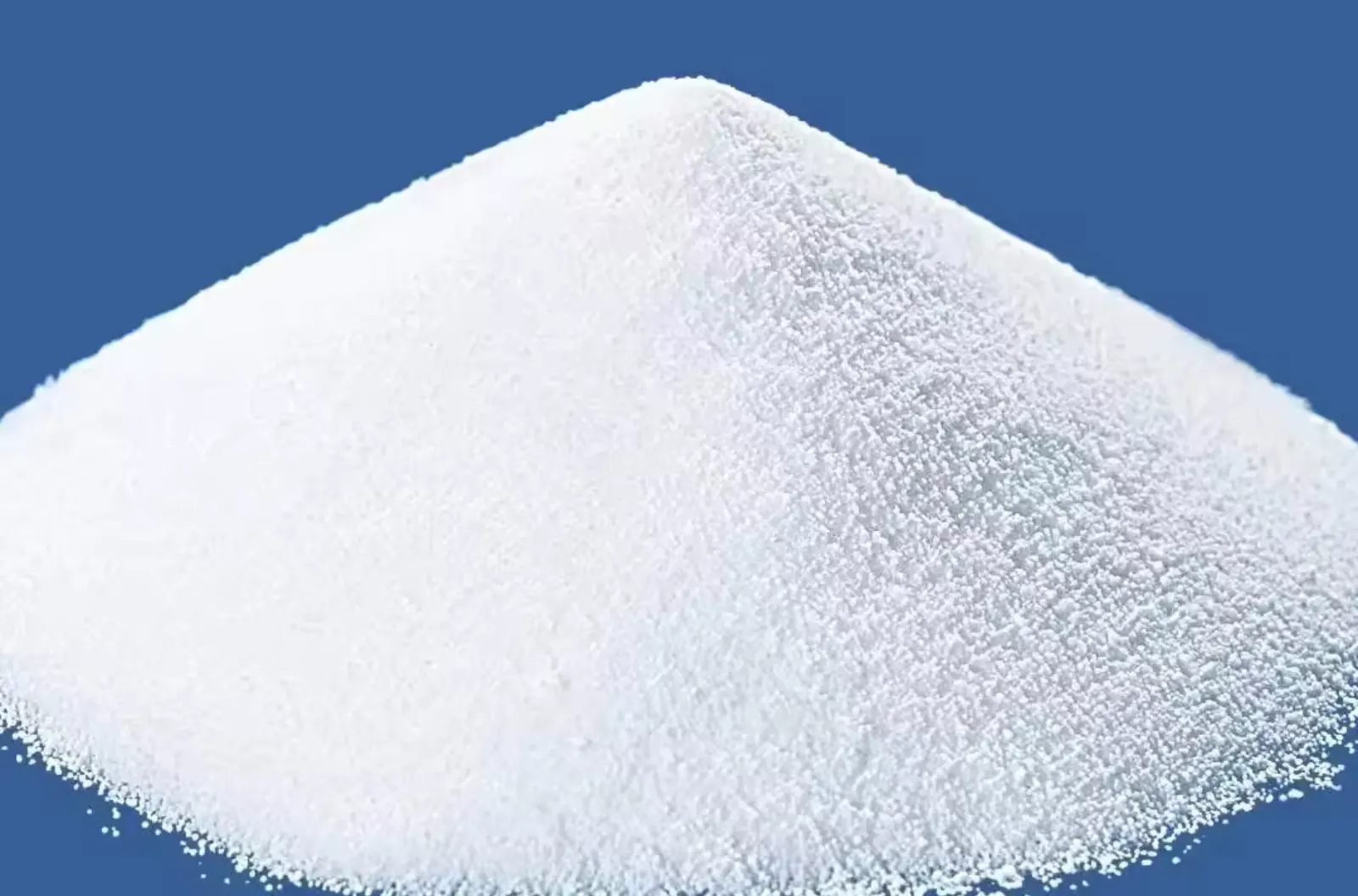
What Is Fumed Silica?
Fumed (pyrogenic) silica, CAS 112945-52-5, is made by burning silicon tetrachloride (SiCl₄) in a hydrogen-oxygen flame. The droplets fuse into branched, chain-like aggregates with very high surface area and almost no internal porosity. Purity is high, typically above 99.8% SiO₂. Surface area is the grade lever. Commercial hydrophilic grades run roughly 90 to 410 m²/g BET. As a benchmark, a common 200-series hydrophilic grade is specified at 175 to 225 m²/g with a tamped density around 50 g/L; a 380-series grade sits at 350 to 410 m²/g. Higher surface area means stronger thickening per unit weight, and harder dispersion.What Is Precipitated Silica?
Precipitated silica, CAS 112926-00-8, is made by reacting sodium silicate (water glass) with sulfuric acid, then washing, filtering, drying, and milling. The result is porous, with internal pore volume that fumed silica lacks. That porosity is why precipitated silica carries liquids and reinforces rubber. The defining number here is oil absorption (often DBP), which can run roughly 150 to 320 mL/100 g depending on grade. High oil absorption lets the powder hold large liquid loads as a free-flowing carrier. BET surface area for reinforcing tire grades typically lands near 150 to 200 m²/g.Hydrophilic vs Hydrophobic: The Surface-Treatment Choice
Both silicas come untreated (hydrophilic, silanol-rich surface) or surface-treated (hydrophobic) with silanes or silicones. Hydrophilic grades thicken polar and aqueous systems. Hydrophobic grades, such as the dimethyl-treated R-series fumed silicas, resist moisture, control rheology in non-polar resins, and improve flow in powders that would otherwise cake. The trade-off: hydrophobic treatment adds cost and changes how the silica builds viscosity, so match the surface chemistry to your resin, not just the surface area.Head-to-Head Properties
| Feature | Fumed Silica | Precipitated Silica |
|---|---|---|
| CAS | 112945-52-5 | 112926-00-8 |
| Production | Flame pyrolysis of SiCl₄ | Wet precipitation (Na silicate + H₂SO₄) |
| Aggregate / particle scale | Aggregates of 5–50 nm primaries | Porous agglomerates, micron-scale |
| BET surface area | ~90–410 m²/g | ~50–200 m²/g |
| Porosity | Essentially non-porous | Porous (high pore volume) |
| Oil absorption (DBP) | Low | ~150–320 mL/100 g |
| Tapped / tamped density | Very low (~40–60 g/L) | Higher |
| SiO₂ purity | >99.8% typical | High, with residual Na/sulfate |
| Relative cost | Higher | Lower |
Where Each One Wins
| Application | Fumed Silica | Precipitated Silica |
|---|---|---|
| Coatings / paints | Anti-sag, thixotropy, rheology control | Matting and flatting agent |
| Tire / rubber | Rarely used | Reinforcing filler (silica-silane tires) |
| Adhesives / sealants | Thixotropy and sag resistance | Lower-cost extender |
| Powder flow / anti-cake | Glidant (incl. pharma grades) | Anti-caking carrier |
| Liquid carrier (feed, agro) | Limited | Converts liquids to free-flowing powder |
| Toothpaste | Not typical | Mild abrasive / thickener |
Regulatory and Grade Notes
Food and pharma grades exist on both sides. Synthetic amorphous silica is permitted as anti-caking agent E551 in the EU, and colloidal silicon dioxide carries a USP-NF monograph used as a tablet glidant. If your end use is food, supplement, or drug, specify the food/pharma grade explicitly, since technical grades are not qualified for those uses. One honest caveat on environmental claims: precipitated silica’s wet process is generally lower-energy than fumed silica’s high-temperature flame route, but quantify any sustainability claim against actual data before you put it on a label.Choosing the Right Silica
Decide on three axes. First, function: thickening and sag control point to fumed; reinforcement, matting, and liquid carrying point to precipitated. Second, surface chemistry: polar/aqueous systems take hydrophilic grades, non-polar resins and moisture-sensitive powders take hydrophobic. Third, cost: at volume, precipitated silica is materially cheaper per kg, so do not pay for fumed performance you do not need. If your only need is bulk reinforcement or anti-caking, fumed silica is usually overspecified. If you need clarity, high thixotropy, or maximum purity, precipitated will not get you there.Sourcing and RFQ Guidance
A usable RFQ names the type, the grade or target BET surface area, and the surface treatment. For fumed silica, state hydrophilic or hydrophobic, target BET (for example ~200 m²/g vs ~380 m²/g), and tapped density if flow matters. For precipitated silica, state oil/DBP absorption, BET, and whether you need a reinforcing, carrier, or matting grade. Always specify any food/pharma grade requirement, packaging (bags, supersacks, bulk), and request the CoA and SDS. If you buy bulk fumed or precipitated silica and want grades matched to your viscosity, reinforcement, or carrier target, send your application, target BET/oil absorption, and packaging and we will source against it.FAQs
What are the 4 types of silica?
In commercial practice, synthetic amorphous silica is sold in four forms: fumed (pyrogenic) silica, precipitated silica, silica gel, and colloidal silica (silica sol). Fumed and precipitated grades cover most industrial volume; gels serve desiccant and matting duty, while sols run as binders and polishing slurries. All four are amorphous, which places them in a different regulatory category from crystalline silica such as quartz.
What are the alternatives to fumed silica?
Match the alternative to the function. For thickening and anti-sag, formulators use precipitated silica, organoclays, hydrogenated castor oil thixotropes, or polyamide waxes. For anti-caking and free flow, precipitated silica and silica gel usually do the job at lower cost per kilogram. Fumed silica stays hard to replace in transparent systems, high-purity work, and silicone rubber reinforcement, so run any substitute against your viscosity and clarity spec before committing a batch.
What is another name for precipitated silica?
Precipitated silica (CAS 112926-00-8) also appears on documents as synthetic amorphous silica (SAS), hydrated silica (the INCI name used in toothpaste and personal care), or simply silicon dioxide. On an RFQ, quote the CAS number plus BET surface area and oil absorption so the supplier cannot mistake the grade family.
Is fumed silica the same chemical as precipitated silica?
Both are synthetic amorphous silicon dioxide (SiO₂), but they are made differently and behave differently. Fumed silica (CAS 112945-52-5) is flame-made, non-porous, and a strong thickener. Precipitated silica (CAS 112926-00-8) is wet-process, porous, lower-cost, and used for reinforcement and as a liquid carrier.
Reviewed and updated July 2026 by the RawSource technical team.
Which silica is used to reinforce tires?
Precipitated silica, typically near 150 to 200 m²/g BET, is the reinforcing filler in modern silica-silane tire compounds for lower rolling resistance and wet grip. Fumed silica is rarely used in tire reinforcement.
What does BET surface area tell me when specifying silica?
BET surface area drives thickening efficiency for fumed silica and reinforcement for precipitated silica. Higher surface area (for example fumed grades from ~200 to ~380 m²/g) gives more thickening per unit weight but is harder to disperse, so it is a key spec to state on an RFQ.
When should I choose a hydrophobic grade?
Choose a hydrophobic (surface-treated) grade for non-polar resin systems, moisture resistance, or to keep moisture-sensitive powders free-flowing. Hydrophilic grades suit polar and aqueous systems. The treatment changes both cost and viscosity build, so match it to your resin.
Are there food and pharmaceutical grades?
Yes. Synthetic amorphous silica is permitted as anti-caking agent E551 in the EU, and colloidal silicon dioxide has a USP-NF monograph for use as a tablet glidant. For food, supplement, or drug use, specify the food or pharma grade explicitly rather than a technical grade.
Search 1,300+ industrial chemicals by name or CAS, or send us your spec — we quote by the drum, tote, or container.
Browse the Chemical Index → Request a Quote