

By RawSource Sourcing Desk, Commercial & Sourcing Desk, RawSource
A purchasing line item reads “silicon.” The plant wanted the little moisture beads. A week later a sealant spec lands calling for “silicone,” and someone files it next to the first two. Three materials, three supply chains, one letter apart. Pick the wrong one and you either ship a semiconductor-grade metalloid to a packaging line or a desiccant to a wafer fab, and the receiving dock catches it only after the freight clears.
The names collide because they share the same root and the same parent element. They are not interchangeable. They differ in formula, structure, hazard class, and the question each one answers on a spec sheet. This guide separates them by the numbers a buyer can put on a purchase order.
Are silicon and silica gel the same thing?
No. Silicon is the element. Silica gel is one of its oxides in a porous form.
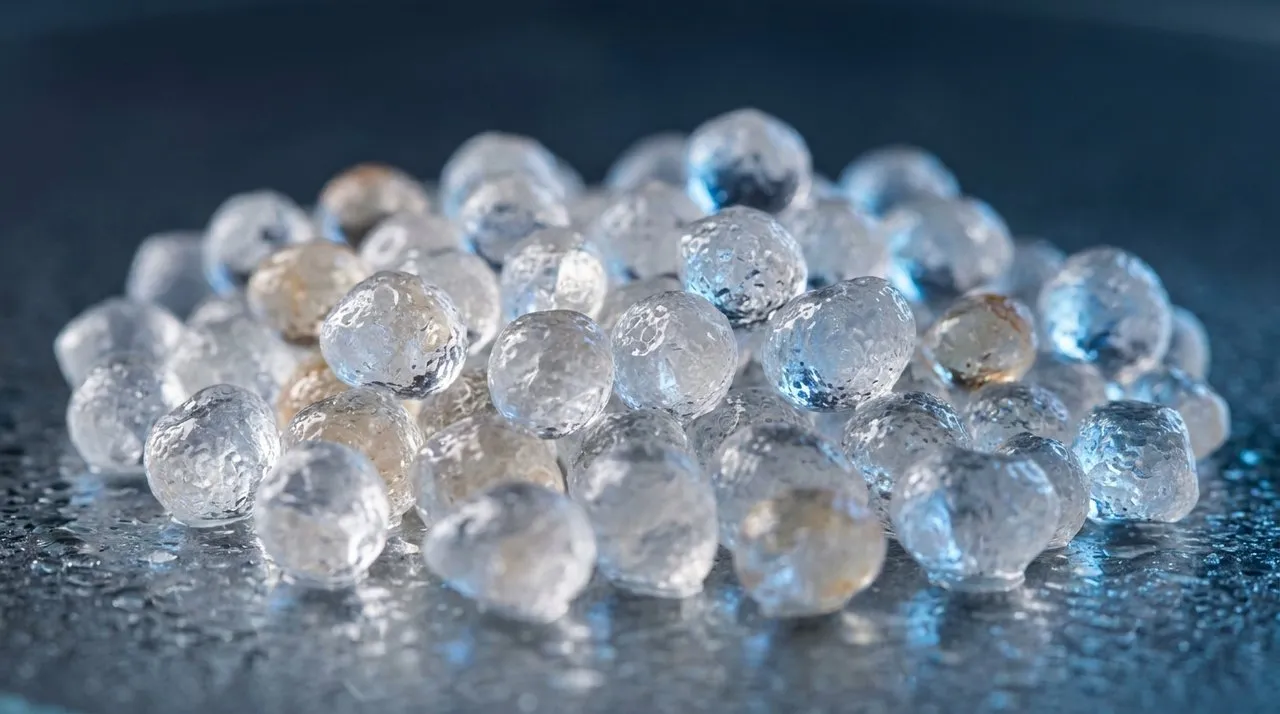
Silicon (Si, CAS 7440-21-3) is the 14th element, a hard gray metalloid that behaves as a semiconductor. Silica gel is amorphous silicon dioxide, SiO2 (silica-gel CAS 112926-00-8), the granular solid sold as a desiccant. The chemical relationship is one of oxidation: take elemental silicon, combine it with oxygen, and you move toward the silica family. The two sit at different points on that path and do entirely different jobs.
A third term completes the confusion. Silicone is a synthetic polymer built on a silicon-oxygen backbone with organic side groups. It is neither the element nor the mineral oxide. The table below sets all three side by side so the distinction holds on paper, not just in conversation.
How do silicon, silica gel, and silicone compare on the spec sheet?
They differ on almost every measurable property. Silicon is a dense crystalline solid that melts above 1,400 C; silica gel is a porous oxide that adsorbs water; silicone is a soft polymer that has no sharp melting point at all.
| Property | Silicon (element) | Silica gel (amorphous SiO2) | Silicone (PDMS) |
|---|---|---|---|
| Formula | Si | SiO2 (porous, hydrated surface) | [-Si(CH3)2-O-]n |
| Mass | 28.09 g/mol (atomic) | 60.08 g/mol (per SiO2 unit) | varies by grade (polymer) |
| CAS | 7440-21-3 | 112926-00-8 (silica gel); 7631-86-9 (amorphous silica) | 63148-62-9 |
| PubChem CID | 5461123 | 24261 | n/a (polymer) |
| Physical form | gray metalloid crystals or powder | translucent porous beads or granules | clear fluid to cured elastomer |
| Melting point | 1,410 C (2,570 F) | ~1,710 C (3,110 F) | no sharp mp; decomposes on heating |
| Boiling point | 2,355 C (4,271 F) | 2,230 C (4,046 F) | not applicable (polymer) |
| Density | 2.33 g/cm3 | ~2.2 g/cm3 skeletal (bulk far lower, porous) | varies by grade (fluids near 0.97) |
| Water solubility | insoluble | insoluble (adsorbs water) | insoluble |
| Surface chemistry | inert, semiconducting | weakly acidic silanol surface | inert siloxane |
| GHS signal / key codes | Danger; H228 flammable solid (fine powder), H320 eye irritation | amorphous: mostly not classified, nuisance dust; crystalline quartz (14808-60-7): Danger, H350 carcinogen | varies by grade; PDMS fluids typically low hazard |
| Primary use | semiconductors, solar PV, ferroalloys | desiccant, matting, catalyst support, chromatography | sealants, defoamers, lubricants, fluids |
Physical property values for silicon and silica are drawn from PubChem (CID 5461123 and CID 24261, NIOSH data). Fahrenheit figures are the source values; Celsius is converted.
What is silicon, and what is it used for?
Silicon is a metalloid element, not a packaged additive you order by the drum for general industry. It carries CAS 7440-21-3 and a molar mass of 28.09 g/mol, and in pure form it appears as dark gray, lustrous crystals or as a brown-gray powder. It melts at 1,410 C (2,570 F) and is insoluble in water (PubChem CID 5461123, NIOSH).
Its value sits in its electronic structure. High-purity silicon is the substrate of integrated circuits and photovoltaic cells, where impurity profiles are measured in parts per billion. In metallurgy, metallurgical-grade silicon and ferrosilicon alloy with aluminum and steel to change strength and casting behavior. Silicon metal is also the upstream feedstock for both the silica and silicone families, which is part of why the three names trace back to one element.
Grade language separates the markets. Metallurgical-grade silicon, typically around 98 to 99 percent pure, feeds aluminum and steel alloying and the chemical routes to silica and silicone. Solar and electronic grades are refined far beyond that, into the parts-per-billion impurity range, and they price and trade as a different commodity. A spec that says only “silicon” without a grade leaves the most expensive variable unstated, so the grade designation belongs on the line alongside the CAS.
For handling, the form matters. Bulk silicon lumps are stable. Fine silicon powder is classified as a flammable solid (GHS H228, signal word Danger, per PubChem CID 5461123) and carries an eye-irritation code (H320), so dust control and ignition-source management govern storage. A buyer asking for “silicon” to dry a shipment of electronics has asked for the wrong material entirely.
What is silica gel, and how does it actually work?
Silica gel is amorphous silicon dioxide in a porous, granular form, and it works by physical adsorption, not by any chemical drying reaction. It carries silica-gel CAS 112926-00-8 within the amorphous silica group (parent amorphous-silica CAS 7631-86-9), a formula-unit mass of 60.08 g/mol, and a skeletal density near 2.2 g/cm3 (PubChem CID 24261).
The internal pore network gives each bead a large internal surface area. Water vapor migrates into the pores and binds to silanol groups on that surface, so the solid pulls moisture out of the air around it without dissolving, swelling, or changing shape. Because the binding is physical, heating drives the water back off, and the desiccant can be regenerated and reused. That reversibility is the practical difference between a desiccant and a chemical drying agent that is consumed.
The reuse mechanic carries a real procurement consequence. A consumed drying agent is a recurring line on the PO; a regenerable desiccant is a capital item that returns to service after a low-temperature bake. For a buyer comparing total cost across a year of shipments, that distinction outweighs the unit price of the beads.
It also sets the spec questions worth asking up front: bead size, pore structure, and whether the grade is indicating or non-indicating. An indicating grade changes color as it loads, which tells a packer when to swap or regenerate it.
Synthetic amorphous silica spans more than the desiccant beads. Fumed silica is a flame-made, ultrafine amorphous SiO2 used as a thickener and anti-settling agent. Hydrated silica and precipitated grades serve as matting agents and abrasives, and as carriers for liquids loaded onto a dry powder. The broader amorphous silica family runs through coatings, plastics, personal care, and pharmaceuticals.
The difference between fumed and precipitated routes is worth its own read in fumed silica vs precipitated silica, because the manufacturing route changes surface area and oil absorption even when the CAS is shared. All of these grades are amorphous, which keeps them clear of the crystalline-silica hazard profile covered below.
Where does silicone fit in the silicon vs silica confusion?
Silicone is the man-made polymer that sounds like both and is neither. It is built on a repeating silicon-oxygen (siloxane) backbone with methyl or other organic groups attached, with polydimethylsiloxane (PDMS, CAS 63148-62-9) as the workhorse structure. Unlike the element and the oxide, silicone has no single fixed molecular weight; chain length sets the grade, which ranges across thin fluids, pourable gels, or cured rubber.
That structural difference shows up in use. Silicone fluids serve as defoamers, lubricants, release agents, and personal-care emollients; silicone elastomers become seals, gaskets, and molded parts. None of that overlaps with silica gel’s moisture control or silicon’s semiconductor role. A spec calling for a “silicone sealant” and one calling for “silica” point at different shelves. The full range is laid out in this guide to the uses of silicone.
One memory aid keeps the three straight on a busy desk. Silicon ends in “-on” and is the element. Silica is the rock-and-glass oxide, SiO2. Silicone ends in “-one” and is the synthetic polymer. The spelling difference of a single letter, silicon versus silicone, is the one buyers miss most, and the supplier quoting against the typo will not always catch it for you.
Is silica gel dangerous? The crystalline vs amorphous distinction that matters
The hazard answer depends entirely on crystal form, and that single distinction is the most consequential one a buyer can get wrong. Amorphous silica gel is low-hazard; respirable crystalline silica is a regulated carcinogen. Both are SiO2, so the formula alone will not tell them apart.
PubChem aggregates every SiO2 form under one record (CID 24261), which is why a search for “silica” surfaces alarming codes such as H350 (may cause cancer) and H372 (organ damage from repeated exposure). Those classifications trace to respirable crystalline silica, the quartz form (CAS 14808-60-7) generated when workers cut, grind, or drill stone, concrete, brick, or sand.
The International Agency for Research on Cancer lists crystalline silica inhaled from occupational sources as a Group 1 carcinogen. OSHA regulates it under a dedicated standard, 29 CFR 1910.1053, with a permissible exposure limit of 50 micrograms per cubic meter as an 8-hour average. That standard governs respirable dust generated downstream from the material, which is why fabrication and stoneworking sites carry exposure-monitoring obligations that a sealed bag of desiccant beads does not.
Synthetic amorphous silica, which includes silica gel, fumed silica, and precipitated silica, sits in a different place. Most registrants report it as not meeting GHS hazard criteria, and the practical concern is nuisance dust, not carcinogenicity. The buyer action is concrete: require the crystal form on the CoA, confirm “amorphous,” and confirm crystalline-silica content is below the reporting threshold. A grade described only as “silica” leaves that question open, and the answer changes both your hazard communication and your worker-exposure controls.
Which grade of silica do you actually need to buy?
Match the grade to the job, then write the spec so a supplier cannot substitute around it. The four decisions below cover most procurement cases that start with the word “silica.”
- Moisture control. Order silica gel, specified as amorphous SiO2 (CAS 112926-00-8), with bead size and indicating-versus-non-indicating called out. This is a desiccant decision, not a semiconductor or polymer one.
- Rheology, anti-settling, or matting. Order an amorphous synthetic silica and name the route. Fumed silica thickens liquids and controls sag; precipitated and hydrated silica grades serve as matting agents and carriers. The fumed-versus-precipitated trade-off changes surface area and oil absorption.
- Coatings, plastics, and construction additives. Work from the amorphous silica family and tie the grade to the end use; the same family threads through coatings and construction as a reinforcing and flow-control additive.
- Sealing, defoaming, or lubrication. That is a silicone decision, not a silica one. Specify the polymer (PDMS, CAS 63148-62-9) and the viscosity or durometer, and keep it on a separate line from any silica order.
Across all four, the controlling instruction is the same. Put the CAS number, the crystal form, and the grade on the purchase order, then verify them on the Certificate of Analysis. The consumer-friendly word “silica” is a category, not a specification.
How do you keep silicon, silica, and silicone straight on a purchase order?
Specify by CAS first, then describe the material in words a supplier cannot reinterpret. A name like “silica” or “silicon” passes plant-floor conversation but fails an audit, because each one maps to several CAS numbers and several hazard outcomes.
Three checks catch most substitution errors before they reach the dock:
- Lead with the CAS, then the form. Write “amorphous silicon dioxide, CAS 112926-00-8, silica-gel grade,” not “silica gel.” For the element, write “silicon metal, CAS 7440-21-3,” with the purity grade. For the polymer, write “polydimethylsiloxane, CAS 63148-62-9,” with the viscosity.
- Name the crystal form on any SiO2 line. State “amorphous” explicitly and require a maximum on crystalline-silica content. This is the single line that separates a low-hazard additive from an OSHA-regulated carcinogen with the same chemical formula.
- Reconcile the CoA against the PO, not against the quote. A quote can echo a loose RFQ and still describe the wrong material. The Certificate of Analysis is where the CAS, the assay, and the crystal form get confirmed against what was shipped.
The spelling trap deserves its own habit. “Silicon” and “silicone” differ by one letter and by an entire material class. Reading a spec aloud, including the final syllable, is a cheap way to catch the swap before it reaches a supplier who will quote exactly what the typo says.
How RawSource helps
If a spec or a search has landed on “silicon” but the requirement is an amorphous SiO2 grade instead of the element, the amorphous silica, fumed silica, and hydrated silica product pages list grade specifications to compare. State the end use, the crystal form, and the target surface area or particle size on the RFQ so the quote returns the right material the first time.
Frequently asked questions
Are silicon and silica gel the same thing? No. Silicon is the element Si (CAS 7440-21-3), a gray metalloid. Silica gel is amorphous silicon dioxide, SiO2 (CAS 112926-00-8), the porous desiccant that adsorbs moisture. Silica gel is an oxide of silicon, not silicon itself.
Is silica gel the same as silicone? No. Silica gel is an inorganic SiO2 solid (CAS 112926-00-8). Silicone is an organic siloxane polymer such as polydimethylsiloxane (CAS 63148-62-9), supplied as fluids, gels, and rubber. The shared “silic” root and the gel form drive the confusion.
Is silica gel dangerous or carcinogenic? Amorphous silica gel is reported by most registrants as not meeting GHS hazard criteria, and the main exposure concern is nuisance dust. The carcinogen classification belongs to respirable crystalline silica (quartz, CAS 14808-60-7), which IARC lists as Group 1 and OSHA regulates under 29 CFR 1910.1053.
Which CAS number should go on a purchase order for silica gel? Silica gel registers under CAS 112926-00-8, within the amorphous silicon dioxide group (parent amorphous-silica CAS 7631-86-9). State the CAS, confirm “amorphous,” and add the grade and pore specification. Avoid the bare term “silica,” which also covers crystalline quartz.
Does silica gel dissolve in water? No. Silica gel is insoluble in water (PubChem CID 24261). It holds moisture by physical adsorption on its internal pore surface instead of dissolving, which is why it can be regenerated with heat and reused.
Methodology: Formula, molar mass, melting and boiling points, plus density and solubility for silicon and silica are drawn from PubChem (CID 5461123 and CID 24261, citing NIOSH 2024 values); GHS classifications are from the same PubChem records. Crystalline-silica carcinogenicity reflects the IARC Monographs (Vol. 100C) and OSHA 29 CFR 1910.1053. CAS assignments for catalog materials are from the RawSource master catalog. Fahrenheit values are source figures; Celsius is converted.
Frequently asked questions
Is silicon the same as silica gel?
Does the silica carcinogen warning apply to silica gel?
What is the difference between silicon, silica, and silicone?
How do I specify silica gel correctly on a purchase order?
Is silica gel flammable or hazardous to handle?
Sources & methodology
Regulatory citations are current as of publication. Chemical identities verified by CAS number against the RawSource catalog.
Search 1,300+ industrial chemicals by name or CAS, or send us your spec — we quote by the drum, tote, or container.
Browse the Chemical Index → Request a Quote