
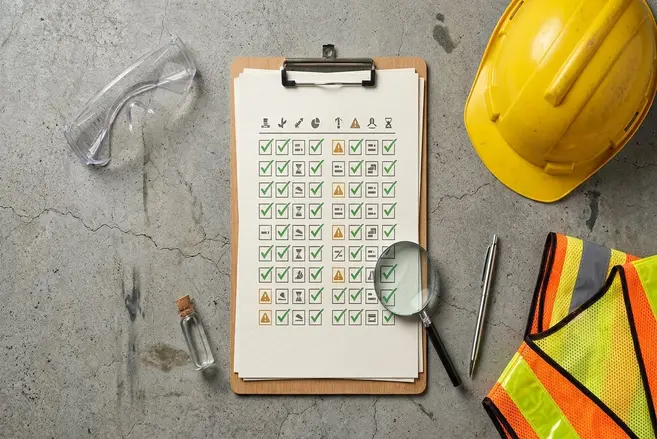
Chemical Supplier Audit Checklist: 50 Questions Before Your First Container Order
A single off-spec container load can shut down a production line for days. Before placing a first order with any new chemical supplier, senior sourcing managers need answers to specific, non-negotiable questions. As a bulk chemical supplier operating in global chemical trade, the gap we see most often is not in willingness to audit but in knowing what to actually ask. Generic supplier audit templates were built for general procurement. They check certifications, ask for references, and confirm delivery timelines. What they miss is the operational reality of international bulk chemical trading: export licenses, anti-dumping duty exposure, batch-to-batch consistency across container loads, force majeure history, and the commercial clauses that protect buyers when shipments arrive off-specification. This checklist covers all of it. Use it before placing your first order with any new supplier, regardless of how credible they appear on paper. For a broader foundation on evaluating chemical supply partners, see our guide on how to source bulk chemicals.Why Standard Checklists Fail Bulk Chemical Buyers
Most published supplier audit checklists are designed for domestic procurement teams buying from local sourcing partners. They ask about ISO certifications, request Safety Data Sheets, and confirm that the supplier can meet the volume requirement. For a 500-kg laboratory order, that level of scrutiny may be sufficient. For a 20 MT container load sourced from overseas, it falls short. The questions that matter in international bulk chemical trade are not on generic templates: Is the exporter subject to anti-dumping duties in your import market? Does the production method (membrane cell versus diaphragm cell) match your purity requirements? Who actually signs the Certificate of Analysis, and have their test results ever been independently verified? What happens contractually when the goods arrive and the actual test results diverge from the CoA? The 50 questions below are organized into six sections. Each section represents a distinct risk category in bulk chemical sourcing.How to Use This Checklist
Run through every section before placing a first order. Mark each question as either a deal-breaker (failure disqualifies the supplier immediately) or negotiable (can be addressed through contract terms, price, or ongoing monitoring). A scoring guide follows the questions. Not every question applies to every chemical or every trade relationship. For domestic orders, skip the export license and REACH questions. For food-grade purchases, elevate the entire documentation section to deal-breaker status. Use judgment, but do not skip sections entirely.Section 1: Company Standing and Legal Compliance (Questions 1-8)
- Is your company legally registered, and can you provide current business registration documentation? A registered entity with auditable filings is the baseline. A polished website and a WhatsApp number are not a substitute for verifiable legal standing.
- Do you hold a valid export license for this specific chemical, and is it current? Some chemicals require government-issued export permits that expire and must be renewed. A supplier who cannot produce a current license cannot ship legally.
- Has your company or any associated entity appeared on OFAC, EU, or UN sanctions lists at any point in the last five years? Importing from a sanctioned entity exposes your company to serious legal liability. Run the check yourself in addition to asking the supplier.
- Is your company currently subject to anti-dumping duties in any import market, particularly your own? Anti-dumping duties can make an apparently competitive FOB price uneconomical once the duty is applied at the destination port. Know the current ADD status before comparing prices.
- Has your company experienced any government-mandated production shutdown or export restriction in the last three years? Environmental enforcement actions and regulatory shutdowns are common in certain producing regions. A history of shutdowns signals supply reliability risk.
- Can you provide trade references from at least two existing bulk chemical customers who place container-load orders? References from companies placing orders similar in scale to yours are meaningful. References from small-quantity buyers are not.
- What is the ownership structure of your company, and is there any parent company or holding company we should know about? Subsidiary relationships affect financial risk, quality responsibility, and who you are actually contracting with. Clarify this before the contract stage.
- What cargo and liability insurance do you carry, and can you provide current policy summaries? Insurance coverage does not prevent problems, but its absence tells you how the supplier will respond when something goes wrong.
Section 2: Manufacturing Capabilities and Quality Systems (Questions 9-18)
- Do you manufacture this product yourself, or do you source from other manufacturers? A trading company presenting a manufacturer’s CoA introduces an additional layer of risk. Know who actually made the product and hold the right entity accountable.
- Where are your production facilities located, and what is the annual production capacity for this specific chemical and grade? Capacity figures tell you whether the supplier can scale with your requirements and whether they are likely to prioritize your orders during tight supply periods.
- Do you hold ISO 9001 certification? What is the scope, the issuing certification body, and the current validity date? ISO 9001 confirms a quality management system exists. The scope matters: a certificate covering a different facility or product line than yours is not relevant.
- What is your batch production process, and what controls do you use to ensure batch-to-batch consistency? Consistency across batches is more important than a single impressive CoA result. Ask specifically what happens when an intermediate batch parameter drifts during production.
- What is your average internal batch rejection rate? A reputable manufacturer with strong QC rejects 1-3% of batches internally. A rate above 5% signals systemic quality problems or a reluctance to answer honestly.
- What is your process when a production batch fails internal quality control? The answer reveals whether the supplier has a genuine non-conformance management process or simply adjusts the CoA to pass the specification.
- What in-house testing equipment do you operate, and which parameters can you test internally? A supplier who outsources all testing to third-party labs has limited ability to catch problems before shipment. In-house testing capability is a positive indicator.
- Which third-party testing laboratory do you use for issuing Certificates of Analysis? Named, accredited laboratories with publicly verifiable NABL or equivalent accreditation are the standard. Unfamiliar labs with no verifiable accreditation are a red flag.
- Do you maintain retention samples from each production batch? For how long, and can buyers request access for dispute resolution? Retention samples are the physical evidence in a quality dispute. A supplier who does not maintain them has no interest in resolving disputes in the buyer’s favor.
- Who has authority to sign and issue a Certificate of Analysis at your facility? The signatory should be a named quality control professional, not an administrative staff member. Ask for their qualifications and role title.
Section 3: Quality Documentation and Regulatory Compliance (Questions 19-28)
- Can you provide a sample CoA for a recent batch? Review it before asking any of the following questions. The CoA will tell you more than the supplier’s verbal answers.
- Which parameters does your CoA report, and which test methods do you use for each? For most industrial chemicals, the methods matter as much as the values: HPLC, GC, Karl Fischer, titration, XRF. Generic methods (“as per standard”) without specifics are insufficient.
- Is the CoA issued per production batch or per lot? What is the typical batch size? A CoA issued per 500 MT lot is not meaningful for a 20 MT container order. Batch-level CoAs are the standard for bulk chemical procurement.
- Can you provide a current Safety Data Sheet compliant with GHS Revision 7 or higher? Pre-GHS SDS documents are outdated. Non-compliant SDS at the destination country triggers customs holds and regulatory liability.
- Can you provide a Technical Data Sheet with all relevant physical and chemical properties? The TDS confirms the supplier understands their product at a technical level. A supplier who cannot produce a TDS is a trading company without technical competence.
- Can you issue a non-preferential Certificate of Origin from the chamber of commerce or the relevant national authority? Self-declared certificates of origin are not acceptable in most import markets for duty rate determination or anti-dumping purposes.
- What is the current REACH registration status of this substance? If you are exporting to EU buyers, do you have an Only Representative arrangement in place? EU importers who accept goods from suppliers without valid REACH registration are legally exposed. Verify this in the ECHA substance database, not from a supplier declaration alone.
- Does this product carry BIS, FSSAI, or other mandatory market-entry certifications required for your specific import market? Mandatory certifications vary by chemical and by country. India’s BIS requirements alone cover a growing list of industrial chemicals. Missing certification means the goods cannot legally be sold.
- What is the UN hazardous goods classification for this chemical, and how do you ensure UN-compliant packaging for transport? Class 8 (corrosives), Class 3 (flammables), Class 5.1 (oxidizers): each requires specific packaging, labeling, and documentation. Non-compliant shipments are detained at ports.
- Does this product require any special import permits at your destination, and have you shipped to that market before? A supplier who has never exported to your country may not understand the specific documentation requirements. Their inexperience becomes your customs delay.
Section 4: Supply Reliability and Business Continuity (Questions 29-36)
- What is your current order backlog, and what is the realistic lead time for a container-load order placed today? Quoted lead times and actual lead times diverge significantly when a supplier is at capacity. Ask for the current committed lead time, not the standard one.
- What is the maximum annual volume you can commit to a single customer without affecting other supply commitments? A supplier who cannot answer this question has not planned for customer concentration risk. For your supply chain, this means you could be deprioritized during tight periods.
- Have you had any force majeure declarations in the last five years? If yes, how were affected customer orders managed? Force majeure history is not disqualifying, but the supplier’s response to it is revealing. Suppliers who proactively communicated and managed alternatives are worth working with.
- Do you have backup production facilities or alternative raw material sources if your primary production is disrupted? Single-plant producers with no backup supply are a single point of failure for your supply chain. Understand the risk before building dependency.
- Is production of this chemical seasonal? Are there months when lead times extend significantly? Certain chemicals have seasonal demand peaks or raw material availability constraints that extend lead times. Plan procurement calendars around these patterns.
- How much advance notice do you require for a standing order, and what is your policy on order amendments after confirmation? Inflexibility on amendments is a commercial risk for procurement teams managing variable production schedules.
- What is your contractual obligation if you cannot fulfill a confirmed order? “Best efforts” is not an acceptable answer. The contract should specify notification timelines, partial shipment options, and compensation for production disruption caused by non-delivery.
- Have you ever failed to fulfill a confirmed container-load order? Describe the circumstances. A supplier who claims a perfect delivery record over years of operation is either new or not being truthful. How they handled failures matters more than whether failures occurred.
Section 5: Packaging, Logistics, and Container Readiness (Questions 37-43)
- What packaging formats are available for this chemical? Options typically include 25 kg PP woven bags, 500 kg or 1,000 kg big bags (FIBCs), 200-liter drums, 1,000-liter IBCs, flexitanks (liquids only), and ISO tanks (liquids only). The right format depends on your handling equipment, storage setup, and the chemical’s physical properties.
- For each packaging format, what is the UN-certified packaging status, and can you provide UN test certificates? For hazardous chemicals, UN-compliant packaging is mandatory. Ask for the actual test certificates, not a declaration of compliance.
- What is the maximum net weight per 20-foot FCL for each packaging format? Standard 20-foot FCL capacity is approximately 21-25 MT for bagged goods depending on density. Know the actual fill weight before building your cost model.
- What is your preferred load port, and what is the typical transit time to the destination port? Port selection affects freight rates, transit times, and reliability. A supplier who ships exclusively through a port with chronic congestion is a logistics risk.
- Do you accept pre-shipment inspection by a third-party agency (SGS, Bureau Veritas, Intertek)? Pre-shipment inspection adds $300-800 per shipment but eliminates most quality disputes for first orders. A supplier who refuses PSI has something to hide.
- What is your container loading process, and who supervises and signs off on the packing list and shipping marks? Container stuffing quality directly affects the condition of goods on arrival. Wet, contaminated, or improperly stacked containers cause damage that is difficult to prove after the fact.
- Can you provide a CAS-number-matched commodity description for customs declaration purposes? Accurate customs declarations reduce clearance delays and prevent misclassification penalties. Suppliers who use vague commodity descriptions create problems at your port.
Section 6: Commercial Terms (Questions 44-50)
- What payment terms do you accept: LC at sight, LC 30/60/90 days, TT with advance and balance, DA, or DP? Payment terms determine your cash flow exposure and risk allocation. LC protects both parties but adds bank costs. TT advance shifts risk to the buyer. Understand the supplier’s preference before entering commercial discussions.
- For TT payment, what advance percentage do you require, and at what milestone is the balance due? Typical structures range from 30% advance against order confirmation to 70% balance against documents. Higher advance percentages mean more buyer risk.
- In which currency do you quote and invoice? USD is the global chemical trade standard. Suppliers quoting in local currency shift exchange rate risk to the buyer. Clarify currency before comparing prices.
- How long is your quoted price valid, and under what conditions can the price change after order confirmation? Price validity of less than 30 days on a product with volatile feedstock costs is understandable. Unlimited price revision rights after order confirmation are not acceptable.
- What volume discount structure applies, and at what metric ton thresholds do discounts activate? Volume discounts are standard in bulk chemical trade. A supplier with no discount structure is either at maximum capacity or not interested in growing the relationship.
- What is your contractual remedy policy when delivered goods are found off-specification on arrival testing? The answer should include: notification timeline, buyer’s right to independent testing, credit note or replacement shipment options, and the threshold for rejection versus acceptance-with-credit.
- Are you willing to include penalty clauses in the purchase contract for delivery delays and confirmed quality failures? A supplier confident in their quality and reliability will accept reasonable penalty terms. Blanket refusal to accept any performance obligation is a negotiating position that tells you exactly what to expect.
Scoring Your Audit: Deal-Breakers vs. Negotiable
Treat these questions as automatic disqualifiers:- Inability to produce valid business registration
- Active sanctions exposure
- Refusal of pre-shipment inspection
- No ISO 9001 or equivalent quality management system
- Refusal to accept any contractual performance obligation
- Food-grade chemicals require full FCC or FSSAI compliance
- EU-bound shipments require valid REACH registration
- Hazardous chemicals require UN-compliant packaging without exception
How Raw Source Qualifies Suppliers Before You Place an Order
For procurement teams sourcing bulk chemicals and ingredients through Raw Source, pre-qualification is handled before any buyer engages with a supplier. Raw Source maintains documented supplier qualification records covering legal standing, CoA verification, and commercial terms for the suppliers in its network. This means buyers receive verified documentation, not supplier declarations, when requesting a quote. For procurement teams sourcing independently, Raw Source’s technical team is available to advise on supplier qualification criteria specific to the chemical category and destination market. Request a bulk quote to discuss your container-load requirements and sourcing strategy.Frequently Asked Questions
How many questions should I ask a new chemical supplier before placing a first order?
All 50 questions in this checklist represent the minimum due diligence for a first container-load order from an overseas supplier. In practice, some questions will be answered by documentation the supplier provides upfront. The goal is complete answers to all 50 before any purchase order is issued.
What is the most important section of a chemical supplier audit?
The quality documentation section (Questions 19-28) and the commercial terms section (Questions 44-50) are the most frequently neglected and carry the highest financial risk. Most procurement teams ask about certifications and delivery times but skip the questions about what happens when something goes wrong.
Should I conduct an on-site audit before placing my first chemical order?
For orders above a certain volume threshold or for chemicals with critical specifications, on-site audits are strongly recommended. However, for most first-order situations, a thorough document-based audit using this checklist combined with a pre-shipment inspection by a third-party agency (SGS, Bureau Veritas, Intertek) provides adequate protection.
The threshold scales with what the chemical does in your process: a container of sulfuric acid feeding a neutralization step needs less scrutiny than a performance additive your formulation depends on.
What is a pre-shipment inspection and how does it protect bulk chemical buyers?
A pre-shipment inspection (PSI) is a third-party verification of the goods at the origin facility before the container is loaded. The inspector verifies the product against specification, confirms packaging compliance, and witnesses the container loading process. PSI costs 0-800 per shipment and eliminates most quality disputes for new supplier relationships.
How do anti-dumping duties affect chemical supplier selection?
Anti-dumping duties (ADD) are import duties imposed when a country determines that a foreign supplier is selling a chemical below fair market value, causing harm to domestic producers. ADD rates can add 10-40% to the landed cost of an imported chemical. Always verify the current ADD status for the specific chemical and origin country before comparing supplier prices.
What should I do if a supplier refuses to answer audit questions?
Refusal to answer specific questions, particularly about certifications, testing methods, and contractual obligations, is itself a qualification result. A supplier unwilling to provide transparent answers before the first order will not provide transparent answers during a quality dispute. Document the refusal and proceed to the next qualified supplier.
Search 1,300+ industrial chemicals by name or CAS, or send us your spec — we quote by the drum, tote, or container.
Browse the Chemical Index → Request a Quote