
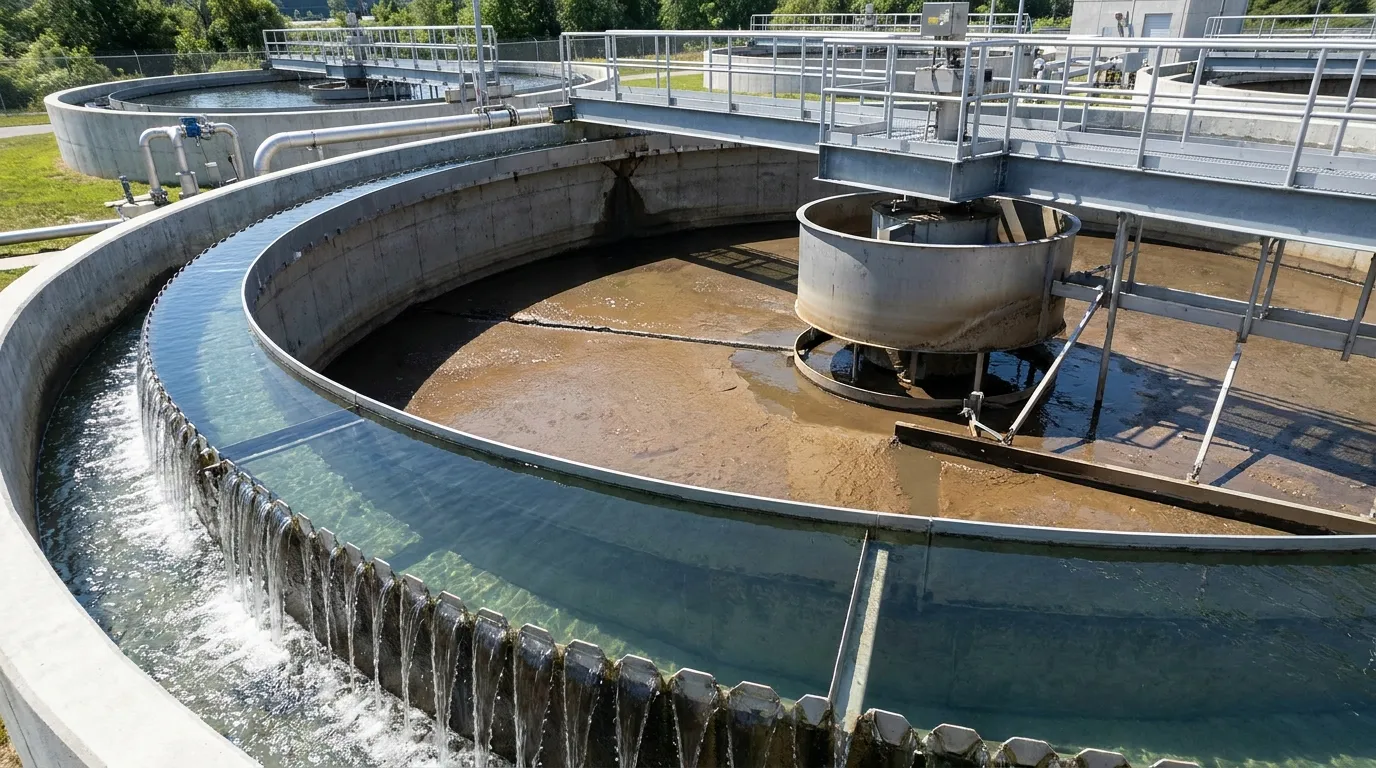
Polyacrylamide (PAM) is a high-molecular-weight, water-soluble synthetic polymer (CAS 9003-05-8) used as a flocculant, coagulant aid, and viscosifier. RawSource supplies and distributes anionic, cationic, and nonionic PAM in bulk for water and wastewater treatment, mining, metal finishing, oil and gas, construction, paper, and agriculture. Grades ship as fine powder or free-flowing granules in 800 kg jumbo bags, with a 24-month shelf life when stored dry.
This page does one job: help you match the right charge type and molecular weight to your solids, then quote it at volume. If you already know the physical form you want, the companion guide on polyacrylamide powder and granular grades carries the full specifications.
What is polyacrylamide?
Polyacrylamide is a linear polymer built from repeating acrylamide units, supplied as a dry solid that dissolves in water into a viscous solution. In dilute water those long chains unwind and grab fine suspended particles, binding them into larger, faster-settling flocs. That bridging action is why a few grams of polymer can clarify thousands of liters of process water (CAS 9003-05-8).
Two properties decide how a grade behaves: molecular weight (chain length) and charge (ionic character). Molecular weight runs into the millions. The nonionic NA219 grade, for example, sits around 12 to 13 million. Longer chains bridge particles better and settle faster. The trade-off is real. Very-high-molecular-weight chains are also more shear-sensitive, so an aggressive transfer pump or a long, turbulent feed line can chop them and quietly cost you performance.
Do not confuse PAM the polymer with acrylamide the monomer. Free residual acrylamide is regulated as a separate quantity, and the U.S. FDA limits residual acrylamide in polyacrylamide used for certain food-contact and potable-water applications to 0.05% (500 ppm). Work from the current SDS and the grade’s certification status, never from assumptions. The practical starting point: identify whether your solids are inorganic or organic, because that single fact sets the charge you need.
Anionic vs Cationic vs Nonionic — how to choose
Match the polymer’s charge to the opposite charge of your particle. Use cationic (positive) PAM for negatively charged organic solids, anionic (negative) PAM for mineral and inorganic solids, and nonionic where charge is weak or the water chemistry is hostile to ionic polymers.
| Type | Charge | Best for | Working pH | Typical industries |
|---|---|---|---|---|
| Anionic | Negative; high (30–35%, KA3016-120) to low (KA3013PWG) | Inorganic and mineral solids; clarification; metal-hydroxide flocs | 6–9 | Water clarification, mining, metal finishing, cement |
| Cationic | Positive; 35–40% (KC5008UH) | Organic and municipal sludge; biosolids dewatering | 4–7 | Municipal wastewater, biosolids, paper |
| Nonionic | Near-neutral; 0–5% (NA219) | Mixed solids; where salinity or pH disrupts ionic polymers | Broad | Paper, construction grouts, some clarification |
Charge degree matters as much as charge sign. A 30 to 35% anionic powder like KA3016-120 carries far more negative sites than the low-charge KA3013PWG, and more is not automatically better. Overdose a high-charge polymer and you re-stabilize the very flocs you were building, dispersing them back into suspension and wasting reagent. The only reliable way to land both the grade and the dose is a jar test on your actual stream: step the concentration up until the supernatant clears, then back off.
Applications by industry
The same polymer family does very different jobs depending on charge and molecular weight. Here is how each sector uses PAM, which charge fits, and what governs the dose.
Water & Wastewater
For clarifying water, anionic PAM flocculates inorganic and mineral suspended solids at pH 6 to 9, while cationic PAM dewaters organic municipal sludge and biosolids at pH 4 to 7. PAM usually follows a primary inorganic coagulant rather than replacing it. Feed it as a dilute 0.1 to 0.2% make-up solution, and set the working dose by jar test for clarification or by a dewatering trial for sludge.
Metal Finishing & Electroplating
In metal-finishing and electroplating wastewater, dose a primary coagulant such as polyaluminium chloride (PAC) first, then add anionic PAM at roughly 2 to 10 g per ton to grow fast-settling metal-hydroxide flocs. The polymer does not replace the coagulant; it grows what the coagulant nucleates, which is what lets a clarifier hit discharge limits on a realistic footprint.
Mining & Tailings
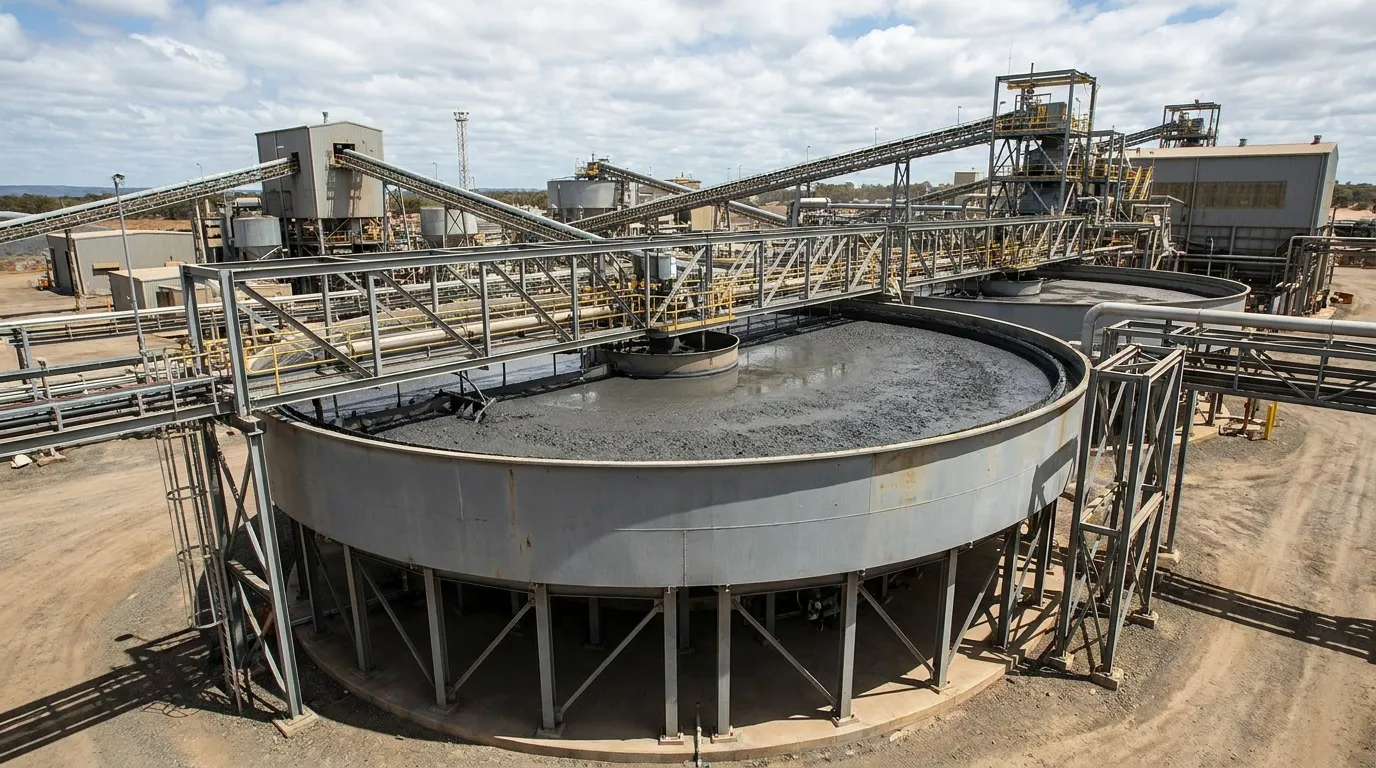
Mining operations use very-high-molecular-weight anionic PAM to settle tailings faster, produce drier underflow, and recover more process water for reuse. The recovered water is often the point: in arid operations, water recovery can matter more than throughput. Match the dose to the ore with a settling test, since the same polymer behaves differently across mineralogies.
Oil & Gas: Drilling & EOR
In drilling and completions, anionic PAM acts as a viscosifier, friction reducer, and shale inhibitor; in enhanced oil recovery (EOR), high-molecular-weight grades viscosify injection water for polymer flooding to improve sweep efficiency. The caution here is downhole conditions. High salinity and high shear both degrade polymer viscosity, so brine tolerance and shear stability are worth confirming before a field trial.
Cement & Construction
In cementitious systems, PAM provides water retention, viscosity, and cohesion, and acts as an anti-washout admixture for underwater concrete, self-compacting mixes, and grouts. Low-charge anionic and nonionic grades are typical because high charge can interfere with cement chemistry. Dose against the binder and water mass in the mix design rather than a fixed figure.
Paper
Papermakers use nonionic and cationic PAM as retention and drainage aids and as dry-strength additives, improving fines and filler retention on the wire. Gains are real but machine-specific, so retention is dialed in on the running furnish, not assumed from a datasheet.
Agriculture & Erosion Control
In furrow irrigation, anionic PAM applied at about 10 ppm in the irrigation water cuts sediment loss sharply. Field work cited by USDA-NRCS reports on the order of 94% less sediment, alongside better infiltration. NRCS practice keeps application at or below 4 lb of active ingredient per acre. This is the water-soluble flocculant grade doing erosion control, not a water-storage gel.
Application → type → dose
| Application | PAM type | Make-up solution | Working dose guidance |
|---|---|---|---|
| Mineral / inorganic water clarification | Anionic (high MW) | 0.1–0.2% | Set by jar test; typically 0.25–2 mg/L of treated water |
| Municipal / organic sludge dewatering | Cationic (very-high MW) | 0.1–0.2% | Set by dewatering trial, typically 5–15 kg/ton dry solids (set by dewatering trial) |
| Metal-hydroxide settling (after PAC) | Anionic | 0.1–0.2% | ~2–10 g/ton |
| Mining tailings thickening | Anionic (very-high MW) | 0.1–0.2% | Set by settling test |
| Cement / anti-washout, grout | Anionic (low charge) or nonionic | Per mix design | Typically ~0.02–0.1% by cement weight, per mix design |
| Paper retention & drainage | Nonionic / cationic | 0.1–0.2% | Set by retention trial |
| Furrow-irrigation erosion control | Anionic | ~10 ppm in irrigation water | ≤4 lb a.i./acre (USDA-NRCS) |
Bulk supply, grades & quality control
RawSource stocks and sources PAM across the charge and molecular-weight spectrum, so one supplier can cover clarification, dewatering, and viscosifying duties. The core grades:
- KA3016-120 — anionic, 30 to 35% charge, very-high MW, fine powder at 120 mesh or finer, bulk density 0.5 to 0.7 g/cm³, pH (0.1%) around 7.2. Built for mineral and inorganic clarification.
- KA3013PWG — anionic, low charge, high MW, 20 to 40 mesh granular, pH around 7.2. Suited to low-charge clarification and cement/grout work.
- KC5008UH — cationic, 35 to 40% charge, very-high MW, 20 to 40 mesh granular, pH around 7.2. The organic sludge dewatering workhorse.
- NA219 / NA219A — nonionic, 0 to 5% charge, MW 12 to 13 million, 20 to 80 mesh granular, white to off-white. For paper, grouts, and mixed solids.
Quality is framed on four levers: charge density, molecular weight, particle size (mesh), and water-insolubles held at 0.5% or below. Store between 0 and 35°C, dry, for a 24-month shelf life. Typical values describe the grade; the Certificate of Analysis for the lot you buy governs. Where two grades look close on paper, the choice usually comes down to dissolution speed versus dust and handling, which is a process-line decision more than a chemistry one.
How to request a quote
Send five things and we can quote accurately and recommend a grade.
- The problem, not just the product: what solids are you treating, and are they inorganic or organic?
- Target volume or throughput (and how often you reorder).
- Water pH and temperature.
- Preferred particle form: fine powder or granular.
- Any certification requirement, such as NSF/ANSI 60 for drinking-water contact.
If you are not sure of the charge, describe the stream and we will start from the opposite-charge rule, then point you to a jar test. The smallest, cheapest step that de-risks a bulk order is a short bench trial before the first pallet ships.
Methodology and sources
Identity and technical context in this guide is anchored to the PubChem record for polyacrylamide and the EPA IRIS assessment of acrylamide (the residual monomer that drives food-contact and potable-use grade limits). Always defer to the supplier's current SDS and CoA for the specific grade and lot you handle.
Polyacrylamide is one line on a plant’s chemical list; the water treatment chemicals supplier page covers the rest by treatment stage, and drilling-mud buyers will find the clay side on the bulk bentonite supplier page.
Frequently asked questions
What is polyacrylamide?
Polyacrylamide (PAM, CAS 9003-05-8) is a high-molecular-weight, water-soluble polymer of acrylamide used as a flocculant, coagulant aid, and viscosifier. Dissolved in water, its long chains bridge fine particles into larger flocs that settle or filter out.
Is polyacrylamide safe?
Polyacrylamide itself is a high-molecular-weight polymer; the regulated concern is residual free acrylamide monomer left from manufacturing. The U.S. FDA limits residual acrylamide to 0.05% (500 ppm) in polyacrylamide used for certain food-contact and potable applications, and drinking-water treatment chemicals are certified to NSF/ANSI 60. Handling, exposure control, and suitability for your use are governed by the current SDS and your own compliance review. Request the certification status for the grade you need.
Anionic vs cationic: what is the difference?
Anionic PAM carries a negative charge and flocculates inorganic and mineral solids, typically at pH 6 to 9. Cationic PAM carries a positive charge and dewaters organic and municipal sludge, typically at pH 4 to 7. Match the polymer to the opposite charge of your particle.
How much polyacrylamide do I use?
Feed PAM as a dilute 0.1 to 0.2% make-up solution, then set the working dose with a jar test (clarification) or dewatering trial (sludge). Some duties have a starting range, such as roughly 2 to 10 g per ton of anionic PAM for metal-hydroxide settling after a PAC coagulant, or about 10 ppm in irrigation water (up to 4 lb a.i./acre) for erosion control per USDA-NRCS. Overdosing can disperse flocs, so step up and back off.
Powder vs gel: what is the difference?
Our products are water-soluble flocculant powder and granules that dissolve completely into a solution. They are not crosslinked superabsorbent gel crystals, which swell and hold water without dissolving. See the powder and granular grades guide for the full distinction.
Editorial note: This article is general technical reference for industrial and professional use, compiled from public sources and our typical product data. It is not a guaranteed specification, and nothing here is a medical, health, or efficacy claim. Always consult the current SDS and confirm regulatory status and suitability for your application and jurisdiction. The Certificate of Analysis for your lot governs.
Search 1,300+ industrial chemicals by name or CAS, or send us your spec — we quote by the drum, tote, or container.
Browse the Chemical Index → Request a Quote