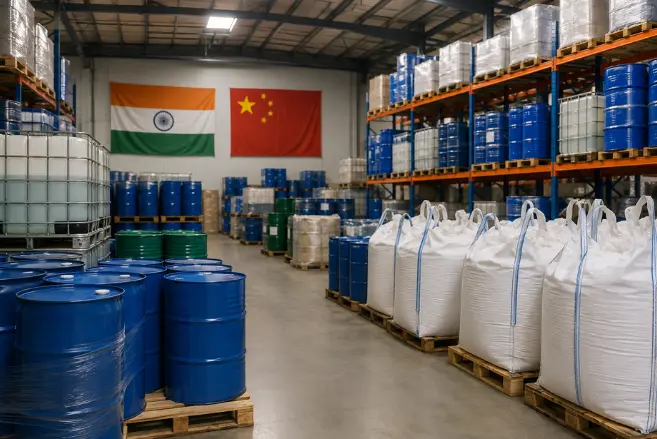
The first decision in any acetic acid purchase is glacial versus dilute, because shipping water in a dilute grade you could make on site is one of the most common avoidable costs in acid procurement. Glacial acetic acid at 99.5 percent plus concentrates the active product and the freight efficiency; dilute grades trade that efficiency for handling simplicity and a lower concentration spec. Procurement teams sourcing from a bulk chemical supplier decide between them on freight math, on site dilution capability, and end-use spec, not on unit price alone.
This guide covers the glacial-versus-dilute trade, the grade and spec parameters that matter, and the procurement tips that keep acetic acid sourcing efficient at container scale.
Glacial vs Dilute: The Core Trade
Glacial acetic acid is the anhydrous form, typically 99.5 percent or higher, that solidifies below about 16.6 degrees C, which is where the “glacial” name comes from. Dilute acetic acid is the same molecule cut with water to a working concentration, commonly anywhere from 5 to 80 percent depending on the application.
The procurement logic is mostly freight and handling. Buying glacial and diluting on site ships the most active product per container and avoids paying ocean freight on water, while buying dilute removes the on site dilution step and the handling of a concentrated, corrosive, low-flash-point material.
Factor | Glacial (99.5%+) | Dilute (varies) |
Active per container | Highest | Lower (carries water) |
Freight efficiency | Best | Pays freight on water |
On site handling | Needs dilution capability | Ready to use |
Cold-weather risk | Freezes below ~16.6 C | Lower freezing point |
Best for | High-volume users with dilution | Direct-use applications |
The cold-weather point is a real operational constraint, not a footnote. Glacial acetic acid freezing in transit or storage requires heated handling, which is why winter logistics and storage temperature belong in the buying decision.
Industrial Uses That Drive the Grade Choice
Acetic acid is a high-volume intermediate, and the end use usually dictates whether glacial or dilute makes sense. Vinyl acetate monomer, acetate esters, and acetic anhydride production consume glacial grade, since these are concentration-sensitive synthesis routes.
Textile, food (where food-grade applies), and many cleaning and pH-adjustment uses run on dilute grades, where the working concentration is below glacial anyway. In these cases buying dilute can be the right call if on site dilution capability or storage of concentrated acid is a constraint.
The deciding question is whether you have the tankage, dosing, and safety setup to dilute glacial on site. A buyer with that capability almost always lands cheaper on glacial; a buyer without it may find the all-in cost of dilute competitive once handling and capex are included.
Procurement Tips for Acetic Acid
Source acetic acid on the active-product math and the spec, not the headline per-MT figure, and the efficient path usually becomes obvious. The tips below are where experienced buyers find cost and avoid problems.
- Calculate cost per MT of active acid: normalize glacial and dilute quotes to cost per MT of pure acetic acid so you are not comparing across different water contents.
- Factor freight on water into dilute quotes: a dilute grade pays ocean freight on its water fraction, which can erase an apparently lower unit price over a container load.
- Confirm the concentration and impurity spec on the CoA: verify the actual concentration, plus formic acid, aldehydes, and heavy metals where relevant, against your end-use spec.
- Plan for cold-weather logistics on glacial: specify heated transport or storage where ambient drops below the freeze point, and build that into landed cost.
- Match grade to end use, not habit: confirm whether your process genuinely needs glacial or whether a dilute grade delivered ready to use is the lower all-in cost.
- Verify materials compatibility: confirm tankage, gaskets, and transfer equipment suit the concentration, since glacial and dilute acetic acid have different corrosion profiles.
The highest-leverage tip is normalizing to cost per MT of active acid. A dilute grade can look cheaper per MT of solution while being more expensive per MT of the acetic acid you actually use, and that distinction decides the purchase.
What Comes Next on Acetic Acid Supply
Acetic acid pricing tracks methanol and carbon monoxide feedstock through the dominant methanol-carbonylation route — thermochemical and physical property data for acetic acid is maintained in the NIST Chemistry WebBook — so it is sensitive to the same upstream tightness that moves methanol markets. Buyers tracking feedstock signals will see acetic acid cost pressure building before it reaches their contract renewals.
Capacity remains concentrated regionally, which keeps supply continuity on the watch list for high-volume users. For synthesis users, the move is to secure contract cover on glacial grade and qualify a second origin, instead of leaning on spot supply when feedstock markets tighten.
How Raw Source Supplies Acetic Acid in Bulk
Choosing and sourcing acetic acid efficiently is a grade-and-logistics problem, and Raw Source supports procurement teams on both. Acetic acid is supplied in container-load and metric-ton quantities with a 1 MT minimum, so the conversation is built around the active-product and freight math that drives real cost, not small quantities.
This comes down to grade precision and documentation. When a buyer specifies the concentration and impurity profile their end use requires, the supply can be matched to that spec, whether that is glacial grade for a synthesis route or a dilute working concentration for direct use. Each shipment carries a Certificate of Analysis reporting concentration and key impurities, so the grade can be validated against the application spec before it reaches the process.
Incoterm flexibility from FOB through DDP lets a high-volume user structure acetic acid supply around its own freight and handling position, including the heated-logistics considerations that glacial grade carries in cold climates. For buyers weighing acetic acid against the broader commodity-acid picture, the same procurement discipline applies as in our caustic soda buying guide: specify precisely, normalize quotes, and source on landed cost per unit of active product.
Neither glacial nor dilute is universally cheaper. The right grade depends on your dilution capability, end use, and logistics, and a buyer without on site dilution may rightly choose dilute despite the freight on water. A supplier’s job is to give you the grade range and documentation to make that call on real numbers. To source the right acetic acid grade for your process, share your concentration, volume, and end-use requirements with the sourcing team.
Source the Right Acetic Acid Grade in Bulk
Specify glacial or dilute on the active-product math, not the headline price. Request a bulk quote and discuss your container-load requirements and acetic acid specifications with the Raw Source team.
Frequently Asked Questions
What is the difference between glacial and dilute acetic acid?
Glacial acetic acid is the anhydrous form at 99.5 percent or higher, while dilute acetic acid is the same molecule cut with water to a working concentration, commonly 5 to 80 percent. Glacial ships the most active product per container and needs on site dilution, while dilute is ready to use but pays freight on its water content.
Is it cheaper to buy glacial or dilute acetic acid?
For high-volume users with on site dilution capability, glacial is usually cheaper because it avoids paying ocean freight on water. Buyers without dilution capability may find dilute competitive once handling and capex are included, so the decision should be made on cost per MT of active acid.
Why does glacial acetic acid freeze?
Glacial acetic acid solidifies below about 16.6 degrees C, which is the origin of the "glacial" name. In cold climates this requires heated transport and storage, so winter logistics and storage temperature must be built into the buying decision and landed cost.
What applications require glacial acetic acid?
Concentration-sensitive synthesis routes require glacial grade, including vinyl acetate monomer, acetate esters, and acetic anhydride production. Textile, food-grade, cleaning, and pH-adjustment uses typically run on dilute grades at lower working concentrations.
What should I check on an acetic acid CoA?
Verify the actual concentration against your spec, plus relevant impurities such as formic acid, aldehydes, and heavy metals for sensitive applications. Confirming actual lot values rather than typical figures ensures the grade matches your end-use requirement before acceptance.