
GLYCERIN- ▸ Humectant: Moisture-retaining agent in food and personal care
- ▸ Solvent & carrier: Carrier solvent for flavors and actives
- ▸ Emulsification: Emulsifier and texture/thickening aid
- ▸ Antifreeze: Freeze-thaw and antifreeze additive
- ▸ Chemical synthesis: Intermediate for derivatives
A grade-specific Safety Data Sheet (SDS) — with the complete hazard classification, handling precautions, and transport information — is supplied with every shipment and available on request. Confirm all safety and regulatory details against the SDS for your specific grade.
Request SDS →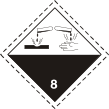
Transport classification per the UN Model Regulations / 49 CFR 172.101 Hazardous Materials Table. Confirm against the grade-specific SDS (Section 14) before shipping.
Vegetable glycerin (CAS 56-81-5) is plant-derived glycerol, a trihydric alcohol. It functions as a humectant, solvent, and emulsifier across food, personal-care, and industrial formulations, and serves as a carrier solvent, thickener, and antifreeze/freeze-thaw additive. It is also used as a chemical intermediate.
Regulatory & registration requirements
- TSCA (US):
- REACH (EU):
- EC number: 200-289-5
Source: EPA TSCA Inventory (July 2025 release) · ECHA CHEM — retrieved 2026-07-12
Solutions Using This Product
Process-solution guides on this site that specify this chemistry:
- Food Humectants to Lower Water Activity: Glycerin, Propylene Glycol & Polyols (Food & Beverage)
- Dental Silica, Binders & Flavor Aids for Toothpaste (Beauty & Personal Care)
- Humectants & Emollients for Alcohol Sanitizer Bases (Beauty & Personal Care)
Frequently Asked Questions
What exactly is glycerin used for?
Vegetable glycerin (CAS 56-81-5) is a trihydric alcohol used as a humectant, solvent/carrier, emulsifier, and thickener across food, personal-care, and industrial formulations. It also serves as a freeze-thaw/antifreeze additive and as a chemical intermediate for glycerol derivatives.
What is vegetable glycerin made from?
Vegetable glycerin is plant-derived glycerol, produced from vegetable oils and fats (typically via hydrolysis, saponification, or transesterification). Its chemical formula is C3H8O3.
Is glycerin water soluble?
Yes. Glycerol is fully miscible with water and is also a strong humectant, meaning it attracts and retains moisture. This solubility underlies its use as a carrier solvent for flavors and actives.
What grade of glycerin do you supply, and is it kosher?
We supply vegetable (plant-derived) glycerin in bulk. Grade designations, purity, and certifications such as kosher or USP are confirmed per lot on the Certificate of Analysis; request the CoA and SDS for the grade required by your application.
How is bulk vegetable glycerin packaged?
Vegetable glycerin ships in drums, IBC totes, and bulk quantities for manufacturers. Packaging and MOQ depend on grade and volume; submit a bulk RFQ for current pricing and lead time.
What is the REACH and TSCA regulatory status of Vegetable Glycerin (Glycerin, Glycerol)?
Vegetable Glycerin (Glycerin, Glycerol) (CAS 56-81-5) is subject to U.S. TSCA Inventory requirements; supplying it into the EU requires valid REACH registration ((EC) No 1907/2006). RawSource cannot verify a third-party supplier's registrations — buyers should require documented TSCA and REACH compliance for their jurisdiction and volume (EC 200-289-5).