
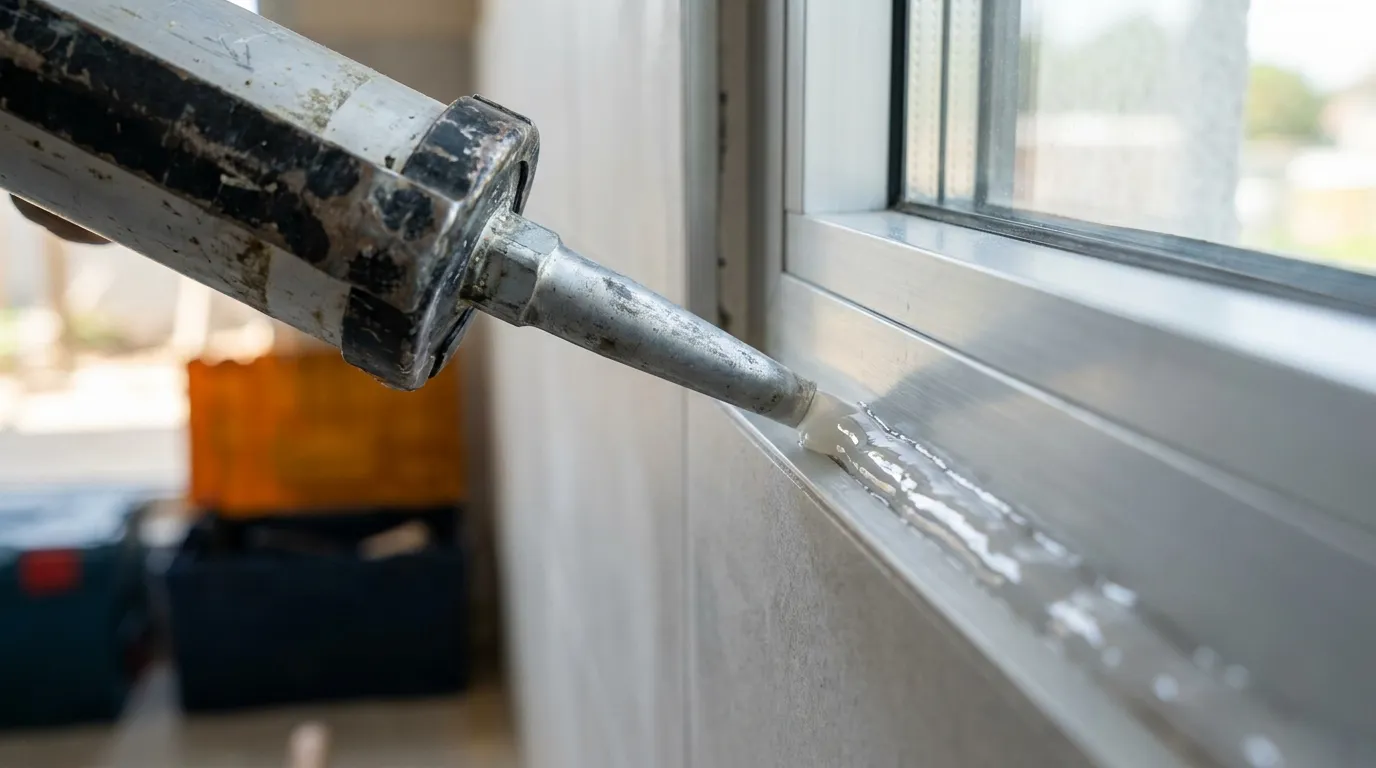
RTV silicone (Room Temperature Vulcanizing silicone) is a type of silicone rubber that cures to a flexible, durable solid at room temperature — without heat — and is used for sealing, bonding, molding, gasketing, and electrical encapsulation. The acronym RTV stands for Room Temperature Vulcanizing: the material is supplied as a pourable or paste-like liquid and crosslinks into an elastomer once it is exposed to atmospheric moisture or a curing catalyst. This guide explains what RTV silicone is, the cure chemistries behind it, where it is used, and the silicone raw materials that go into formulating it — the angle that matters most to sealant and elastomer producers.
What Does RTV Stand For, and What Is RTV Silicone?
RTV stands for Room Temperature Vulcanizing. RTV silicone is a silicone rubber that vulcanizes (crosslinks) at ambient temperature rather than requiring an oven or press, distinguishing it from high-temperature vulcanizing (HTV) silicone rubber, which cures under heat. The polymer backbone is polydimethylsiloxane (PDMS); on curing it forms a stable Si–O–Si network that stays elastic across a broad temperature range and resists weathering, ozone, and UV exposure.
RTV-1 vs RTV-2: One-Part and Two-Part Systems
RTV silicones are classified by how they are packaged and cured. One-part (RTV-1) systems are single-component, ready-to-use products that cure on contact with atmospheric moisture — ideal for sealing and gasketing where a thin bead is exposed to air. Two-part (RTV-2) systems ship as a base and a catalyst that are mixed before use; they cure throughout the bulk independent of air exposure, which makes them suited to thick sections, deep potting, and mold making.
Cure Chemistries
The cure system determines the byproduct released, the cure speed, substrate compatibility, and corrosivity. The table below summarizes the common RTV cure chemistries.
| Cure chemistry | System | Byproduct | Key traits | Typical use |
|---|---|---|---|---|
| Acetoxy | RTV-1, condensation | Acetic acid (vinegar odor) | Fast tack-free, strong adhesion; corrosive to bare metals | Glass, glazing, sanitary and general sealing |
| Oxime | RTV-1, condensation (neutral) | Methyl ethyl ketoxime | Neutral cure, broad adhesion, low corrosivity | Metals, electronics, construction sealants |
| Alkoxy | RTV-1, condensation (neutral) | Alcohol (methanol/ethanol) | Low odor, non-corrosive, electronics-friendly | Electronics, sensitive substrates |
| Tin condensation | RTV-2 | Alcohol | Low-cost, cures in deep sections; can revert at high heat in sealed parts | Mold making, general casting |
| Platinum addition | RTV-2 | None | No byproduct, low shrinkage, dimensionally precise; inhibited by some contaminants | Precision molds, encapsulation, electronics |
Acetoxy is the oldest and fastest RTV-1 chemistry, but the acetic acid it releases can corrode metal and electronics, which is why neutral-cure oxime and alkoxy systems are specified where corrosion is a concern. Among two-part systems, tin condensation is economical and forgiving, while platinum addition cures with no byproduct and almost no shrinkage — preferred for dimensionally accurate molds and electronic encapsulation, though it is sensitive to cure inhibition from sulfur, amines, and tin residues. Choosing a cure system is therefore a trade-off between cure speed, substrate sensitivity, depth of cure, and cost: acetoxy where speed and adhesion lead and metal corrosion is not a concern; oxime or alkoxy where the seal contacts metal or electronics; tin RTV-2 for cost-driven casting; and platinum RTV-2 where dimensional accuracy and a clean, byproduct-free cure are non-negotiable.
What Is RTV Silicone Used For?
RTV silicone is used wherever a flexible, weather-resistant, electrically insulating seal or bond must form without applied heat. Core industrial applications include:
Construction and sealants: weatherproofing, glazing, and expansion-joint sealing where flexibility and UV resistance are required.
Automotive gaskets (FIPG): formed-in-place gaskets for engine covers, oil pans, and housings that must hold a seal under heat, vibration, and oil exposure.
Electronics potting and encapsulation: protecting circuit boards, sensors, and connectors from moisture, dust, and vibration; neutral-cure and addition systems are favored to avoid corrosion.
Mold making: RTV-2 systems reproduce fine detail for casting resin, plaster, wax, and low-melt metals.
Electrical insulation: dielectric encapsulation and insulation for components operating across a wide temperature range.
What Is in an RTV Silicone? The Raw Materials
For formulators and elastomer producers, RTV silicone is a system built from a handful of well-defined silicone raw materials. Understanding each component is the difference between buying finished sealant and engineering your own.
Silanol-terminated PDMS (the base polymer): the hydroxyl-terminated polydimethylsiloxane backbone that crosslinks during cure. Molecular weight (viscosity grade) sets the cured hardness and elongation.
Crosslinkers: multifunctional silanes (acetoxy, oxime, or alkoxy) that react with the silanol ends to build the network and define the cure chemistry. Alkoxysilanes such as tetraethyl orthosilicate (TEOS) serve as crosslinkers and chain extenders in condensation systems.
Reinforcing filler — fumed silica: fumed silica provides reinforcement, tear strength, and thixotropy (sag control), typically at 8–15% by weight. Surface-treated grades such as silica dimethyl silylate (hydrophobic fumed silica) are used where moisture resistance and rheology control matter.
Extending filler — calcium carbonate: ground calcium carbonate is a low-cost, non-reinforcing filler that builds body and reduces cost, commonly at 15–45% by weight.
Catalysts: organotin compounds (such as dibutyltin dilaurate) drive condensation cure; platinum complexes drive addition cure. Catalyst type and loading govern cure rate and pot life.
Plasticizers and adhesion promoters: non-reactive silicone fluids adjust modulus and flow, while functional silanes improve adhesion to specific substrates.
Because each of these inputs is sourced and dosed independently, formulators control cured hardness, elongation, sag resistance, cure speed, and cost at the raw-material level rather than accepting a fixed off-the-shelf product. A higher-viscosity PDMS base with more fumed silica yields a stiffer, more thixotropic paste suited to vertical sealing; a lower-viscosity base with extending filler pours readily for potting and casting. The crosslinker and catalyst pairing then fixes the cure chemistry and the open time.
How Does RTV Silicone Cure?
RTV silicone cures by crosslinking the silanol-terminated polymer into a three-dimensional Si–O–Si network. In condensation cure (most RTV-1 and tin-catalyzed RTV-2), atmospheric moisture or the catalyst hydrolyzes the crosslinker, which then condenses with the polymer ends and releases a small-molecule byproduct — acetic acid, an oxime, or an alcohol depending on the chemistry. In addition cure (platinum RTV-2), a hydrosilylation reaction joins Si–H and vinyl groups with no byproduct and minimal shrinkage. Cure rate depends on humidity, temperature, catalyst loading, and section thickness: condensation RTV-1 cures from the surface inward as moisture penetrates, while RTV-2 cures uniformly through the bulk.
Properties That Make RTV Silicone Useful
Cured RTV silicone stays elastic across roughly −60 °C to 200 °C, resists UV, ozone, weathering, and many chemicals, and provides reliable electrical insulation. It bonds to metals, glass, ceramics, and many plastics when surfaces are clean and dry. These properties hold across formulations, but the exact hardness, elongation, and cure profile are set by the raw-material choices above — which is why formulators control them at the component level.
FAQs
What does RTV stand for?
RTV stands for Room Temperature Vulcanizing. RTV silicone is a silicone rubber that cures (vulcanizes) to a flexible solid at room temperature, without applied heat.
What is RTV silicone used for?
RTV silicone is used for sealing, bonding, gasketing, mold making, and electrical and electronics encapsulation. Common applications include construction and weatherproofing sealants, formed-in-place automotive gaskets, electronics potting, and casting molds.
What is the difference between RTV-1 and RTV-2?
RTV-1 (one-part) silicone is a single, ready-to-use component that cures on contact with atmospheric moisture, suited to thin beads exposed to air. RTV-2 (two-part) silicone ships as a base and a catalyst that are mixed before use and cures throughout the bulk, suited to thick sections, potting, and mold making.
How does RTV silicone cure?
RTV silicone cures by crosslinking its silanol-terminated PDMS polymer into a Si-O-Si network. Condensation-cure systems (acetoxy, oxime, alkoxy, and tin RTV-2) use moisture or a catalyst and release a small-molecule byproduct such as acetic acid, an oxime, or an alcohol. Platinum addition-cure RTV-2 crosslinks with no byproduct and minimal shrinkage.
How long does it take for RTV silicone to cure?
Cure time depends on humidity, temperature, catalyst loading, and section thickness. One-part RTV cures from the surface inward as moisture penetrates and can take from a few hours to several days; two-part RTV cures uniformly through the bulk.
Can RTV silicone be used for high-temperature applications?
Cured RTV silicone typically stays flexible across roughly -60 to 200 degrees C, which makes it suitable for many high-temperature sealing and gasketing applications. The exact service range depends on the specific formulation.
What raw materials are used to make RTV silicone?
RTV silicone is formulated from silanol-terminated PDMS (the base polymer), silane crosslinkers, reinforcing fumed silica, extending calcium carbonate filler, and a tin or platinum catalyst, plus optional plasticizers and adhesion promoters.
What surfaces can RTV silicone adhere to?
RTV silicone bonds well with metals, glass, ceramics, and many plastics. Clean, dry surfaces and the right cure chemistry and adhesion promoter are important for optimal adhesion.
Source RTV Silicone Raw Materials in Bulk
RawSource is a B2B chemical sourcing company supplying the silicone raw materials used to formulate RTV silicone — silanol-terminated and dimethicone PDMS fluids, crosslinkers, fumed silica, calcium carbonate, and catalysts — in drum, tote, and bulk quantities.
Methodology and sources
Identity and technical context in this guide is anchored to the PubChem record for polydimethylsiloxane (PDMS), the base polymer of RTV systems. Always defer to the supplier's current SDS and CoA for the specific grade and lot you handle.
Search 1,300+ industrial chemicals by name or CAS, or send us your spec — we quote by the drum, tote, or container.
Browse the Chemical Index → Request a Quote