
VINYLTRIETHOXYSILANE- ▸Technical data sheet: on request
- ▸Safety data sheet: on request
- ▸Certificate of analysis: issued per lot with each shipment
- ▸ Coupling agent: Bonds inorganic fillers to polymers
- ▸ Adhesion promotion: Adhesion promoter in composites and coatings
- ▸ Crosslinking: Crosslinker and surface modifier
- ▸ Polymer production: Comonomer/modifier for general-purpose polymers

GHS07
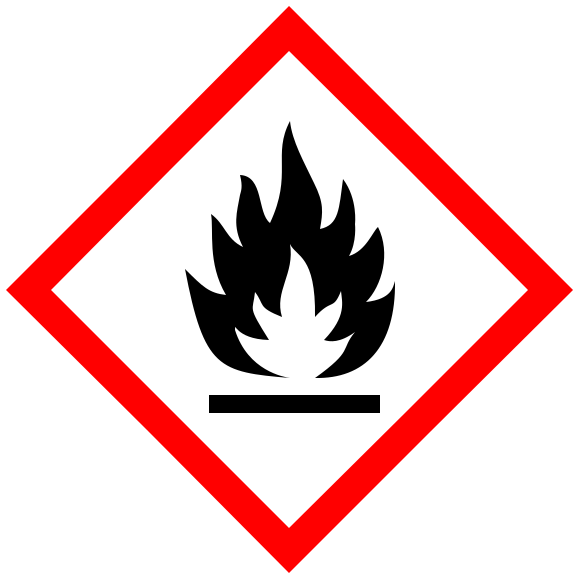
GHS02
- H335 (26.4%): May cause respiratory irritation [Warning Specific target organ toxicity, single exposure; Respiratory tract irritation]
- H226 (82.3%): Flammable liquid and vapor [Warning Flammable liquids]
- H319 (26.7%): Causes serious eye irritation [Warning Serious eye damage/eye irritation]
Precautionary statement codes: P210, P233, P240, P241, P242, P243, P261, P264+P265, P271, P280, P303+P361+P353, P304+P340, P305+P351+P338, P319, P337+P317, P370+P378, P403+P233, P403+P235, P405, P501
Source: PubChem, compound CID 6516, Safety and Hazards: GHS Classification
A grade-specific Safety Data Sheet (SDS) — with the complete hazard classification, handling precautions, and transport information — is supplied with every shipment and available on request. Confirm all safety and regulatory details against the SDS for your specific grade.
Request SDS →Vinyltriethoxysilane (CAS 78-08-0), VTES, is a vinyl-functional trialkoxysilane. It acts as a coupling agent between inorganic fillers and polymers, functioning as an adhesion promoter, crosslinker, and surface modifier, and is used in the production of general-purpose polymers.
Regulatory & registration requirements
- TSCA (US):
- REACH (EU):
- EC number: 201-081-7
Source: EPA TSCA Inventory (July 2025 release) · ECHA CHEM — retrieved 2026-07-12
Solutions Using This Product
Process-solution guides on this site that specify this chemistry:
- Vinyl Silanes for Moisture-Crosslinked PE Pipe & Cable (Plastics & Polymers)
Frequently Asked Questions
What is vinyltriethoxysilane used for?
Vinyltriethoxysilane (VTES, CAS 78-08-0) is a vinyl-functional trialkoxysilane used as a coupling agent between inorganic fillers and polymers. It serves as an adhesion promoter, crosslinker, and surface modifier in composites, coatings, and general-purpose polymer production.
What is the structure of vinyltriethoxysilane?
VTES (formula C8H18O3Si) is a silicon atom bearing one reactive vinyl group and three hydrolyzable ethoxy groups. The ethoxy groups hydrolyze to bond inorganic surfaces while the vinyl group couples to organic polymers.
What is a vinyl silane?
A vinyl silane is an organosilane carrying a reactive vinyl group plus hydrolyzable alkoxy groups, such as VTES (ethoxy) and VTMS (methoxy). The vinyl group reacts with polymers while the alkoxy groups bond mineral fillers, making vinyl silanes coupling agents and adhesion promoters.
What is the difference between vinyltriethoxysilane and vinyltrimethoxysilane?
Both are vinyl-functional coupling-agent silanes; VTES (CAS 78-08-0) carries ethoxy leaving groups and releases ethanol on hydrolysis, while VTMS (CAS 2768-02-7) carries methoxy groups and releases methanol and hydrolyzes faster. Selection depends on cure speed and byproduct preferences in the formulation.
How is bulk vinyltriethoxysilane packaged and priced?
VTES ships under HS 2931.90 in drums and totes for polymer and coatings manufacturers. Packaging, MOQ, and pricing depend on volume; submit a bulk RFQ with your target quantity, and request the CoA and SDS.
What is the REACH and TSCA regulatory status of Vinyltriethoxysilane (VTES)?
Vinyltriethoxysilane (VTES) (CAS 78-08-0) is subject to U.S. TSCA Inventory requirements; supplying it into the EU requires valid REACH registration ((EC) No 1907/2006). Buyers should require documented TSCA and REACH compliance for their jurisdiction and volume (EC 201-081-7).