
AMMONIUM HYDROXIDE- ▸ pH adjustment: Alkalizer/neutralizer in process streams.
- ▸ Cleaning & detergents: Active in industrial and household cleaners.
- ▸ Water treatment: Purification and chloramine pH control.
- ▸ Textiles & paper: Rayon, textile, and pulp/paper processing.
- ▸ Metal extraction: Ammoniacal leaching and refining.
A grade-specific Safety Data Sheet (SDS) — with the complete hazard classification, handling precautions, and transport information — is supplied with every shipment and available on request. Confirm all safety and regulatory details against the SDS for your specific grade.
Request SDS →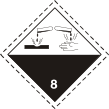
Transport classification per the UN Model Regulations / 49 CFR 172.101 Hazardous Materials Table. Confirm against the grade-specific SDS (Section 14) before shipping.
Ammonium hydroxide (CAS 1336-21-6) is aqueous ammonia, supplied here at approximately 28% (Type B). It is used in the manufacture of rayon and textiles, pulp and paper, rubber, detergents and cleaners, and inks; in water purification and pH adjustment; in photographic development; and in metal extraction and refining.
Reviewed and updated July 2026 by the RawSource technical team.
Ammonium hydroxide (aqua ammonia) is ammonia dissolved in water; this Type B commercial grade assays 27.9% NH3 maximum and ships as UN 2672, hazard class 8 corrosive.
Aqua Ammonia: Key Figures for Buyers
U.S. ammonia production, 2024: an estimated 14.0 million metric tons of contained nitrogen, made by 18 companies at 37 plants in 17 states (USGS Mineral Commodity Summaries 2025). Aqua ammonia supply draws on this domestic ammonia base.
Benchmark price, 2024: the U.S. Gulf Coast ammonia price averaged an estimated $440 per short ton for 2024 (USGS, 2025). Use it as the upstream anchor when evaluating aqua ammonia quotes.
Weight per gallon: 26° Baumé aqua ammonia (29.4% NH3) weighs 7.5 lb per gallon at 60 °F, specific gravity 0.8974 (Airgas Specialty Products technical manual, 2022; Tanner Industries technical data, accessed July 2026).
Workplace exposure limit: OSHA’s permissible exposure limit for ammonia is 50 ppm (35 mg/m³) as an 8-hour time-weighted average under 29 CFR 1910.1000, Table Z-1 (OSHA chemical data, accessed July 2026).
Storage compliance threshold: ammonia solutions at 20% concentration or greater are Risk Management Program substances with a 20,000 lb threshold quantity, listed at 40 CFR 68.130 (EPA RMP regulated-substance list, accessed July 2026).
Regulatory & registration requirements
- TSCA (US):
- REACH (EU):
- EC number: 215-647-6
Source: EPA TSCA Inventory (July 2025 release) · ECHA CHEM — retrieved 2026-07-12
Frequently Asked Questions
What is ammonium hydroxide Type B 27.9% used for?
Ammonium hydroxide (aqueous ammonia) at roughly 28% is used as an alkalizer/neutralizer for pH adjustment in process streams, as an active in industrial and household cleaners and detergents, in water purification and chloramine pH control, in rayon/textile and pulp/paper processing, and in ammoniacal metal leaching and refining. Type B denotes the approximately 27.9% concentration grade.
What is the highest concentration of ammonium hydroxide?
Aqueous ammonia is limited by ammonia solubility in water; concentrated commercial grades typically run up to about 28-30% NH3 by weight, beyond which ammonia readily off-gasses. This Type B product is supplied at approximately 27.9% maximum. Confirm the exact assay on the product Certificate of Analysis.
Is ammonium hydroxide a strong acid or a base?
Ammonium hydroxide is a weak base, not an acid; it is aqueous ammonia (NH3 in water) and raises pH, which is why it is used as an alkalizer and neutralizer. It is only partially ionized in solution, distinguishing it from strong bases like sodium hydroxide. See the SDS for handling and GHS classification.
What is the chemical identity and CAS number of ammonium hydroxide?
Ammonium hydroxide has CAS 1336-21-6 and is the aqueous solution of ammonia, classified under HS code 2814.20. This grade is supplied at approximately 27.9% NH3 (Type B). Concentration and identity are documented on the CoA.
How is bulk ammonium hydroxide shipped and packaged?
Aqueous ammonia is supplied in drums, totes, and bulk to manufacturers and ships under UN 2672 (ammonia solution). Transport requires the corresponding DOT/IMDG documentation and packaging, which we provide with the SDS and CoA. Request a bulk quote for your volume and packaging.
Is anhydrous ammonia the same as aqua ammonia?
No. Anhydrous ammonia is liquefied NH3 containing no water, stored and shipped under pressure as UN 1005. Aqua ammonia is ammonia dissolved in water; solutions holding more than 10% and up to 35% NH3, including this 27.9% Type B grade, ship as UN 2672, hazard class 8. EPA Risk Management Program thresholds also differ: 10,000 lb for anhydrous versus 20,000 lb for aqueous solutions of 20% concentration or greater.
Is aqua ammonia hazardous?
Yes. DOT classifies ammonia solutions between 10% and 35% NH3 as UN 2672, hazard class 8 (corrosive). OSHA’s permissible exposure limit for ammonia vapor is 50 ppm (35 mg/m³) as an 8-hour time-weighted average, and NIOSH lists 300 ppm as immediately dangerous to life or health. The vapor pressure of 26° Baumé solution roughly equals atmospheric pressure at ambient temperature, so ventilate storage and transfer areas and review the SDS before receiving drums, totes, or bulk.
What is the UN number for aqua ammonia?
UN 2672 covers aqua ammonia containing more than 10% but not more than 35% NH3; the 49 CFR 172.101 entry reads “Ammonia solution, relative density between 0.880 and 0.957 at 15 degrees C in water,” hazard class 8. This 27.9% Type B grade falls inside that band. Anhydrous ammonia moves under a separate number, UN 1005. Placarding, shipping papers, and packaging follow the UN 2672 entry.
How much does aqua ammonia weigh per gallon?
About 7.5 pounds per gallon at 60 °F for standard 26° Baumé aqua ammonia (29.4% NH3), per Airgas Specialty Products’ technical manual. Tanner Industries’ density table lists specific gravity 0.8974 and 2.20 lb of contained NH3 per gallon at that strength. Density rises as ammonia content falls, so this 27.9% grade weighs slightly more per gallon. Use the assay on the Certificate of Analysis when converting tank volume to shipped weight.
What is the REACH and TSCA regulatory status of Ammonium Hydroxide (Aqueous Ammonia)?
Ammonium Hydroxide (Aqueous Ammonia) (CAS 1336-21-6) is subject to U.S. TSCA Inventory requirements; supplying it into the EU requires valid REACH registration ((EC) No 1907/2006). RawSource cannot verify a third-party supplier's registrations — buyers should require documented TSCA and REACH compliance for their jurisdiction and volume (EC 215-647-6).