
GLYCOL- ▸ Antifreeze and coolant: Freeze-point depressant and heat-transfer fluid.
- ▸ Polyester/PET feedstock: Monomer for polyester fibers and PET resin.
- ▸ Humectant: Moisture-retaining additive in industrial formulations.
- ▸ Deicing fluid: Component of aircraft and surface deicers.
- ▸ Solvent: Co-solvent in coatings and process fluids.
A grade-specific Safety Data Sheet (SDS) — with the complete hazard classification, handling precautions, and transport information — is supplied with every shipment and available on request. Confirm all safety and regulatory details against the SDS for your specific grade.
Request SDS →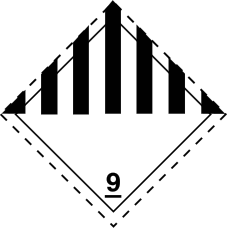
Transport classification per the UN Model Regulations / 49 CFR 172.101 Hazardous Materials Table. Confirm against the grade-specific SDS (Section 14) before shipping.
⚠ WARNING: This product can expose you to Ethylene Glycol, which is known to the State of California to cause birth defects or other reproductive harm. For more information go to www.P65Warnings.ca.gov.
Ethylene glycol (monoethylene glycol, MEG, CAS 107-21-1) is a clear, hygroscopic diol used mainly in PET and polyester resin, antifreeze and engine coolant, industrial heat-transfer fluids, and aircraft and runway de-icing fluids. It is the simplest and highest-volume member of the glycol family, valued for its strong affinity for water, its ability to depress freezing point, and its reactivity as a two-hydroxyl building block for polyesters. RawSource supplies MEG in bulk for industrial and manufacturing buyers across fiber, packaging, coolant, and de-icing applications.
MEG vs. DEG vs. TEG vs. propylene glycol
Buyers shopping “glycol” are usually choosing between four distinct chemicals, and they are not interchangeable. The ethylene-glycol series (MEG, DEG, TEG) climbs in molecular weight, boiling point, and viscosity with each added oxyethylene unit, which shifts the chemistry toward higher-boiling solvent and gas-dehydration duties. Propylene glycol (PG) is a separate chemistry chosen primarily where lower oral toxicity matters. Use this table to confirm you are quoting the grade your process actually needs.
| Glycol | Formula | Key property | Primary use |
|---|---|---|---|
| MEG (monoethylene glycol) | C2H6O2 | Lowest MW (62.07), strong freeze-point depression, fully water-miscible | PET resin & polyester fiber feedstock; antifreeze / engine coolant |
| DEG (diethylene glycol) | C4H10O3 | Higher boiling point (~245°C), higher viscosity than MEG | Unsaturated polyester resins, plasticizers, solvent / humectant |
| TEG (triethylene glycol) | C6H14O4 | Strongly hygroscopic, high boiling point (~285°C) | Natural-gas dehydration, air dehumidification, humectant |
| PG (propylene glycol) | C3H8O2 | Lower oral toxicity than ethylene glycols | Lower-toxicity coolants/HTF, food/cosmetic-adjacent industrial uses |
Properties at a glance
MEG is a colorless, nearly odorless liquid with a molecular weight of 62.07 g/mol and a boiling point near 197°C. It is fully miscible with water and many polar solvents, and it is strongly hygroscopic, which is why drum and tote storage should stay sealed against atmospheric moisture pickup. The property that drives most coolant and de-icing demand is freeze-point depression: blended with water, MEG sharply lowers the freezing point, with the lowest freeze point typically falling around a 60:40 glycol-to-water ratio rather than at 100% glycol. Below that point the practical trade-off is viscosity and pumpability, so most field coolants run leaner blends and accept a higher freeze point. These are typical reference values; the Certificate of Analysis for the lot you purchase governs.
Applications by sector
PET resin & polyester fiber
The largest global use of MEG is as a co-monomer with purified terephthalic acid (PTA) or dimethyl terephthalate to make polyethylene terephthalate (PET) — the resin behind beverage bottles, packaging film, and polyester staple and filament fiber. Fiber-grade MEG carries tight specifications on UV transmittance, iron, aldehyde, and diethylene glycol content because trace impurities show up as color and polymer-quality defects downstream. If you are polymerizing, specify fiber/polymer grade rather than antifreeze grade.
Antifreeze & engine coolant
The classic use. MEG is the base fluid in the majority of automotive and industrial antifreeze and engine coolants, where its freeze-point depression and high boiling point protect against both freezing and boil-over. Finished coolants pair it with corrosion-inhibitor packages and dyes. Where a formulator needs lower toxicity in the finished product, propylene glycol is substituted at some performance cost — see the comparison below.
Industrial heat-transfer fluids
Inhibited MEG/water blends serve as the working fluid in closed-loop HVAC chilled-water systems, process cooling, geothermal loops, and solar thermal arrays — tying directly into our coolant and heat-transfer-fluid line. The engineering trade-off is real: glycol lowers freeze risk but also reduces the heat-transfer efficiency and raises the pumping energy of plain water, so loops are typically dosed only to the protection level the climate requires.
Aircraft & runway de-icing
Glycol-based fluids de-ice and anti-ice aircraft surfaces and pavement in winter operations. MEG and PG both appear in this market; airport selection often weighs toxicity and runoff/biochemical-oxygen-demand handling alongside performance, and discharge is regulated, so de-icing buyers should confirm the grade and any local environmental requirements for their operation.
Humectant & industrial
Secondary uses draw on MEG’s hygroscopicity and solvency: humectant and moisture-control roles in industrial formulations, a reactive intermediate for resins and polyols, and a co-solvent in select process fluids. These are lower-volume than PET and coolant but steady pull-through for blenders.
Toxicity: read this before you formulate
Ethylene glycol is toxic if ingested. In the body it is metabolized to glycolic and oxalic acid, which cause metabolic acidosis and are nephrotoxic — oxalate damages the kidneys. This is the central reason propylene glycol is chosen wherever a finished product needs lower oral toxicity, such as coolants and de-icing fluids used around people, animals, or food-adjacent environments. Treat MEG as an industrial chemical: handle, store, and dispose of it per the current Safety Data Sheet, keep it away from accidental ingestion routes, and confirm regulatory and discharge requirements for your jurisdiction. We do not present ethylene glycol as low-hazard.
Bulk MEG sourcing & RFQ
RawSource supplies monoethylene glycol in drums, totes/IBCs, and bulk volumes for industrial buyers. To quote accurately, send your grade (fiber/polymer, industrial, or antifreeze), target volume, and any CoA or specification requirements, and we will match supply to your application. If lower toxicity is a requirement, compare against propylene glycol, and read propylene glycol vs. ethylene glycol: what’s the difference before you decide.
Regulatory & registration requirements
- TSCA (US):
- REACH (EU):
- EC number: 203-473-3
Source: EPA TSCA Inventory (July 2025 release) · ECHA CHEM — retrieved 2026-07-12
Regulatory restriction status
Ethylene Glycol (MEG, EG) (CAS 107-21-1) appears on the regulatory list(s) below. This is public regulatory information about the substance — not a statement about any specific supplier’s material, and not a safety claim. Confirm the current status for your jurisdiction and intended use.
- California Proposition 65: listed for reproductive toxicity, listed 19 Jun 2015. A California Proposition 65 warning applies (see the warning above).
Sources: ECHA Candidate List / Annex XIV / Annex XVII (echa.europa.eu); U.S. EPA TSCA; UN Stockholm Convention / EU POPs Regulation; California OEHHA Proposition 65 list. Retrieved 2026-07-13.
Solutions Using This Product
Process-solution guides on this site that specify this chemistry:
- Glycols & Methanol for Hydrate & Gas Dehydration (Oil, Gas & Mining)
- Heat Transfer & Thermal Fluids (Industrial Manufacturing)
- Disperse Dye Carriers & Leveling Agents for Polyester (Textiles)
Frequently Asked Questions
What is MEG (monoethylene glycol) used for?
The largest use is as a feedstock for PET resin and polyester fiber. It is also the base fluid in most antifreeze and engine coolant, a working fluid in industrial heat-transfer loops, a component of aircraft and runway de-icing fluids, and a humectant and reactive intermediate in various industrial formulations.
What’s the difference between MEG, DEG, and TEG?
They are three different chemicals in the ethylene-glycol series, not grades of one product. MEG (monoethylene glycol, C2H6O2) is the smallest and highest-volume, the primary PET and antifreeze feedstock. DEG (diethylene glycol) is higher-boiling and more viscous, used in resins, plasticizers, and as a solvent. TEG (triethylene glycol) is the most hygroscopic and highest-boiling, used mainly in natural-gas dehydration and dehumidification. Specify which one your process needs.
Ethylene glycol vs. propylene glycol — which should I use?
Ethylene glycol generally gives stronger freeze protection and lower cost, but it is toxic if ingested. Propylene glycol is chosen where lower oral toxicity is required, accepting somewhat reduced heat-transfer performance and usually higher cost. The right choice depends on whether toxicity exposure is a constraint in your finished product; see our propylene glycol vs. ethylene glycol comparison.
Is ethylene glycol toxic?
Yes. Ethylene glycol is toxic if ingested — it is metabolized to oxalic acid and is nephrotoxic (damaging to the kidneys). It should be handled strictly as an industrial chemical per its Safety Data Sheet and kept away from accidental ingestion. This toxicity is why propylene glycol is used where lower-toxicity coolants or de-icing fluids are needed.
Is ethylene glycol used in antifreeze?
Yes — monoethylene glycol is the base fluid in most automotive and industrial antifreeze and engine coolants. Blended with water and a corrosion-inhibitor package, it both lowers the freezing point and raises the boiling point to protect cooling systems against freeze and boil-over.
What is the chemical formula and molecular weight of ethylene glycol?
The formula is C2H6O2 (ethane-1,2-diol), with a molecular weight of 62.07 g/mol. It is a clear, hygroscopic liquid that boils near 197°C and is fully miscible with water.
How is bulk ethylene glycol packaged and quoted?
MEG ships in drums, totes/IBCs, and bulk volumes. Pricing depends on grade (fiber/polymer, industrial, or antifreeze), packaging, and volume, and tracks feedstock markets, so we quote against your specification rather than listing spot prices. Submit a bulk RFQ with grade, volume, and any CoA requirements for a current quote.