
- ▸Technical data sheet: on request
- ▸Safety data sheet: on request
- ▸Certificate of analysis: issued per lot with each shipment
- ▸ Epoxy curing agent: Hardener for epoxy resin systems.
- ▸ Coatings and composites: Amine component for epoxy coatings and composites.
- ▸ Amine intermediate: Building block for cycloaliphatic amine derivatives.

GHS07

GHS08
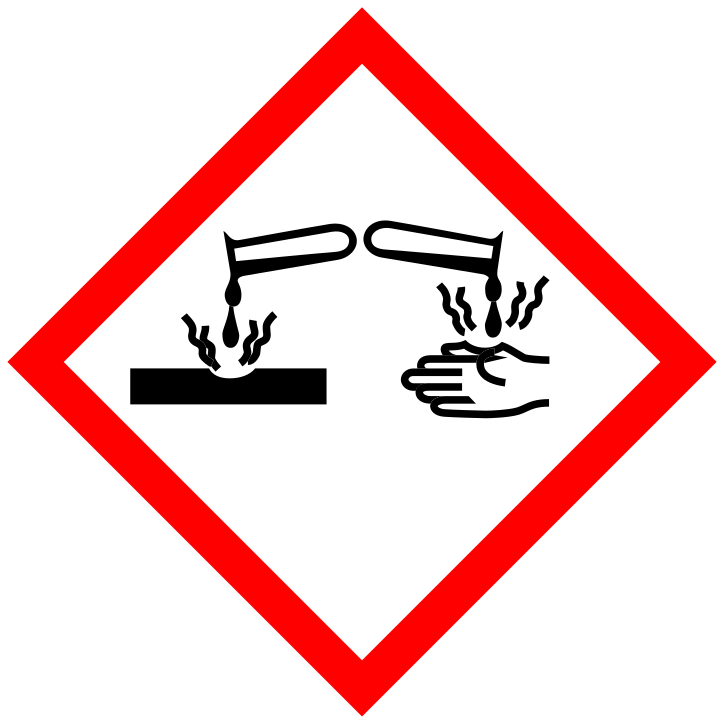
GHS05
- H302+H312 (12.8%): Harmful if swallowed or in contact with skin [Warning Acute toxicity, oral; acute toxicity, dermal]
- H317 (14%): May cause an allergic skin reaction [Warning Sensitization, Skin]
- H302 (98.3%): Harmful if swallowed [Warning Acute toxicity, oral]
- H314 (93%): Causes severe skin burns and eye damage [Danger Skin corrosion/irritation]
- H312: Harmful in contact with skin [Warning Acute toxicity, dermal]
- H318: Causes serious eye damage [Danger Serious eye damage/eye irritation]
- H332 (13.3%): Harmful if inhaled [Warning Acute toxicity, inhalation]
- H371: May cause damage to organs [Warning Specific target organ toxicity, single exposure]
- H412 (65.6%): Harmful to aquatic life with long lasting effects [Hazardous to the aquatic environment, long-term hazard]
Precautionary statement codes: P260, P261, P264, P264+P265, P270, P271, P272, P273, P280, P301+P317, P301+P330+P331, P302+P352, P302+P361+P354, P304+P340, P305+P354+P338, P316, P317, P321, P330, P333+P317, P362+P364, P363, P405, P501, P308+P316
Source: PubChem, compound CID 17406, Safety and Hazards: GHS Classification
A grade-specific Safety Data Sheet (SDS) — with the complete hazard classification, handling precautions, and transport information — is supplied with every shipment and available on request. Confirm all safety and regulatory details against the SDS for your specific grade.
Request SDS →1,3-Bis(aminomethyl)cyclohexane (CAS 2579-20-6) is a cycloaliphatic primary diamine. Industry references record its use as a curing agent (hardener) for epoxy resins. Supplied as a bulk amine intermediate.
Regulatory & registration requirements
- TSCA (US):
- REACH (EU):
- EC number: 219-941-5
Source: EPA TSCA Inventory (July 2025 release) · ECHA CHEM — retrieved 2026-07-12
Solutions Using This Product
Process-solution guides on this site that specify this chemistry:
- Amine Curing Agents for Epoxy Adhesives & Composites (Plastics & Polymers)
Frequently Asked Questions
What is 1,3-bis(aminomethyl)cyclohexane (BAC) used for?
It is a cycloaliphatic primary diamine used as a curing agent (hardener) for epoxy resins. It is used as the amine component in epoxy coatings and composites and as a building block for cycloaliphatic amine derivatives.
What is the chemical formula and CAS number of BAC?
The molecular formula is C8H18N2 and the CAS number is 2579-20-6. It is classified within the amines and amides family.
How does BAC work as an epoxy curing agent?
Its two primary aminomethyl groups react with epoxide groups to crosslink and cure epoxy resin systems. Cycloaliphatic diamines like BAC are chosen for the property profile they impart to coatings and composites; consult the technical data sheet for handling and stoichiometry guidance.
What HS code applies to 1,3-bis(aminomethyl)cyclohexane?
It is classified under HS 2921.30 (cyclanic, cyclenic or cycloterpenic mono- or polyamines and their derivatives). Confirm the destination-country tariff classification with your customs broker.
What is the bulk price of BAC and can I get an SDS?
An SDS and CoA accompany bulk shipments. Pricing depends on volume and packaging (drums/totes/IBCs); submit a bulk RFQ with your required quantity for a current quote.
What is the REACH and TSCA regulatory status of 1,3-Bis(aminomethyl)cyclohexane (1,3-BAC)?
1,3-Bis(aminomethyl)cyclohexane (1,3-BAC) (CAS 2579-20-6) is subject to U.S. TSCA Inventory requirements; supplying it into the EU requires valid REACH registration ((EC) No 1907/2006). Buyers should require documented TSCA and REACH compliance for their jurisdiction and volume (EC 219-941-5).