
Is the “sodium lauryl sulfate” on your CoA the same as sodium dodecyl sulfate, CAS 151-21-3?
A CoA arrives marked “Sodium Lauryl Sulfate, CAS 151-21-3.” The next lot from the same supplier lists “Sodium Lauryl Sulfate” with a different CAS number entirely. Same trade name, different registry number, and potentially a different chain-length distribution that will shift your foam profile, your emulsion stability, or your SDS-PAGE band resolution. CAS 151-21-3 defines the pure C12 alkyl sulfate, with molecular formula C12H25NaO4S and a computed molecular weight of 288.38 g/mol (PubChem CID 3423265, 2025).
But the OECD SIDS assessment describes what is “generally called sodium lauryl sulphate” in commerce as approximately 70% C12 and 30% C14 alkyl sulfate (OECD SIDS SIAR, via HSDB, 2005). Your spec needs to name the CAS, the chain-length distribution, and the active content, or the name alone will not hold.
The CAS tangle: one INCI name, at least 31 registry numbers
ECHA’s substance record for EC 205-788-1 lists 31 CAS numbers under a single entry for sodium dodecyl sulphate (ECHA CHEM, substance index 100.005.263). PubChem lists deprecated CAS numbers that still surface on older documentation (PubChem CID 3423265, ChemIDplus data, 2025).
The INCI dictionary compounds the problem: the Personal Care Products Council assigns the single name “Sodium Lauryl Sulfate” to materials spanning multiple CAS numbers, and the FDA Global Substance Registration System records that same INCI name under a single UNII code (FDA GSRS, 368GB5141J).
The CAS number that appears most often in regulatory and reference contexts is 151-21-3, which defines the pure C12 sodium dodecyl sulfate. Its main impurity is the C14 alkyl sulfate homologue (OECD SIDS, via HSDB, 2005). But commercial SLS grades sold under other CAS numbers deliberately include broader chain-length mixes, and those broader mixes are different substances with different performance profiles.
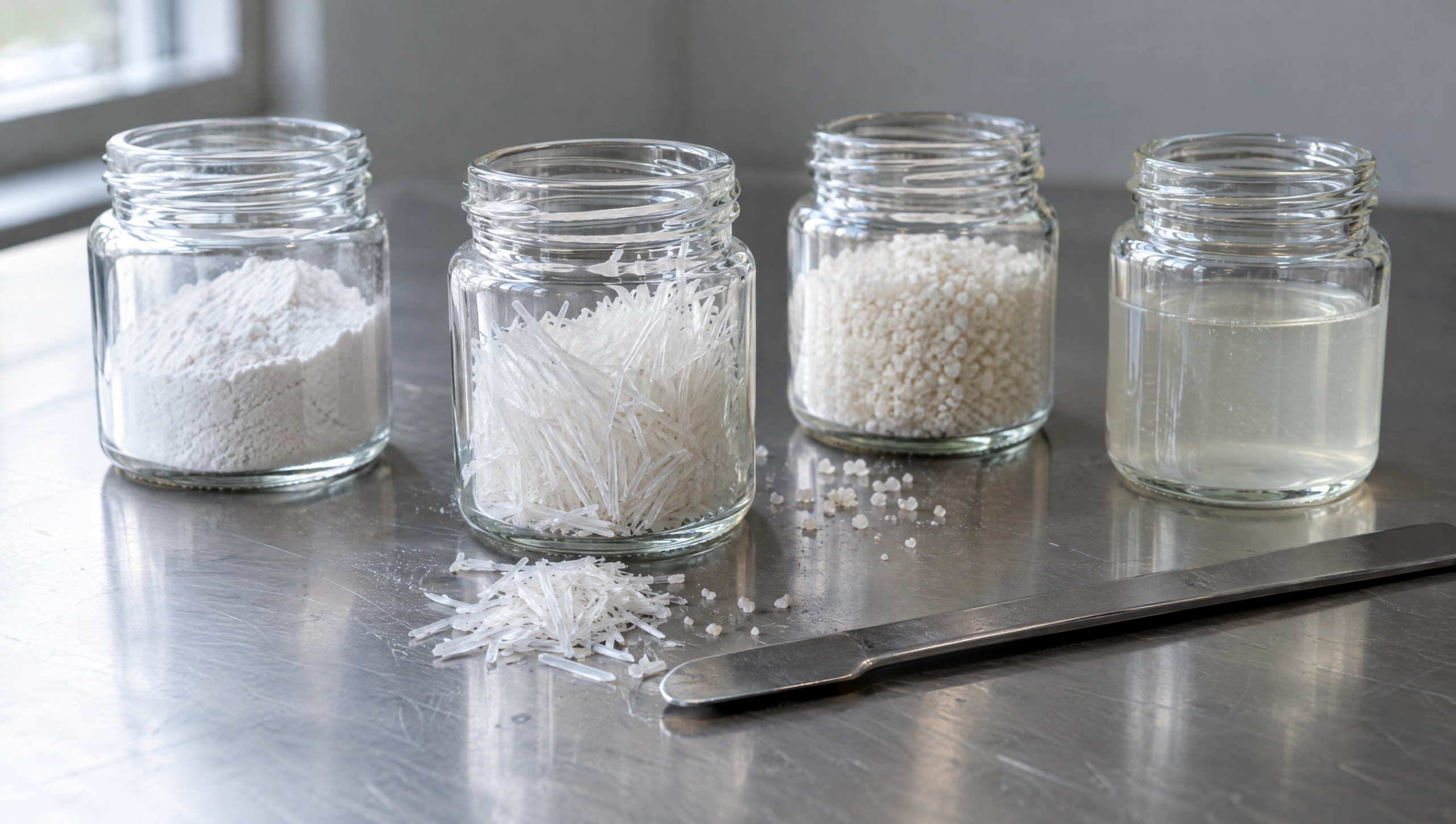
A manufacturer’s product portfolio table lists liquids at 28.0-30.0% active, powders at min. 90.0% or min. 95.0% active, and granules at 95.0-99.0% active, all under the INCI name Sodium Lauryl Sulfate, but different grades carry different CAS numbers (manufacturer technical bulletin). The INCI name alone resolves nothing.
Under REACH, CAS 151-21-3 is registered with ECHA under EC 205-788-1. Under TSCA, sodium lauryl sulfate appears on the active inventory. Under FIFRA, EPA lists it specifically under CAS 151-21-3 as a permitted minimum-risk pesticide active ingredient in 40 CFR 152.25(f), Table 1 (eCFR, current as of 2026-10-15).
But FIFRA product registrations for surfactant-containing pesticides use the common name without necessarily specifying which CAS applies (Federal Register, 90 FR 51127, August 5, 2025). In every regulatory context, the common name is not precise enough: you need the CAS on the filing to match the CAS on the CoA.
What should the spec sheet pin down?
The failure mode is straightforward: you write “SLS, min. Or worse, the reverse: you needed the coconut-derived mix for foam and wetting performance and received a narrow-cut reagent grade at a premium.
| Spec Parameter | Why It Matters | Typical Range (varies by grade) | Where to Verify |
|---|---|---|---|
| CAS number | Defines the substance identity, not just the name | 151-21-3 is the most commonly cited; confirm your specific grade | CoA header; cross-check against SDS Section 3 |
| Active content (% as supplied) | Determines dosing; liquid vs. solid grades differ sharply | Liquid: 28.0-30.0%; powder: min. 90.0-95.0%; granules: 95.0-99.0% (manufacturer technical bulletin) | CoA assay line; confirm whether the supplier reports on a pure-C12 MW basis or a higher average MW |
| C12 chain-length content (by GC) | The single parameter that distinguishes “SDS” from “SLS” in practice | Reagent: typically high C12; technical: ~70% C12, ~30% C14 (OECD SIDS, via HSDB, 2005) | Request GC chain-length distribution; not always on a standard CoA |
| Unsulfated matter | Free alcohol indicates incomplete sulfation; affects foam and irritation | One manufacturer’s high-purity liquid reports 0.25% typical (manufacturer technical bulletin) | CoA line item |
| Sodium sulfate | Inorganic salt byproduct; high levels dilute active and affect ionic strength | One manufacturer’s high-purity liquid reports 0.10% typical (manufacturer technical bulletin) | CoA line item |
| Sodium chloride | Process residue | One manufacturer’s high-purity liquid reports 0.01% typical (manufacturer technical bulletin) | CoA line item |
| pH (10% aqueous) | Indicates neutralization completeness | One manufacturer’s high-purity liquid reports 8.03 (manufacturer technical bulletin) | CoA or in-house QC |
Those manufacturer numbers are typical properties, not specification limits (manufacturer technical bulletin). Ask for spec limits and compare against at least three consecutive lot CoAs.
Why chain length is the spec line that decides it
In emulsion polymerization, SLS concentration directly affects polymer properties. That sensitivity means a shift in chain-length distribution, which changes the CMC and packing behavior at the particle surface, is not a cosmetic difference.
In oral care, the incompatibility is chemical: anionic SLS deactivates cationic antibacterials such as cetyl pyridinium chloride (US Patent 6,447,758 B1, 2002). Substituting a nonionic surfactant to avoid this kills foam. The formulator’s choice of SLS grade, with its specific chain mix, is load-bearing.
In electroplating, SLS at 0.05-1 g/L serves as an anti-pitting agent in nickel and cobalt baths (US Patent 4,069,112 A, 1978). But SLS alone, without a grain refiner like saccharin, produced grey, matt coatings at 0% brightness that cracked and separated from the substrate (Burzynska and Rudnik, Archives of Metallurgy 45(3), 2000). The surfactant is necessary but not sufficient, and the grade must be compatible with bath chemistry.
Here is the trade-off: a broader-cut material with a wider carbon-chain distribution costs less per tonne and performs acceptably for general cleaning and industrial wetting. A narrow C12 cut (CAS 151-21-3) costs more and is required only where the application is sensitive to chain-length homogeneity. Paying for reagent-grade SDS to clean floors wastes money. Running an SDS-PAGE gel with technical SLS containing 30% C14 wastes the experiment: even a few percent C14 shifts electrophoretic migration.
What to check before qualifying a new lot or source
Request a CoA that states the specific CAS number, not just the trade name. If the CoA says “Sodium Lauryl Sulfate” without a CAS, send it back. Cross-check: the CAS on the CoA must match the CAS on the SDS (Section 3) and on your import filing. ECHA’s record for this substance carries 31 CAS numbers; a mismatch between the CoA and your customs documentation will flag the shipment at document review, the same way a CAPB CAS mismatch does.
Ask for the GC chain-length distribution. This is the line item most often missing from a standard surfactant CoA and most often responsible for lot-to-lot performance drift. If a supplier cannot provide it, that tells you something about their analytical capability or their feedstock control.
Confirm the MW basis for the active assay. One manufacturer reports actives on MW 302, which assumes an average chain length longer than pure C12 at 288.38 g/mol (PubChem CID 3423265, 2025; manufacturer technical bulletin). If your internal dosing calculations assume a different MW basis, reconcile the two before accepting the lot.
For FIFRA-registered end uses, verify that the CAS on the product registration matches the CAS on the incoming material. EPA’s minimum-risk exemption at 40 CFR 152.25(f) specifically lists CAS 151-21-3.
Request pricing and specification
Request current pricing, availability, and a full specification sheet, including GC chain-length distribution, for Sodium Lauryl Sulfate (SLS) in the CAS number and form factor your application requires.
Related on RawSource
- Sodium Lauryl Sulfate (SLS) product page: pricing, availability, and specification sheets for SLS grades by CAS number and form factor.
- CAPB CAS number guide: how to resolve the same CAS ambiguity problem for cocamidopropyl betaine documents.
- Section 301 tariff update for silicones and silanes: related sourcing compliance reading for specialty chemical buyers.
Frequently asked questions
Is sodium coco-sulfate the same as SLS?
Why does ECHA list 31 CAS numbers for one SLS substance record?
Does SLS require a FIFRA registration for use in cleaning products?
Sources & methodology
Figures are RawSource sourcing data unless attributed to a named source. Regulatory citations are current as of publication. Chemical identities verified by CAS number against the RawSource catalog.
Search 1,300+ industrial chemicals by name or CAS, or send us your spec — we quote by the drum, tote, or container.
Browse the Chemical Index → Request a Quote