
MALEIC ANHYDRIDE- ▸Technical data sheet: on request
- ▸Safety data sheet: on request
- ▸Certificate of analysis: issued per lot with each shipment
- ▸ Unsaturated polyesters: Primary raw material for UPR.
- ▸ Copolymers: Comonomer in maleic-anhydride copolymerization.
- ▸ Lubricant additives: Feedstock for dispersants and corrosion inhibitors.
- ▸ Paper and coating resins: Used in paper-sizing and coating resins.
- ▸ Acid manufacture: Precursor to fumaric and tartaric acids.

GHS07
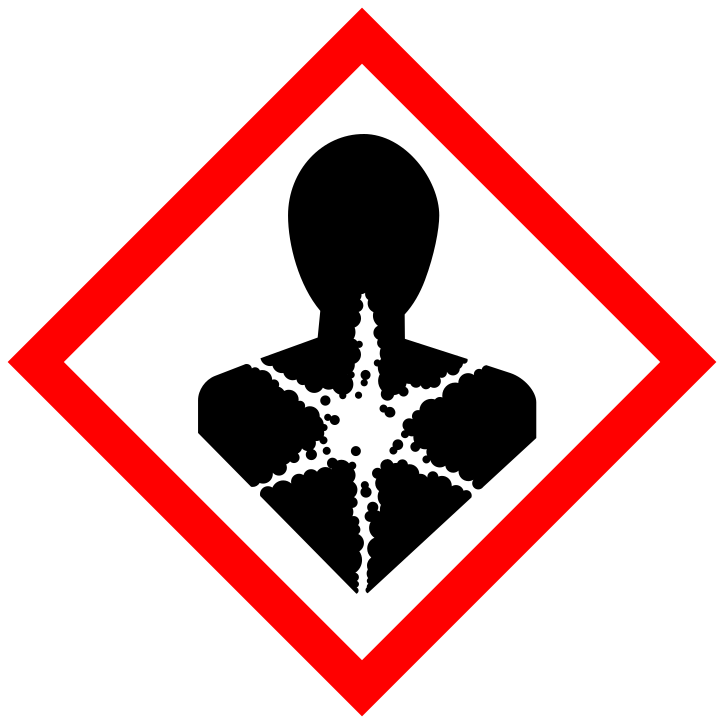
GHS08
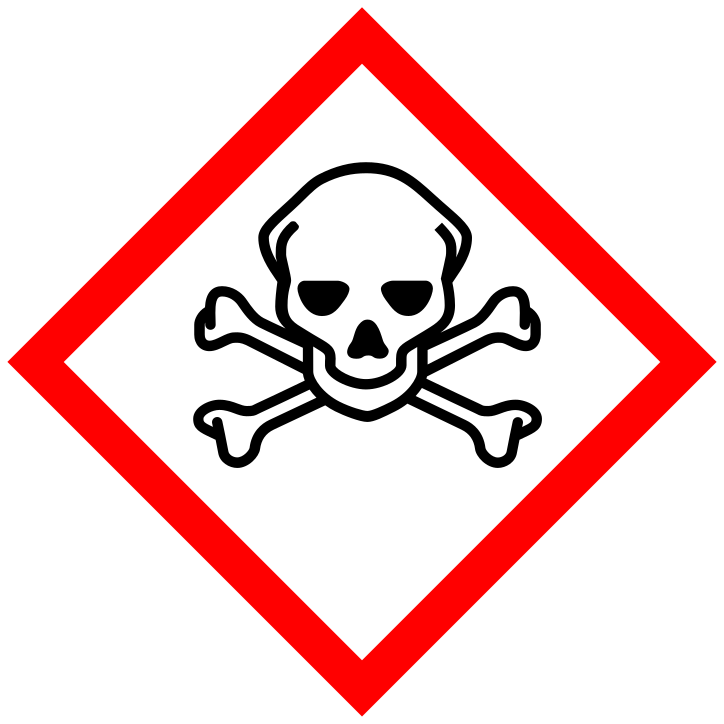
GHS06
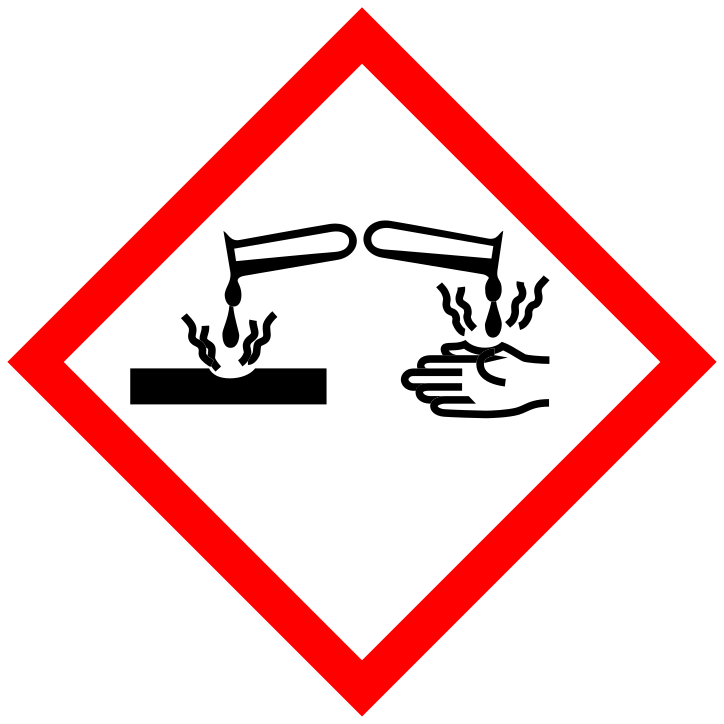
GHS05
- H370: Causes damage to organs [Danger Specific target organ toxicity, single exposure]
- H402: Harmful to aquatic life [Hazardous to the aquatic environment, acute hazard]
- H302 (> 99.9%): Harmful if swallowed [Warning Acute toxicity, oral]
- H335: May cause respiratory irritation [Warning Specific target organ toxicity, single exposure; Respiratory tract irritation]
- H314 (> 99.9%): Causes severe skin burns and eye damage [Danger Skin corrosion/irritation]
- H311: Toxic in contact with skin [Danger Acute toxicity, dermal]
- H372 (16.8%): Causes damage to organs through prolonged or repeated exposure [Danger Specific target organ toxicity, repeated exposure]
- H330: Fatal if inhaled [Danger Acute toxicity, inhalation]
- H373: May causes damage to organs through prolonged or repeated exposure [Warning Specific target organ toxicity, repeated exposure]
- H317: May cause an allergic skin reaction [Warning Sensitization, Skin]
- H318: Causes serious eye damage [Danger Serious eye damage/eye irritation]
- H334 (> 99.9%): May cause allergy or asthma symptoms or breathing difficulties if inhaled [Danger Sensitization, respiratory]
- H371: May cause damage to organs [Warning Specific target organ toxicity, single exposure]
- H412: Harmful to aquatic life with long lasting effects [Hazardous to the aquatic environment, long-term hazard]
Precautionary statement codes: P233, P260, P261, P264, P264+P265, P270, P271, P272, P280, P284, P301+P317, P301+P330+P331, P302+P352, P302+P361+P354, P304+P340, P305+P354+P338, P316, P317, P319, P321, P330, P333+P317, P342+P316, P362+P364, P363, P403, P405, P501, P273, P308+P316, P262, P361+P364, P403+P233, P320
Source: PubChem, compound CID 7923, Safety and Hazards: GHS Classification
A grade-specific Safety Data Sheet (SDS) — with the complete hazard classification, handling precautions, and transport information — is supplied with every shipment and available on request. Confirm all safety and regulatory details against the SDS for your specific grade.
Request SDS →
UN number source: PubChem, compound CID 7923, Transport Information. Class, packing group and proper shipping name: 49 CFR 172.101 Hazardous Materials Table. Confirm against the grade-specific SDS (Section 14) before shipping.
Maleic anhydride (CAS 108-31-6) is a reactive anhydride and major chemical intermediate. Industry references record its use in unsaturated polyester and alkyd-type resins, copolymerization reactions, coatings and paper-sizing resins, lube-oil dispersants and corrosion inhibitors, and the manufacture of fumaric and tartaric acids, plus its role as a Diels-Alder dienophile. Supplied as a bulk intermediate.
Regulatory & registration requirements
- TSCA (US):
- REACH (EU):
- EC number: 203-571-6
Source: EPA TSCA Inventory (July 2025 release) · ECHA CHEM — retrieved 2026-07-12
Frequently Asked Questions
What is maleic anhydride used for?
Maleic anhydride (MAH, CAS 108-31-6) is a major reactive intermediate. It is the primary raw material for unsaturated polyester and alkyd-type resins, a comonomer in copolymerization, a feedstock for lube-oil dispersants and corrosion inhibitors, a paper-sizing and coating resin component, and a precursor to fumaric and tartaric acids. It is also a classic Diels-Alder dienophile.
What are the alternative names for maleic anhydride?
Maleic anhydride is also called MAH, cis-butenedioic anhydride, 2,5-furandione, and dihydro-2,5-dioxofuran. Its CAS number is 108-31-6 and its formula is C4H2O3. All refer to the same reactive anhydride intermediate.
What happens when maleic anhydride reacts with water?
Maleic anhydride hydrolyzes in water to form maleic acid (cis-butenedioic acid). This ring-opening is why the anhydride must be kept dry in storage and handling. The reaction is exothermic; refer to the SDS for moisture-control and handling guidance.
What HS code and UN number apply to maleic anhydride?
Maleic anhydride classifies under HS 2917.14 (maleic anhydride). For transport it is assigned UN 2215 (MALEIC ANHYDRIDE). RawSource ships in compliance with applicable DOT/IMDG requirements and provides shipping documentation with each order.
What is the cost of bulk maleic anhydride?
Bulk maleic anhydride pricing varies with volume, form (molten, briquette, or flake), packaging, and destination. We do not list spot pricing — request a bulk quote and RawSource will return current pricing along with CoA and SDS for the lot.
What is the REACH and TSCA regulatory status of Maleic Anhydride (MAH)?
Maleic Anhydride (MAH) (CAS 108-31-6) is subject to U.S. TSCA Inventory requirements; supplying it into the EU requires valid REACH registration ((EC) No 1907/2006). Buyers should require documented TSCA and REACH compliance for their jurisdiction and volume (EC 203-571-6).
What is the molecular weight of Maleic anhydride?
The molecular weight of Maleic anhydride is 98.06 g/mol (PubChem).
What is the molecular formula of Maleic anhydride?
The molecular formula of Maleic anhydride is C4H2O3.