
What is benzalkonium chloride (ADBAC) and what is it used for?
Benzalkonium chloride (ADBAC/BAC, CAS 68391-01-5) is a cationic quaternary-ammonium biocide and surfactant. It is used as an active in hard-surface and equipment sanitizers and disinfectants, an antimicrobial preservative, a cationic wetting and emulsifying surfactant in cleaners, and in textile, pulp-and-paper, wood-preservation and metallurgical processes.
BENZALKONIUM CHLORIDE- ▸ Disinfection & sanitizing: Quaternary-ammonium biocide for hard-surface and equipment sanitizers.
- ▸ Antimicrobial preservative: Preservative function in personal-care and industrial formulations.
- ▸ Cationic surfactant: Wetting, detergent, and emulsifying action in cleaners.
- ▸ Industrial processing: Used in textile, pulp-and-paper, and metallurgical processes.
- ▸ Wood preservation: Quaternary-based wood-preservative systems.
A grade-specific Safety Data Sheet (SDS) — with the complete hazard classification, handling precautions, and transport information — is supplied with every shipment and available on request. Confirm all safety and regulatory details against the SDS for your specific grade.
Request SDS →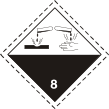
Transport classification per the UN Model Regulations / 49 CFR 172.101 Hazardous Materials Table. Confirm against the grade-specific SDS (Section 14) before shipping.
Benzalkonium chloride (BAC/BKC) — also called alkyl dimethyl benzyl ammonium chloride (ADBAC) — is a cationic quaternary-ammonium surfactant and broad-spectrum biocide. Its positively charged head adsorbs onto the negatively charged surface of microbial cells and disrupts the membrane lipid bilayer, killing or inhibiting a wide range of bacteria, along with many fungi and enveloped viruses. That dual nature — surface-active wetting agent and non-oxidizing disinfectant — makes it a workhorse active across hard-surface sanitizers, water treatment, oilfield, and industrial formulations.
What benzalkonium chloride is used for, by sector
BAC is supplied as a mixture of alkyl homologues, typically C12–C16. The alkyl-chain distribution drives the efficacy profile: shorter C12 chains favor activity against yeast and fungi, C14 against gram-positive bacteria, and C16 against gram-negative organisms — which is why a balanced C12–C14-rich distribution is the most common all-purpose grade. Because it is non-oxidizing, BAC does not bleach or corrode in the way chlorine chemistries do, and it leaves a residual cationic film that can extend surface activity between applications.
- Hard-surface disinfectants & sanitizers (HI&I, food-contact areas): The dominant use. As a quaternary-ammonium (“quat”) active, BAC is formulated into spray-and-wipe cleaners, sanitizers, and no-rinse surface treatments. Its surfactancy lets a single formulation both clean and sanitize. Food-contact and institutional sanitizer formulations using quats are common; specific label efficacy and any regulatory registration are the formulator’s responsibility to establish.
- Water treatment, algaecide & biocide: Used to control biofilm, slime-forming bacteria, and algae in recirculating cooling water, industrial process water, and similar systems, where its non-oxidizing, persistent action complements oxidizing biocide programs.
- Oilfield & energy: Deployed as a biocide to control sulfate-reducing bacteria and microbial-induced corrosion in injection water, fracturing fluids, and stored fluids, and as a cationic surfactant component in treatment packages.
- Personal-care preservation (low levels): At low use levels, BAC functions as an antimicrobial preservative in rinse-off and certain leave-on formulations. Use levels here are governed by the applicable cosmetic regulations and safety assessment.
- Phase-transfer catalysis & industrial processing: As a quaternary-ammonium salt, BAC serves as a phase-transfer catalyst in organic synthesis and is used in textile, pulp-and-paper, and metallurgical processing.
- Fabric softening & antistatic finishing: The cationic charge deposits onto fibers to deliver softening and antistatic effects in textile and laundry systems.
Typical use-concentration ranges by application
The figures below are generic, formulation-dependent guide ranges expressed as active BAC; they are not specifications. Actual dosing depends on the alkyl distribution, target organisms, contact time, water chemistry, and the rest of the formulation. Always validate efficacy and confirm dosing against your own testing and the SDS.
Safety & handling
Benzalkonium chloride is supplied at high active concentration and must be handled with care. The concentrate is classified as corrosive and a skin/eye irritant (GHS signal word Danger; hazard statements include skin corrosion and serious eye damage, plus harmful if swallowed or in contact with skin). It is also very toxic to aquatic life with long-lasting effects, so spills, rinse water, and effluent require appropriate containment and treatment before discharge. Use suitable PPE, avoid mixing with anionic surfactants (which deactivate the cationic active), and treat the product Safety Data Sheet as the governing document for classification, exposure controls, storage, and disposal. The hazard profile applies to the concentrate; properly diluted in-use solutions are typically far less hazardous, but you must confirm this against your own formulation and the SDS.
Forms & grades
BAC is most commonly supplied as a clear aqueous solution, typically at 50% or 80% active, with the balance being water (and minor co-solvent in some grades). The alkyl-chain distribution and active strength are confirmed on the Certificate of Analysis per lot. Specify your required active concentration and alkyl distribution when requesting a quote.
Bulk benzalkonium chloride supply
RawSource sources benzalkonium chloride for manufacturers and formulators in drums, totes, and IBCs. Send your target active strength (e.g., 50% or 80%), alkyl distribution, and volume to receive current bulk pricing along with the SDS and CoA.
Regulatory & registration requirements
- TSCA (US):
- REACH (EU): Not determined from public registry
- EC number: 269-919-4
Source: EPA TSCA Inventory (July 2025 release) · ECHA CHEM — retrieved 2026-07-12
Solutions Using This Product
Process-solution guides on this site that specify this chemistry:
- Benzalkonium Chloride / Quat Sanitizer Ingredient Hub (Home & Industrial Care)
Frequently Asked Questions
What is benzalkonium chloride used for?
Benzalkonium chloride (BAC/BKC), or alkyl dimethyl benzyl ammonium chloride, is a cationic quaternary-ammonium surfactant and broad-spectrum biocide. It is used mainly in hard-surface disinfectants and sanitizers, as a water-treatment biocide and algaecide, as an oilfield microbial-control agent, as a low-level personal-care preservative, as a phase-transfer catalyst, and as a fabric softener and antistatic agent.
Is benzalkonium chloride a disinfectant?
Yes. Benzalkonium chloride is a quaternary-ammonium (“quat”) biocide widely formulated into disinfectants and sanitizers. It disrupts microbial cell membranes and is effective against a broad range of bacteria, along with many fungi and enveloped viruses. It is non-oxidizing, so it works differently from chlorine bleach. Specific efficacy and any regulatory registration depend on the finished formulation.
Is benzalkonium chloride safe?
As a concentrate, benzalkonium chloride is corrosive and a skin and eye irritant, and it is very toxic to aquatic life, so it requires PPE, careful handling, and proper effluent treatment. Diluted in-use solutions are typically much less hazardous, but you must confirm the hazard profile of your specific formulation. The Safety Data Sheet is the governing document for classification, handling, and disposal.
Is alkyl dimethyl benzyl ammonium chloride the same as bleach?
No. Bleach is sodium hypochlorite, an oxidizing chlorine chemistry. Benzalkonium chloride (CAS 68391-01-5) is a non-oxidizing quaternary-ammonium cationic surfactant — a chemically distinct class with different handling and formulation behavior. Consult the SDS for each before use.
What is the CAS number for benzalkonium chloride (BAC)?
This benzalkonium chloride is supplied under CAS 68391-01-5, a mixture of alkyl dimethyl benzyl ammonium chlorides. A related alkyl-distribution definition of the same chemistry is offered under CAS 63449-41-2. Active content is confirmed on the CoA per lot.
What HS code applies to alkyl dimethyl benzyl ammonium chloride?
BAC classifies under HS 2923.90 — quaternary ammonium salts and hydroxides, other. Confirm the destination-country tariff line and any biocidal-product import requirements with your broker.
What is the cost of bulk benzalkonium chloride?
Bulk pricing depends on active concentration (e.g., 50% vs. 80%), alkyl distribution, and order volume. We supply manufacturers in drums, totes, and IBCs — request a bulk quote with your target active strength and tonnage for current pricing, SDS, and CoA.
What is the REACH and TSCA regulatory status of Benzalkonium Chloride (ADBAC, BAC)?
Benzalkonium Chloride (ADBAC, BAC) (CAS 68391-01-5) is listed as Active on the U.S. EPA TSCA Inventory; its REACH registration status is not determined from the public ECHA registry.