
ISOPROPANOLAMINE- ▸ Metalworking fluids: Emulsifier and neutralizing/pH agent in metal-cutting and soluble oils.
- ▸ Coatings and textiles: Emulsifying agent in emulsion paints and soluble textile oils.
- ▸ Intermediate: Feedstock for surfactants, plasticizers, and agrochemicals.
- ▸ Cleaning: Component of wax removers and cleaning formulations.
- ▸ Buffering: pH-regulating and buffering agent in cosmetic formulations.
A grade-specific Safety Data Sheet (SDS) — with the complete hazard classification, handling precautions, and transport information — is supplied with every shipment and available on request. Confirm all safety and regulatory details against the SDS for your specific grade.
Request SDS →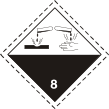
Transport classification per the UN Model Regulations / 49 CFR 172.101 Hazardous Materials Table. Confirm against the grade-specific SDS (Section 14) before shipping.
Monoisopropanolamine (isopropanolamine, MIPA; 1-amino-2-propanol; CAS 78-96-6) is a primary amino-alcohol. It is used as an emulsifying and neutralizing agent in metal-cutting oils, soluble textile oils, wax removers, and emulsion paints, and as an intermediate for surfactants, plasticizers, and agrochemicals. It also serves as a buffering agent in cosmetics.
Regulatory & registration requirements
- TSCA (US):
- REACH (EU):
- EC number: 201-162-7
Source: EPA TSCA Inventory (July 2025 release) · ECHA CHEM — retrieved 2026-07-12
Frequently Asked Questions
What is monoisopropanolamine (MIPA) used for?
Monoisopropanolamine (MIPA, CAS 78-96-6) is a primary amino-alcohol used as an emulsifying and neutralizing/pH agent in metal-cutting and soluble oils, as an emulsifier in emulsion paints and soluble textile oils, and in wax removers and cleaning formulations. It also serves as an intermediate for surfactants, plasticizers, and agrochemicals. We supply it in bulk to formulators and chemical manufacturers.
What is the chemical name for MIPA?
MIPA is monoisopropanolamine, also called isopropanolamine or 1-amino-2-propanol, CAS 78-96-6, molecular formula C3H9NO. It is a primary amino-alcohol carrying both an amine and a hydroxyl group, which is what gives it dual neutralizing and emulsifying behavior in metalworking and coatings systems.
What grades and bulk packaging are available for monoisopropanolamine?
We supply monoisopropanolamine in drums, totes/IBCs, and bulk for industrial and intermediate use. Specification, grade, and CoA details are confirmed at quotation against your application. Contact us for a bulk quote with your required volume and packaging.
What HS code and UN number apply to monoisopropanolamine?
Monoisopropanolamine is classified under HS 2922.19 and ships under UN 2735 (monoisopropanolamine). The current SDS governs classification, handling, and transport documentation; we provide the SDS and CoA with each shipment.
What is the cost of bulk monoisopropanolamine?
Bulk pricing depends on grade, volume, and packaging (drum, tote/IBC, or bulk) and current market conditions. Request a quote with your target quantity and ship-to location and we will return current pricing and lead time.
What is the REACH and TSCA regulatory status of Monoisopropanolamine (Isopropanolamine, MIPA)?
Monoisopropanolamine (Isopropanolamine, MIPA) (CAS 78-96-6) is subject to U.S. TSCA Inventory requirements; supplying it into the EU requires valid REACH registration ((EC) No 1907/2006). RawSource cannot verify a third-party supplier's registrations — buyers should require documented TSCA and REACH compliance for their jurisdiction and volume (EC 201-162-7).
What is the CAS number of Monoisopropanolamide Alkoxylat?
The CAS number of Monoisopropanolamide Alkoxylat is 78-96-6.