
What is methylchloroisothiazolinone/methylisothiazolinone (CMIT/MIT) and what is it used for?
CMIT/MIT (CAS 55965-84-9) is a water-based 3:1 isothiazolinone preservative blend. It is used as a broad-spectrum preservative and biocide in cosmetics and toiletries, for in-can preservation of paints and adhesives, and for microbial control in water-based products and metalworking and process fluids.
- ▸ Preservative: broad-spectrum preservative for cosmetics and toiletries
- ▸ Industrial preservation: microbial control in water-based products
- ▸ Paints & adhesives: in-can preservation of latex and adhesive systems
- ▸ Process fluids: microbiocide in metalworking and process waters
A grade-specific Safety Data Sheet (SDS) — with the complete hazard classification, handling precautions, and transport information — is supplied with every shipment and available on request. Confirm all safety and regulatory details against the SDS for your specific grade.
Request SDS →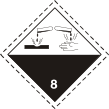
Transport classification per the UN Model Regulations / 49 CFR 172.101 Hazardous Materials Table. Confirm against the grade-specific SDS (Section 14) before shipping.
Methylchloroisothiazolinone/methylisothiazolinone (CMIT/MIT, CAS 55965-84-9) is the 3:1 aqueous blend of two isothiazolinone biocides, supplied as a low-use-level, broad-spectrum preservative for water-based formulations. A few parts per million protect a formula against bacteria, yeast, and mold — which is why formulators reach for it when they need wide microbial coverage without loading the product with preservative.
What CMIT/MIT does and why formulators specify it
The two actives work by an electrophilic mechanism: the isothiazolinone ring reacts with thiol groups in microbial enzymes, shutting down cellular respiration and growth. That mode of action is non-specific, so a single low-dose addition covers Gram-positive and Gram-negative bacteria, yeast, and fungi in one shot. Because it is effective at single-digit-to-low-double-digit ppm of active, it adds almost nothing to formulation cost or to the finished product’s sensory profile. The trade-off is that the same reactivity that kills microbes makes it a skin sensitizer above threshold — so the entire value of this chemistry depends on dosing it correctly and within the limits that govern your product class.
Applications
Personal care and cosmetics
CMIT/MIT is a workhorse preservative for rinse-off personal care — shampoo, conditioner, body wash, and hand soap — where short skin contact and dilution suit its profile. Use levels are tightly regulated and vary by region; under EU cosmetics rules the blend is permitted in rinse-off products only, at a maximum of 15 ppm, and it is no longer permitted in leave-on products such as lotions and creams. Other jurisdictions set their own limits. Treat those numbers as moving targets: confirm the current limit for your market and product type against the SDS and the applicable regulation before you formulate, because this is one of the most actively re-evaluated preservative chemistries in cosmetics.
Wet wipes and tissue products
Water-loaded substrates — baby wipes, surface wipes, cosmetic tissues — are a high-risk format for microbial growth, and CMIT/MIT has historically been a common preservative here. Wipes are a leave-on-adjacent format and a known historical driver of contact-allergy cases, so regional restrictions hit the category hard; verify what is currently permitted for the wipe type and market you sell into.
Household, industrial, and in-can preservation
Outside personal care, the same blend preserves water-based industrial systems where regulatory limits are different and use levels are typically higher. It is widely used for in-can (in-tin) preservation of latex paints, coatings, and adhesives — protecting the wet product on the shelf, distinct from a dry-film fungicide — and for microbial control of metalworking fluids, coolants, and process waters that would otherwise sour and grow biofilm. For these applications, dose and handling are governed by the industrial SDS, not the cosmetic limits above.
Forms and grade
The material ships as a stabilized aqueous solution. The most widely specified cosmetic grade is supplied at roughly 1.5% total active isothiazolinones in water; higher-active industrial concentrates also exist for in-can and process-water use. Because it is sold as a dilute solution, the active you dose into a finished formula is a small fraction of the as-supplied liquid — check the exact active content and recommended addition rate on the CoA and SDS for the specific grade quoted, since these differ between cosmetic and industrial supply.
Safety and regulatory — the honest version
CMIT/MIT is a recognized skin sensitizer and contact allergen. The same reactivity that makes it an efficient biocide at low ppm drives the regulation: use levels are capped, and for some product classes and regions the blend is restricted or banned outright (notably leave-on cosmetics in the EU). That does not make the chemistry unusable — it remains heavily used and well understood — but correct dosing, current regulatory checking, and proper handling are non-negotiable. We make no safety or efficacy claims here: the Safety Data Sheet and the regulation applicable to your product and market govern permitted concentrations, hazard classification, and handling.
CMIT/MIT use levels are tightly regulated and vary by region — confirm the current limit for your market and product type, and verify against the SDS and Certificate of Analysis.
Sourcing CMIT/MIT preservative in bulk
RawSource supplies MCI/MI preservative in bulk for cosmetic, personal-care, and industrial formulators and purchasing teams. Send us your target active content, grade (cosmetic vs. industrial), pack size, and destination, and we will quote against your specification with a current SDS and Certificate of Analysis. Use the RFQ form to request a quote.
Regulatory & registration requirements
- TSCA (US): Not found on the public (non-confidential) TSCA Inventory
- REACH (EU):
- EC number: 911-418-6
Source: EPA TSCA Inventory (July 2025 release) · ECHA CHEM — retrieved 2026-07-12
Frequently Asked Questions
What is another name for CMIT/MIT?
CMIT/MIT is the abbreviation for the 3:1 mixture of methylchloroisothiazolinone and methylisothiazolinone, CAS 55965-84-9. On cosmetic labels it appears under the INCI names Methylchloroisothiazolinone (and) Methylisothiazolinone. The component CAS numbers are 26172-55-4 (methylchloroisothiazolinone) and 2682-20-4 (methylisothiazolinone), and the molecular reference formula for the blend is C8H9ClN2O2S2.
What products contain CMIT/MIT preservative?
As a broad-spectrum isothiazolinone preservative it is used in water-based rinse-off personal care (shampoo, conditioner, body wash), wet wipes, in-can preservation of latex paints and adhesives, and microbial control of metalworking fluids and process waters. Permitted use levels vary by product class and region, and some leave-on cosmetic uses are restricted. RawSource supplies it as a raw-material biocide concentrate to formulators and industrial blenders, not as a finished consumer product.
What is the use level for CMIT/MIT in cosmetics?
It is effective at very low concentrations — single-digit to low-double-digit ppm of total active — and use levels are tightly regulated. Under EU rules the blend is permitted in rinse-off products at a maximum of 15 ppm and is not permitted in leave-on products; other regions set their own limits. Always confirm the current limit for your specific product type and market against the SDS and the applicable regulation, as these are actively reviewed.
Is CMIT/MIT a skin sensitizer?
Yes. CMIT/MIT is a recognized skin sensitizer and contact allergen above threshold, which is why its permitted concentrations are capped and, for some product classes such as EU leave-on cosmetics, restricted or banned. The same reactivity makes it an efficient biocide at low ppm. We make no safety claims; the Safety Data Sheet and applicable regulation govern hazard classification, permitted concentration, and handling.
What is an alternative to CMIT/MIT?
Common formulator alternatives in the same broad-spectrum preservation role include other isothiazolinones (e.g., benzisothiazolinone), phenoxyethanol-based systems, and organic-acid preservative blends; selection depends on pH, system chemistry, regional regulation, and your finished-product specification. We can quote available preservative chemistries against your formulation requirements.
How is CMIT/MIT preservative sold in bulk?
It is supplied as a stabilized aqueous biocide concentrate — the common cosmetic grade is roughly 1.5% active in water, with higher-active industrial concentrates also available — in industrial packaging sized to formulation use. Contact us for bulk pack sizes, minimum order quantity, lead time, and a current quote. A Safety Data Sheet (SDS) and Certificate of Analysis (CoA) are provided with every shipment.
What is the REACH and TSCA regulatory status of Methylchloroisothiazolinone/Methylisothiazolinone (CMIT/MIT)?
Methylchloroisothiazolinone/Methylisothiazolinone (CMIT/MIT) (CAS 55965-84-9) is recorded as REACH-registered in ECHA's public CHEM database (EC 911-418-6); it was not found on EPA's public (non-confidential) TSCA Inventory file.
What is the CAS number of Methylchloroisothiazolinone/Methylisothiazolinone?
The CAS number of Methylchloroisothiazolinone/Methylisothiazolinone is 55965-84-9.