
Amines & Amides Available — Bulk Only

Carbohydrazide

CAS 497-18-7 · Formula CH6N4O · MW 90.09 g/mol

Carbohydrazide (CAS 497-18-7) is an oxygen scavenger and metal passivator for boiler feedwater, named by IAPWS guidance (TGD9-18, 2018) as an acceptable substitute for hydrazine in AVT(R) treatment.

Request SDS
CAS Number
497-18-7
Formula
CH6N4O
Molecular Weight
90.09 g/mol
Material Family
Amines & Amides
At a Glance
Material Family
Amines & Amides
Record Type
Pure compound
Primary Role
Corrosion Inhibition
Functional Roles
Industries Served
Safety & Handling
Self-classification from the ECHA C&L Inventory (EC 207-837-2); no harmonised classification; the supplier SDS governs
Signal word: Warning
GHS Irritant pictogram
Irritant
GHS07
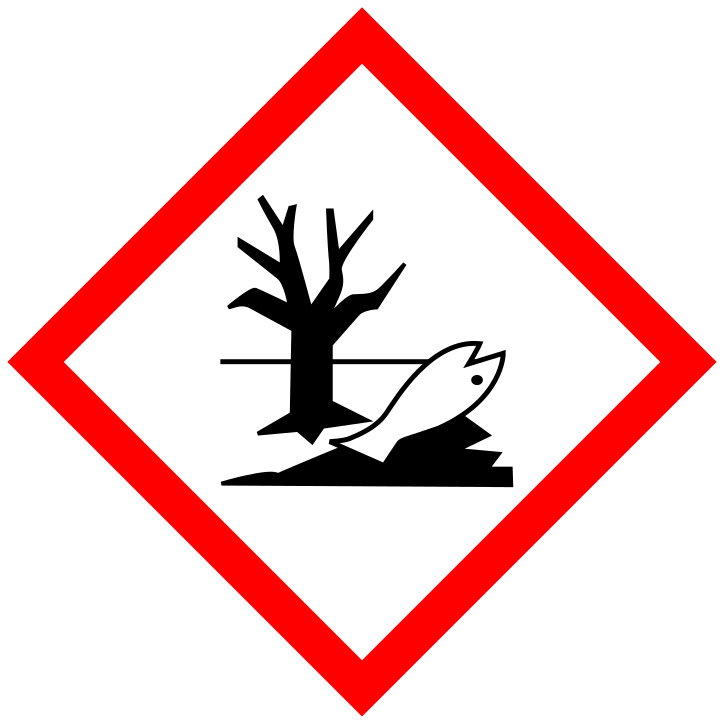
GHS Environmental Hazard pictogram
Environmental Hazard
GHS09
  • H302 Harmful if swallowed
  • H315 Causes skin irritation
  • H317 May cause an allergic skin reaction
  • H411 Toxic to aquatic life with long lasting effects

Source: European Chemicals Agency (ECHA), C&L Inventory: Carbonohydrazide (EC 207-837-2)

Full SDS available on request

A grade-specific Safety Data Sheet (SDS) — with the complete hazard classification, handling precautions, and transport information — is supplied with every shipment and available on request. Confirm all safety and regulatory details against the SDS for your specific grade.

Request SDS →
Chemical Identity
CAS Number
497-18-7
Molecular Formula
CH6N4O
Molecular Weight
90.09 g/mol
IUPAC Name
1,3-diaminourea
PubChem CID
InChI Key
XEVRDFDBXJMZFG-UHFFFAOYSA-N
Synonyms
Carbohydrazide Carbonic dihydrazide 1,3-Diaminourea Carbonohydrazide Carbazide Carbodihydrazide carbonyl dihydrazine hydrazinecarbohydrazide
Full Description

Carbohydrazide — frequently asked

What is the chemical formula of carbohydrazide?

PubChem (CID 73948) lists carbohydrazide with the molecular formula CH6N4O, a molecular weight of 90.09 and the IUPAC name 1,3-diaminourea.

What is the CAS number of carbohydrazide?

Carbohydrazide is CAS 497-18-7 (PubChem CID 73948).

Is carbohydrazide soluble in water?

Yes. A US patent describes carbohydrazide as a high-melting solid that is freely soluble in water. It melts with decomposition: reported melting points are 150 °C (DSC, in the REACH dossier), 153-154 °C (Inorganic Syntheses) and 157-158 °C (the patent).

How does carbohydrazide work as an oxygen scavenger?

Carbohydrazide is dosed into boiler water to remove dissolved oxygen. US patent 4,269,717 claims at least 0.5 mole of carbohydrazide per mole of dissolved oxygen in alkaline boiler water. At high temperature it converts to hydrazine: a published study found that at 453 K and above it decomposes rapidly to hydrazine, which then acts as the oxygen scavenger, while between 398 and 428 K carbohydrazide and the hydrazine formed from it coexist. IAPWS technical guidance names carbohydrazide as an acceptable substitute for hydrazine as the reducing agent in AVT(R) treatment, added to the condensate or feedwater (IAPWS TGD9-18, Air In-leakage in Steam-Water Cycles, 2018). A boiler-water handbook lists it among the specialty volatile oxygen scavengers for boilers over 900 psig (6205 kPa), normally maintained in the parts-per-billion range.

Disclaimer. Information on this page — including properties, identifiers, hazard, transport (DOT/UN) and tariff (HS) classifications, and applications — is provided for general reference and is compiled from authoritative public sources (e.g. PubChem/ECHA, 49 CFR 172.101, the Harmonized Tariff Schedule). Values are typical and are not a guaranteed specification; the Certificate of Analysis (CoA) for the lot purchased governs. Products are sold for industrial and professional use only. Nothing here is a medical, health, or efficacy claim or advice. Always consult the current Safety Data Sheet (SDS) before handling, storage, transport or disposal, and confirm regulatory status, classification and suitability for your application and jurisdiction. Hazard, transport and tariff classifications must be verified for your specific shipment. RawSource makes no warranty, express or implied, and assumes no liability for use of this information. Trademarks. Third-party trademarks and brand names are the property of their respective owners; any reference is nominative — used only to identify a comparable product — and does not imply affiliation with, sponsorship by, or endorsement by the trademark owner.