
SODIUM LAURETH SULFATE- ▸ Personal care: Primary surfactant in shampoos and bubble baths
- ▸ Household detergents: Foaming and cleansing surfactant
- ▸ Industrial cleaners: Anionic surfactant base
Supplied for industrial formulation and manufacturing use; not for retail or consumer sale.
Supplied for industrial formulation and manufacturing use; not for retail or consumer sale.
Supplied for industrial formulation and manufacturing use; not for retail or consumer sale.
- ▸ Sodium Laureth Sulfate 30% Technical Data Sheet (RS-SLES_30) PDF · TDS
- ▸ Sodium Laureth Sulfate 56% (alcohol-free) Technical Data Sheet (RS-SLES_56) PDF · TDS
- ▸ Sodium Laureth Sulfate 60% Technical Data Sheet (RS-SLES_60) PDF · TDS
Values shown are typical for the current commercial grade. A lot-specific Certificate of Analysis accompanies every shipment; the grade-specific SDS is available on request.
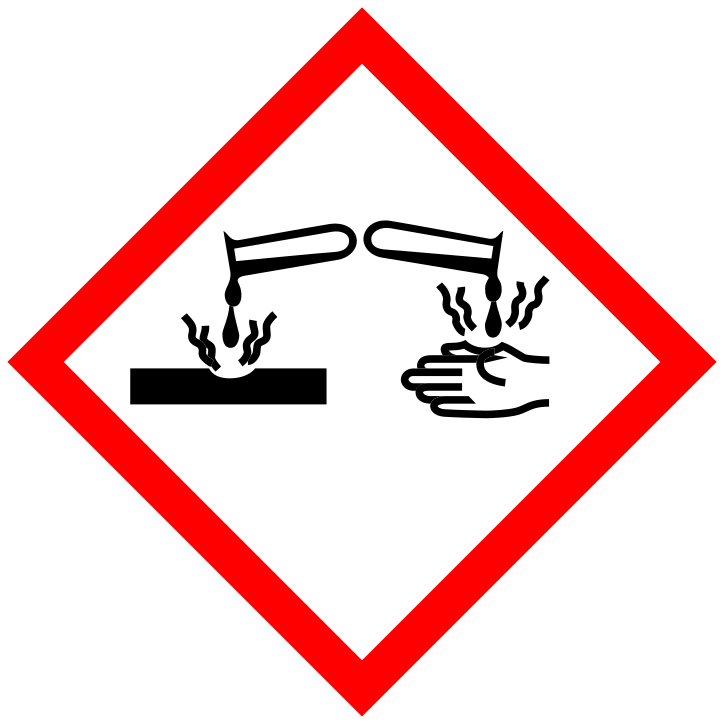
GHS05
- H227 Combustible liquid
- H315 Causes skin irritation
- H318 Causes serious eye damage
Source: Supplier SDS, Section 2, by grade: RS-SLES_30 Danger (H227, H315, H318); RS-SLES_56 Danger (H227, H315, H318); RS-SLES_60 Danger (H315, H318)
A grade-specific Safety Data Sheet (SDS) — with the complete hazard classification, handling precautions, and transport information — is supplied with every shipment and available on request. Confirm all safety and regulatory details against the SDS for your specific grade.
Request SDS →Sodium laureth sulfate (CAS 68891-38-3, SLES), an ethoxylated anionic sulfate surfactant also known as sodium lauryl ether sulfate. Used as a primary foaming and cleansing surfactant in shampoos, bubble baths, and household and industrial detergents.
Regulatory & registration requirements
- TSCA (US):
- REACH (EU):
- EC number: 500-234-8
TSCA Inventory flag XU: a substance exempt from reporting under the Chemical Data Reporting Rule (40 CFR 711) (EPA flag legend).
Source: EPA TSCA Inventory (July 2025 release) · ECHA CHEM — retrieved 2026-07-12
Solutions Using This Product
Process-solution guides on this site that specify this chemistry:
- Detergent Enzymes & Oxygen Bleach for Protein & Grease (Home & Industrial Care)
Frequently Asked Questions
What is Sodium Lauryl Ether Sulfate (SLES) made from?
SLES is produced by ethoxylating lauryl alcohol (typically from coconut or palm kernel oil, or petrochemical sources) and then sulfating the resulting alcohol ethoxylate, followed by neutralization with sodium hydroxide. It is an anionic alkyl ether sulfate surfactant, CAS 68891-38-3. The degree of ethoxylation is commonly cited as the number after the name (e.g. SLES-2).
What is the difference between SLS and SLES?
SLES (sodium laureth/lauryl ether sulfate) is the ethoxylated form, carrying ether (EO) groups that SLS (sodium lauryl sulfate) lacks. Both are anionic foaming and cleansing surfactants; SLES is generally milder-foaming and more water-soluble in dilute systems. Confirm the exact grade and active content against the CoA for your formulation.
What is SLES used for?
SLES is a primary foaming and cleansing surfactant in shampoos, bubble baths, body washes, and household and industrial detergents. It lowers surface tension for soil and oil removal and stabilizes lather in dilute aqueous systems. RawSource supplies it as an anionic surfactant base for personal-care and cleaning formulations.
What active concentration of SLES does RawSource supply, and in what packaging?
SLES is commonly traded at around 70% active (often labeled SLES 70), and grade and active content vary by source. RawSource supplies bulk drums, totes, and IBCs; request a CoA to confirm active content, EO degree, and specifications for your supply. Contact us for available grades and current bulk pricing.
What is the HS code and CAS number for SLES?
SLES is CAS 68891-38-3. The HS classification is 3402.39 — organic surface-active agents (other than soap), anionic, other. RawSource provides the SDS and CoA with each bulk shipment for import and formulation documentation.
What is the REACH and TSCA regulatory status of Sodium Laureth Sulfate (SLES, Sodium Lauryl Ether Sulfate)?
Sodium Laureth Sulfate (SLES, Sodium Lauryl Ether Sulfate) (CAS 68891-38-3) is subject to U.S. TSCA Inventory requirements; supplying it into the EU requires valid REACH registration ((EC) No 1907/2006). RawSource cannot verify a third-party supplier's registrations — buyers should require documented TSCA and REACH compliance for their jurisdiction and volume (EC 500-234-8).
What is the CAS number of Sodium Lauryl Ether Sulfate (SLES)?
The CAS number of Sodium Lauryl Ether Sulfate (SLES) is 68891-38-3.